
Horseback riding benefits kids by building physical strength, improving balance and coordination, boosting self-confidence, developing responsibility, and sharpening cognitive abilities. Research published in Frontiers in Public Health by Tokyo University of Agriculture found that the vibrations produced by horses during riding activate the sympathetic nervous system, which improves learning, decision-making, and self-control in children. A study commissioned by the British Horse Society confirmed that just 30 minutes of riding qualifies as moderate-intensity exercise, and that trotting exerts more energy than playing badminton.
In this article, we cover the physical, mental, and emotional benefits of horseback riding for kids, the best age to start, how riding builds confidence, what children learn from working with horses, and how to help your daughter get started safely.
How Does Horseback Riding Help Children?
Horseback riding helps children by strengthening their bodies, sharpening their minds, and teaching them emotional skills they carry into every part of life. Unlike most sports, riding requires a child to connect with a living, breathing partner. That partnership between rider and horse builds trust, patience, empathy, and communication in a way no ball sport or gym class can replicate.
A study published in Frontiers in Public Health examined 106 children between the ages of 10 and 12 and found that horseback riding improved their ability to make good decisions and exercise self-control. The researchers believe the three-dimensional movement of the horse, which shifts the rider up and down, side to side, and forward and backward, activates the nervous system in ways that enhance learning and memory. Professor Mitsuaki Ohta of Tokyo University of Agriculture said the findings point to “many possible effects of human-animal interactions on child development.”
Beyond the science, we see these benefits play out every summer. Girls who arrive at camp nervous about being around a large animal leave horseback riding as one of their favorite activities. The pride on a girl’s face after her first ride is something a parent never forgets.
Physical Benefits of Riding for Kids
The physical benefits of horseback riding for kids are significant. Riding strengthens the core, legs, and back. It improves balance, posture, and coordination. It develops hand-eye coordination because a rider must steer, balance, and respond to the horse’s movements all at once. According to the American Heart Association, a 45-minute ride at a walk, trot, and canter can burn up to 200 calories. Dr. Dennis Sigler, a horse specialist and professor at Texas A&M University, noted that more strenuous riding like cutting or reining can burn nearly 7 calories per minute.
The British Horse Society’s 2011 study, conducted through the University of Brighton and Plumpton College, classified horseback riding as moderate-intensity exercise when done for at least 30 minutes, three times per week. That meets the activity levels recommended by public health guidelines. For kids who struggle to enjoy traditional exercise, riding offers something different. It does not feel like a workout. It feels like an adventure.
The Compendium of Physical Activities, a widely used reference in exercise science, rates riding at a gallop at 7.3 METs, which is the same level of effort as rock climbing. Jumping a horse earns a 9.0 MET rating, making it more physically demanding than ice hockey. These numbers show that horseback riding is a serious physical activity, even though it looks effortless from the ground.
Mental and Emotional Benefits
Horseback riding has powerful mental and emotional benefits for children. A review of research in Frontiers in Public Health found that riding relieves anxiety, reduces hyperactivity, enhances self-esteem, and promotes relaxation. A study from Washington State University showed that children who ride horses have lower levels of stress hormones in their saliva compared to a control group. These findings confirm what many parents observe on their own: kids are calmer, happier, and more focused after spending time with horses.
The emotional bond between a child and a horse is also meaningful. Horses are sensitive animals that respond to the rider’s energy, body language, and confidence. When a girl learns to communicate with a horse through gentle cues rather than force, she is also learning emotional regulation. She learns that staying calm gets better results than getting frustrated. That lesson transfers directly into friendships, classroom behavior, and family life.
The British Horse Society study found that more than 80% of riders said horseback riding made them feel “quite a lot” or “extremely” cheerful, relaxed, happy, or active. Spending time with animals has also been shown to raise levels of serotonin, a hormone that supports positive mood. For girls who deal with stress from school, social pressures, or screen overload, riding offers a healthy and natural way to reset.
Is Horse Riding Good for Kids?
Yes, horse riding is very good for kids. It provides a rare combination of physical exercise, mental focus, emotional growth, and connection with nature that few other activities can match. The American Camp Association’s Youth Outcomes Study found that 92% of children say their camp experience helped them build self-esteem, and horseback riding is consistently one of the most popular and impactful activities at camps across the country.
Riding is especially valuable for girls. Research from the National Coalition of Girls’ Schools found that girls in supportive, all-female environments develop greater self-confidence and a stronger sense of what they can accomplish. When girls ride horses at an all-girls camp, they push through fears, master new skills, and cheer each other on. There is no pressure to hold back or let someone else go first. Every girl rides, and every girl grows because of it.
For parents worried about screen time, riding offers the perfect antidote. The Kaiser Family Foundation reports that the average child in the United States spends over 7 hours a day on screens. At a riding lesson or at camp, the phone goes away and the real world comes alive. A girl cannot text while holding reins, and that is exactly the point.
What Do Kids Learn from Horseback Riding?
Kids learn responsibility, patience, empathy, focus, teamwork, and physical coordination from horseback riding. The lessons go far beyond the saddle. Before a girl even mounts a horse, she learns about grooming, feeding, and caring for the animal. That process teaches her that the horse’s needs come first, which is a powerful lesson in putting others before yourself.
During the ride itself, a child learns focus. She must pay attention to her posture, her hand position, her leg pressure, and the horse’s body language all at the same time. That kind of multitasking builds concentration that carries over into school and other activities. After the ride, she cools the horse down, brushes it, and makes sure it is comfortable. The full process, before, during, and after the ride, teaches a complete cycle of responsibility.
Girls also learn that success with a horse requires calm communication, not force. A horse does not respond well to yelling or yanking. It responds to steady, confident cues. Learning to work with an animal that weighs ten times as much as you is a lesson in respect, trust, and self-control that stays with a girl for life.
How Does Horseback Riding Build Confidence in Kids?
Horseback riding builds confidence in kids because it puts them in charge of a large, powerful animal and asks them to lead. When a girl controls a 1,000-pound horse with gentle cues and calm energy, she learns that she is capable of far more than she thought. Every successful ride reinforces the idea that she can handle big challenges.
The confidence that comes from riding is different from the confidence that comes from scoring a goal or getting a good grade. It is a deeper, more physical confidence. A girl who can guide a horse through a trail, over a small jump, or around an arena carries herself differently. She stands taller. She speaks up more. She trusts her own judgment.
We see this transformation happen at camp every summer. Girls who start their first riding session clinging to the saddle with wide eyes are cantering by the end of the week. That kind of rapid growth builds a belief in herself that goes far beyond the riding ring.
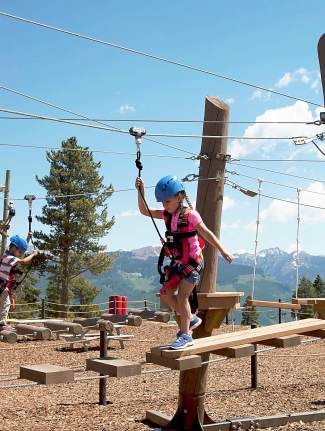
It shows up in how she approaches the ropes course, how she introduces herself to new friends, and how she carries herself when she goes back to school in the fall.
What Is the Best Age to Start Horse Riding?
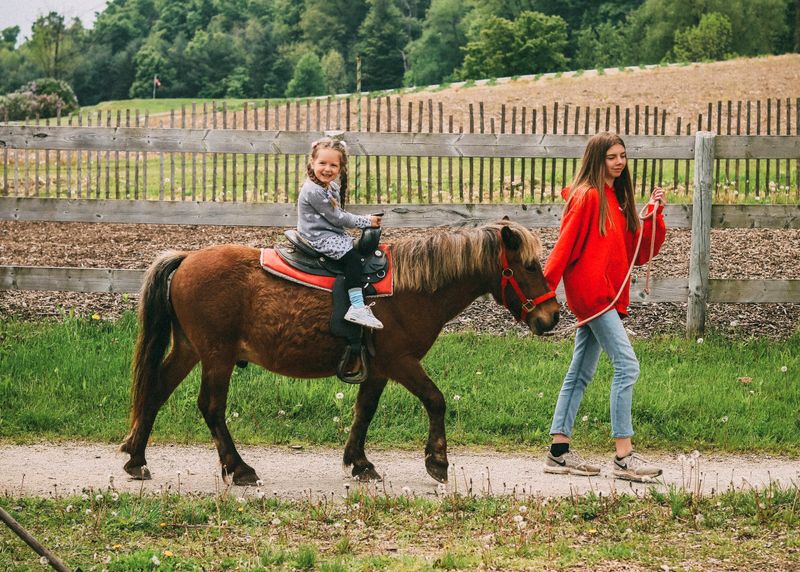
The best age to start horse riding is around 5 to 7 years old for introductory lessons, though many programs accept children as young as 4 for lead-line or pony rides. By age 6 or 7, most children have developed enough coordination, balance, and attention span to begin learning basic riding skills with proper instruction.
At summer camps, horseback riding is one of the most popular activity choices for girls ages 6 through 16. Younger girls typically start with shorter, supervised trail rides or arena lessons where a counselor walks alongside the horse. Older and more experienced riders may have the chance to ride independently or try more advanced skills.
The key is finding a program with qualified instructors, well-trained horses, and a focus on safety. An ACA-accredited camp, for example, follows strict safety standards that cover everything from instructor certifications to horse care protocols. That kind of structure gives parents confidence that their daughter is learning in a safe, well-managed environment.
Is Horseback Riding Good for Kids with ADHD?
Yes, horseback riding is good for kids with ADHD because it provides physical activity, a structured routine, sensory stimulation, and the need for sustained focus, all of which can be helpful for children who struggle with attention and impulsivity. Research cited in Frontiers in Public Health found that horseback riding reduces hyperactivity and promotes relaxation in children.
The rhythmic, repetitive motion of the horse has a calming effect on the nervous system. The need to focus on multiple tasks at once, like steering, balancing, and watching the trail ahead, gives the brain the kind of stimulation it craves without the negative effects of screen-based stimulation. Many parents of children with ADHD report that their child is calmer, more focused, and more confident after riding.
Equine-assisted therapy is now used by programs around the world specifically to support children with developmental and behavioral challenges. While recreational riding at camp is not therapy, it offers many of the same benefits in a fun, social setting. A girl who rides at camp gets the physical and emotional benefits of being with horses while also making friends and trying archery.
She also gets to take part in camp traditions like campfire singing and team competitions that she will remember forever. The combination of riding and the broader camp experience creates something truly special.
How Many Times a Week Should Kids Ride?
Kids should ride 1 to 3 times per week for the best balance of skill development, physical benefit, and enjoyment. The British Horse Society study found that 30 minutes of riding at least three times per week meets the standard for moderate-intensity exercise. For most children, one or two lessons per week during the school year is ideal, with more frequent riding available during summer camp or vacation programs.
At camp, girls may ride several times during a one- or two-week session, which gives them enough time to build real comfort and skill with the horse. The consistent daily or every-other-day riding schedule at camp accelerates learning in a way that a once-a-week lesson at home cannot match. Girls who arrive as total beginners often leave camp feeling confident in the saddle.
Horseback Riding Benefits Compared to Other Kids’ Activities
| Benefit | Horseback Riding | Team Sports | Swimming | Arts and Crafts |
| Core Strength | High (constant engagement for balance) | Moderate | High | Low |
| Confidence Building | Very high (controlling a large animal) | Moderate | Moderate | Moderate |
| Emotional Regulation | Very high (horse responds to rider’s calm) | Moderate | Low | Moderate |
| Responsibility | Very high (caring for a living animal) | Moderate | Low | Low |
| Calories Burned (45 min) | Up to 200 (Texas A&M) | 200-350 varies | 250-400 | 50-80 |
| Nature Connection | Very high (outdoor, animal bond) | Moderate (outdoor fields) | Low (pool) to High (lake) | Low to Moderate |
| Cognitive Improvement | Proven (Frontiers in Public Health, 2017) | Some evidence | Some evidence | Creativity and fine motor gains |
Sources: Frontiers in Public Health (2017), British Horse Society/University of Brighton (2011), Texas A&M University, American Heart Association, Compendium of Physical Activities, ACA Youth Outcomes Study.
How to Keep Kids Safe While Horseback Riding
Keeping kids safe while horseback riding starts with choosing a program that uses well-trained horses, certified instructors, and proper safety equipment. Every child should wear a properly fitted riding helmet during every ride, no exceptions. Sturdy boots with a heel are also important because they prevent a rider’s foot from slipping through the stirrup.
At an ACA-accredited camp, safety protocols for horseback riding are part of the camp’s overall accreditation review. Counselors and instructors are trained specifically in equine safety, and horses are selected for their temperament and experience with young riders. Parents should always ask about a program’s safety record, instructor qualifications, and horse care practices before enrolling their child.
It is also important for parents to prepare their daughter mentally. Horses are large animals, and it is normal for a child to feel nervous at first. Talking about what to expect, watching videos of kids riding, and reading about the experience ahead of time all help reduce first-day jitters. Once a girl is on the horse and moving, the nervousness almost always gives way to pure excitement.
Why Horseback Riding at Camp Is Different from Riding Lessons at Home
Horseback riding at camp is different from riding lessons at home because it happens in the context of an entire community experience. A girl does not just show up, ride for an hour, and go home. She spends the whole day at camp, and riding is woven into a schedule that also includes swimming, campfire nights, and time with friends.
She might start her morning with a ride, spend her afternoon doing crafts with her cabin mates, and end her evening singing under the stars. That full-day context makes the riding experience richer and more meaningful than any standalone lesson could.
At camp, girls ride with their cabin mates. They encourage each other, share tips, and celebrate each other’s progress. The social element adds a layer of bonding that a private lesson at a stable does not offer. A girl might be nervous about her first ride, but when her friends are cheering from the fence, that fear turns into courage faster than she expected.
Camp also offers more frequent riding over a shorter period, which accelerates learning. A girl who takes one lesson a week at home might ride 10 times over a whole summer. A girl at a two-week camp session might ride 6 or 8 times in those same two weeks. That concentrated practice, combined with the supportive camp environment, leads to faster skill development and deeper confidence.
Frequently Asked Questions
Does Horseback Riding Help with Anxiety?
Yes, horseback riding helps with anxiety. Research published in Frontiers in Public Health found that riding relieves anxiety and promotes relaxation. The rhythmic motion of the horse has a calming effect on the nervous system, and the focus required during a ride leaves little room for worried thoughts. The British Horse Society study found that over 80% of riders reported feeling relaxed and happy after riding.
Can Horseback Riding Help Shy Children?
Yes, horseback riding can help shy children because it builds confidence through a one-on-one relationship with the horse before requiring group interaction. A shy girl may feel more comfortable communicating with a horse than with a room full of new people. As her confidence grows in the saddle, it often carries over into social settings at camp and at school.
Is Horseback Riding a Full-Body Workout?
Yes, horseback riding is a full-body workout. It engages the core, legs, back, arms, and shoulders simultaneously. The rider uses core muscles to maintain balance, leg muscles to guide the horse, arm muscles to manage the reins, and back muscles to maintain posture. The American Heart Association recognizes horseback riding as a cardiovascular workout that benefits heart health.
How Long Should a Child’s Riding Lesson Be?
A child’s riding lesson should be 30 to 45 minutes for beginners. Younger children and first-time riders do best with 30-minute sessions because their muscles tire quickly and their attention span is shorter. As a child gains experience and strength, lessons can be extended to 45 minutes or longer.
Do Kids Need Their Own Horse to Learn?
No, kids do not need their own horse to learn. Most riding programs, lessons, and camps provide trained horses for their students to ride. At camp, horses are matched to riders based on experience level and temperament, so every girl is paired with a horse that is right for her. Owning a horse is not necessary to enjoy the full benefits of riding.
What Should a Child Wear for Horseback Riding?
A child should wear long pants, sturdy boots or shoes with a heel, and a properly fitted riding helmet for horseback riding. Avoid sandals, sneakers without a heel, or loose clothing that could get caught in the saddle. Most camps and riding programs provide helmets, but parents are welcome to bring their own as long as it meets current safety standards.
The Bottom Line
Horseback riding gives kids something that very few other activities can. It builds physical strength, sharpens the mind, calms anxiety, teaches responsibility, and creates a bond with an animal that is both humbling and empowering. The research from Frontiers in Public Health, the British Horse Society, Washington State University, and the American Heart Association all point to the same conclusion: riding is one of the best things a child can do for their body and their spirit.
At Riverview Camp for Girls, horseback riding has been one of our most beloved activities for decades. Our campus in Mentone, Alabama offers girls the chance to ride in a beautiful natural setting, surrounded by wooded trails and the gentle flow of Little River. If you want your daughter to experience the confidence, joy, and growth that comes from working with horses, we would love to have her join us. Call 256-634-4043 to learn more about our riding program and upcoming sessions.