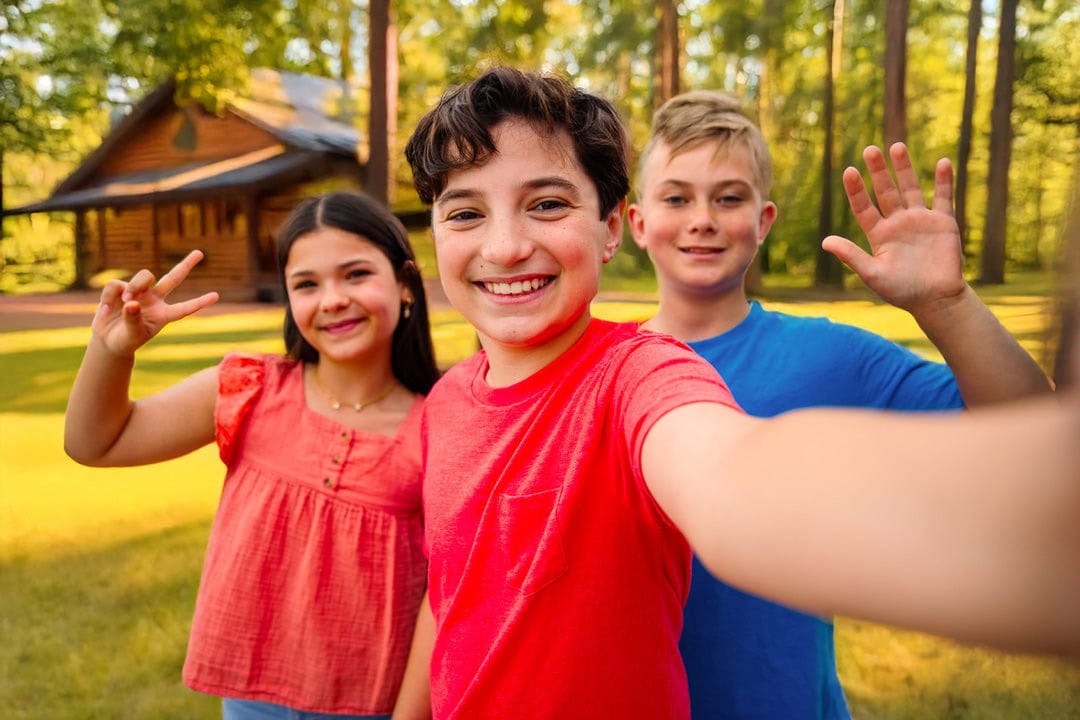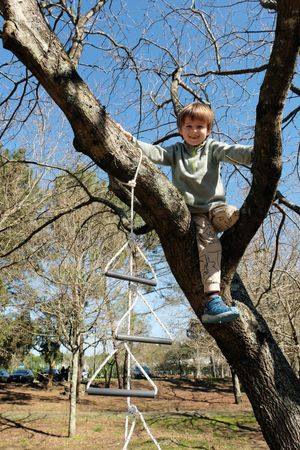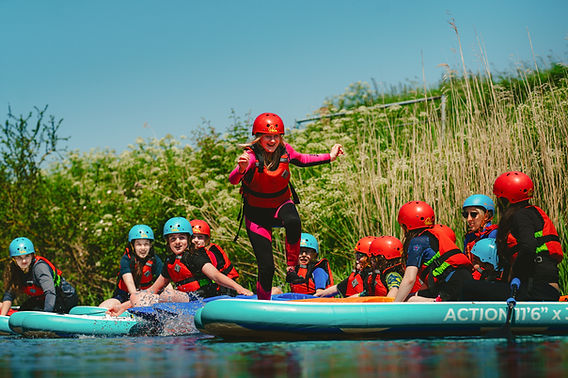

Summer camp teaches kids social skills through daily face-to-face interaction, shared living, group activities, team challenges, and real conversations that happen naturally from morning to night. At camp, children practice cooperation, empathy, conflict resolution, and friendship-building every single day, often without even realizing they are learning. According to the American Camp Association’s Youth Outcomes Study, 92% of children say their camp experience helped them build self-esteem, and a separate ACA survey found that 70% of parents reported their child gained self-confidence while away at camp.
In this article, we cover exactly how camp develops the social skills children need, what activities drive that growth, why a screen-free environment matters so much, and how parents can help their daughters get the most out of their camp experience.
How Does Summer Camp Develop Children’s Social Skills?
Summer camp develops children’s social skills by placing them in a community where they live, eat, play, and problem-solve alongside other kids from the moment they wake up until they fall asleep. Unlike school, where social time is limited to recess and lunch, camp creates an all-day social environment. Research shared by Sunshine Parenting and based on a multi-camp study found that campers spend more time in intentional, directed conversation at camp than at any other point in their year. Trained counselors lead children through team-building and relationship-building activities throughout the day, and skills are reinforced through constant face-to-face communication.
A 2025 Gallup poll found that 45% of K-12 parents say the pandemic negatively impacted their child’s social skills development, and 22% say those difficulties are still ongoing. That means nearly one in four school-age children in the United States is still struggling with social skills years after the pandemic ended. Camp directly addresses this gap by immersing children in exactly the kind of in-person, screen-free, relationship-heavy environment that many kids have been missing.
The University of Waterloo’s Canadian Summer Camp Research Project confirmed that overnight camp improves social integration, emotional intelligence, self-confidence, and nature appreciation. These are not small gains. They are the building blocks that help a child navigate friendships, school, and eventually the adult world.
Living Together Builds Communication
One of the most powerful parts of camp is cabin life. When girls share a cabin, they learn how to communicate their needs, respect personal space, take turns, and work through disagreements. These are the same skills adults use in the workplace and in relationships, and camp teaches them naturally through daily practice.
At camp, a girl might need to ask a cabin mate to keep the noise down at bedtime, share supplies during an art project, or figure out whose turn it is to sweep the floor. Each of these small moments is a social skills lesson in real time. We see it happen every summer. Girls who arrive unsure of themselves learn to speak up within the first few days because the camp community encourages and supports them.
What Are Some Social Skills Activities at Camp?
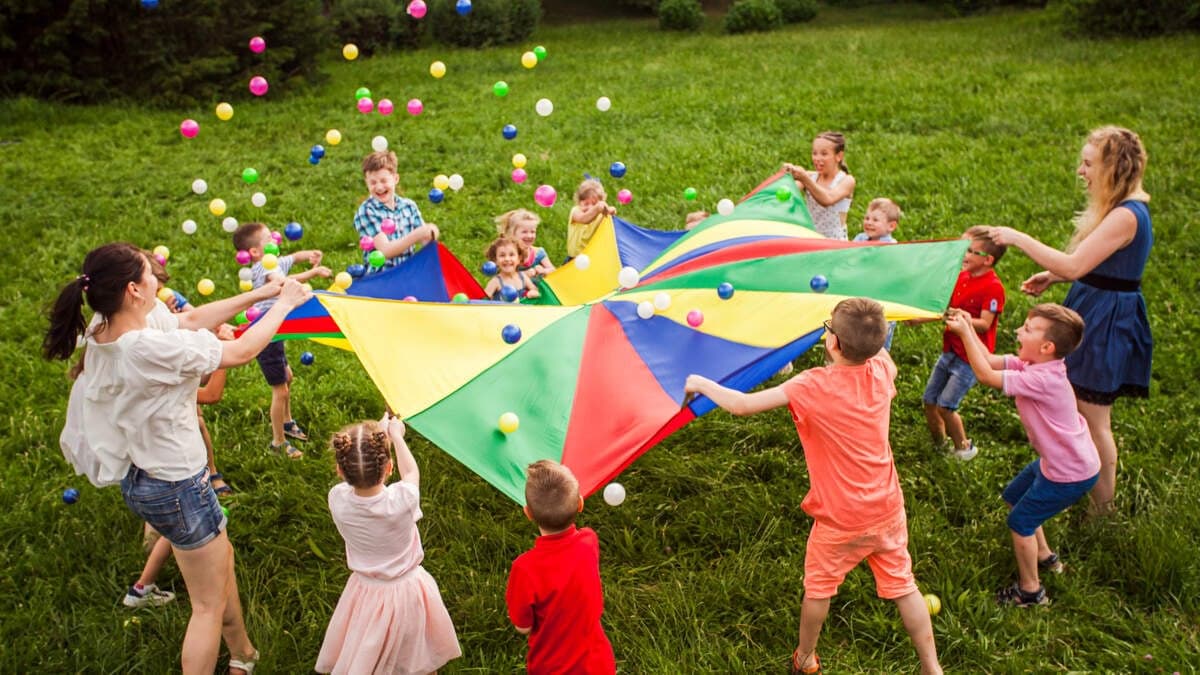
Social skills activities at camp include team sports, group art projects, cabin challenges, campfire discussions, drama performances, cooperative games, and outdoor adventures that require working together. These activities are designed to build cooperation, communication, empathy, and problem-solving without feeling like a lesson.
A game of capture the flag, for example, teaches strategy, teamwork, and communication. A group arts and crafts session teaches patience and the ability to share materials. A cabin skit at evening programs teaches performance confidence and group creativity. Research published in the journal Frontiers in Psychology found that cooperative group learning significantly improves social skills like self-assertion, information sharing, and teamwork. Camp applies this research every day through activities that are fun first and educational second.
Even mealtimes are social skills activities in disguise. Sitting at a table with other girls, passing food, making conversation, and cleaning up together all teach basic social norms that many children today get less practice with than previous generations.
How Group Activities Teach Teamwork and Cooperation
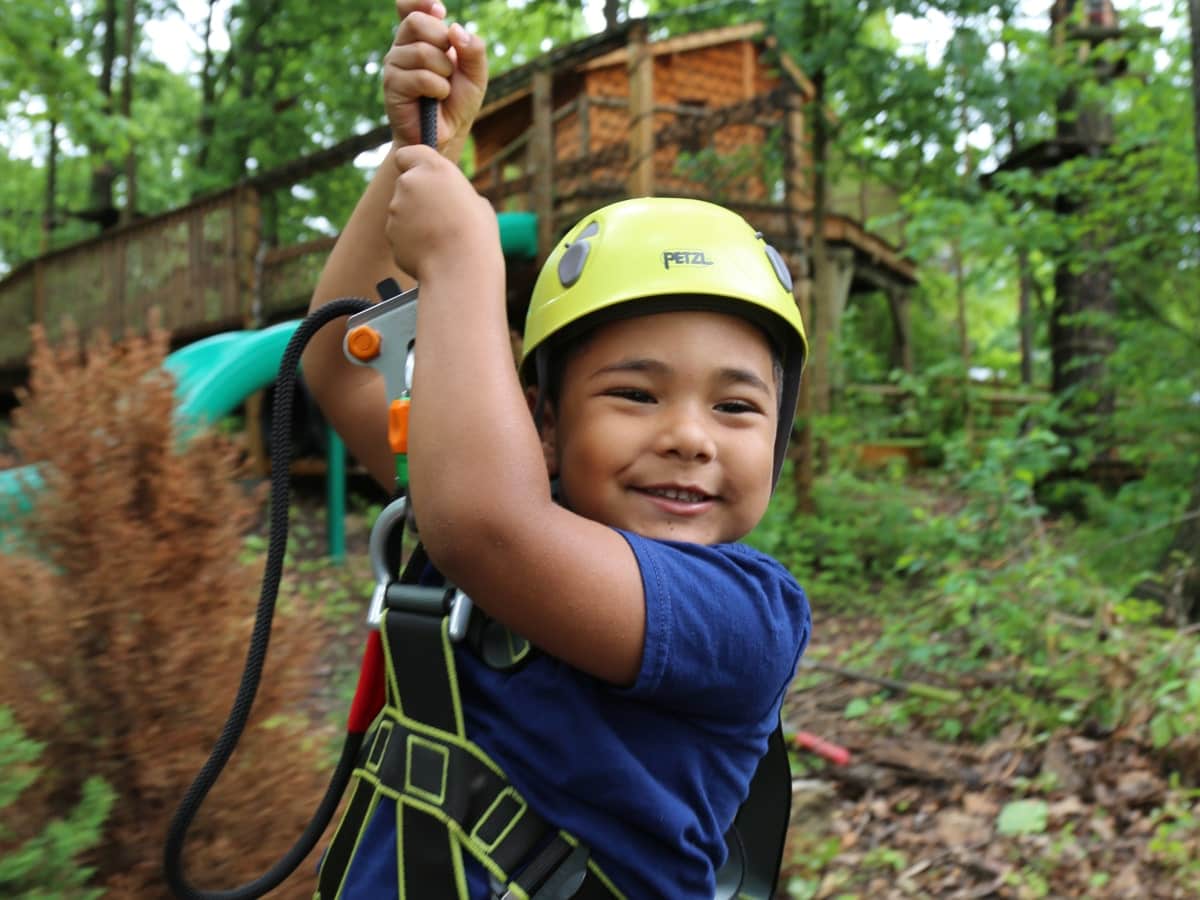
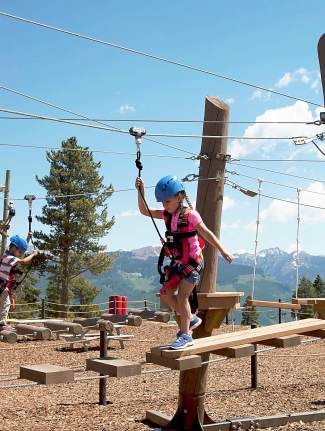
Group activities at camp teach teamwork and cooperation because they require girls to rely on each other. A ropes course challenge only works if the team communicates clearly. A relay race only succeeds if everyone does their part. A camp-wide competition only feels rewarding because the team earned it together.
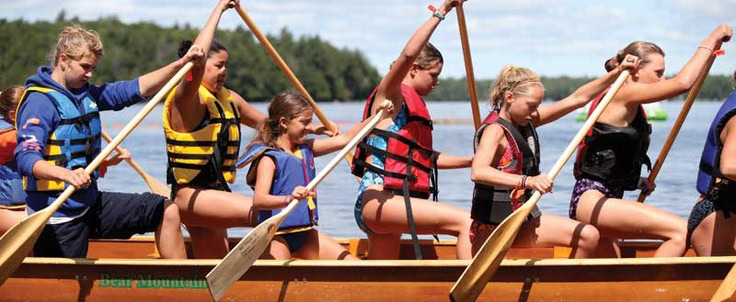
The ACA’s breakthrough study found that camp experiences promote youth outcomes most strongly in the areas of independence, social awareness, and affinity for nature. These results are driven by the structure of camp, which combines a sense of belonging, real engagement, and action-based learning. When a girl paddles a canoe with a partner, she is not just learning a sport. She is learning to listen, to adjust, and to trust someone else.
What Are Children’s Social Needs?
Children’s social needs include belonging, acceptance, friendship, the ability to communicate, the chance to cooperate with others, and the opportunity to practice empathy. These needs are just as important as academic achievement, and research consistently shows that children who have strong social skills perform better in school and report greater life satisfaction.
Dr. Peter Scales, a developmental psychologist cited by the American Camp Association, has said that camp is one of the few places where young people can meet their basic needs to belong, feel capable, and contribute to a group. Those three needs, belonging, competence, and contribution, are central to healthy child development. Camp addresses all three simultaneously.
A 2025 report from The Bump’s Future of Parenting survey found that 88% of parents believe shared experiences hold more value than material gifts. That belief reflects what researchers have been saying for years: children thrive when they have real, in-person connections with other kids and caring adults. Camp delivers exactly that.
Why a Screen-Free Environment Matters for Social Growth
A screen-free environment matters for social growth because it forces children to practice the face-to-face communication skills that screens often replace. The average child in the United States spends over 7 hours a day on screens, according to the Kaiser Family Foundation. A landmark study by the National Institutes of Health found that children who spend more than 2 hours a day on screens scored lower on language and thinking tests.
Research from Emory University clinical psychologist Dr. Stephen Nowicki found that 10% of children demonstrate what he calls “dyssemia,” a difficulty reading nonverbal cues like facial expressions, body language, and tone of voice that is severe enough to interfere with social or academic success. Excessive screen time makes this worse because children get less practice reading real faces and real emotions. Camp reverses that pattern by putting girls in a community where every interaction is face-to-face.
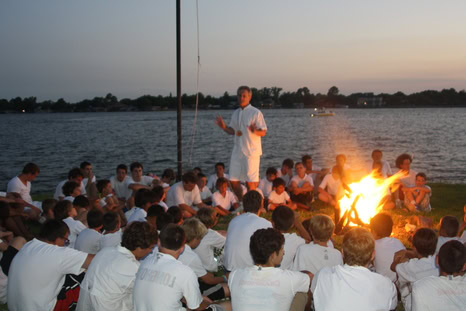
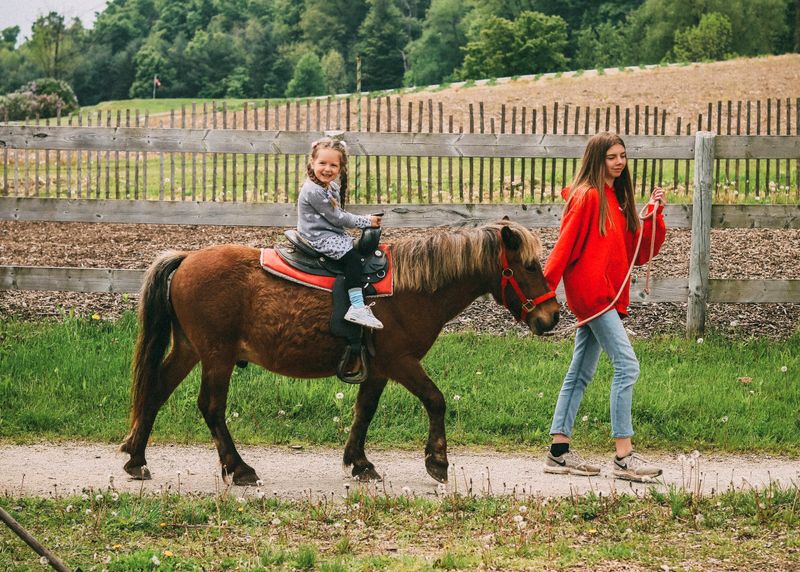
The ACA’s breakthrough study found that 58% of youth who attend camp say the experience helped them appreciate the importance of being present and taking time away from technology. Many of our campers tell us that one of their favorite things about camp is not having a phone. Without screens, girls ride horses, tell stories around the campfire, play games in the grass, and have the kind of long, uninterrupted conversations that rarely happen at home anymore.
How Can You Tell If Your Child Needs Help with Social Skills?
Signs that a child may need help with social skills include difficulty making or keeping friends, trouble reading other people’s emotions, frequently interrupting conversations, struggling to take turns, avoiding group activities, and preferring screens over in-person interaction. These signs do not mean something is wrong with your child. They often mean your child simply needs more practice in a supportive social setting.
Camp is one of the best environments for that kind of practice. Unlike a classroom where social opportunities are limited, camp surrounds a girl with social situations all day long. She practices greeting new people at breakfast, cooperating during morning activities, handling a disagreement at lunch, cheering for her team in the afternoon, and winding down with her cabin mates at night. That kind of immersive social practice is hard to replicate anywhere else.
If your daughter seems to hang back in group settings or struggles with friendships at school, a week or two at camp can make a noticeable difference. The counselors are trained to notice when a girl needs a little extra encouragement, and the camp structure naturally draws even shy girls into the group.
What Age Is Best for Summer Camp?
The best age for summer camp is between 7 and 10 for most children, though readiness matters more than age. The American Academy of Pediatrics notes that most children are ready for overnight camp around age 7 or 8. The American Camp Association reports that kids between 8 and 12 make up about half of all summer campers in the United States, which makes that age range a natural sweet spot for both first-time and returning campers.
For younger girls, shorter sessions provide the perfect introduction. A one-week camp session gives a first-timer enough time to make friends, try new activities, and build confidence without the commitment of a longer stay. If that first week goes well, many families sign up for a two-week session the following summer.
Older girls benefit just as much. Teens who attend camp develop leadership skills through programs like counselor-in-training tracks, where they mentor younger campers, lead activities, and take on real responsibility. These experiences look great on college applications, but more importantly, they shape who a girl becomes.
How to Help Your Daughter Succeed at Camp
To help your daughter succeed at camp, start by talking positively about the experience weeks before she goes. Let her know she will meet new friends, try exciting activities, and have fun. Avoid making promises to pick her up early if she does not like it, because that gives her an exit instead of encouraging her to push through the adjustment period.
Research by Dr. Christopher Thurber at Phillips Exeter Academy found that 83% of campers experience homesickness on at least one day of camp, but less than 1% actually leave because of it, according to the University of Maryland Extension. Homesickness is normal, and most girls move past it quickly once they get busy with activities and start making friends.
Packing the right gear also makes a difference. Check the camp’s packing list carefully, label everything, and include a few comfort items from home like a favorite stuffed animal or a family photo. Small touches like writing a cheerful letter for her to open on the first day go a long way toward easing the transition.
What Are the Essentials for Summer Camp?
The essentials for summer camp include comfortable clothing, sturdy shoes, swimwear, sunscreen, a water bottle, labeled bedding, a flashlight, and any personal items your daughter needs for daily routines. Beyond the physical packing list, the most important essentials are an open mind and a willingness to try new things.
We also recommend that parents send their daughter with realistic expectations. Camp is not perfect every minute. There will be a rainy day, a homesick moment, or a small disagreement with a cabin mate. Those moments are not problems. They are the exact situations where social skills grow. A girl who works through a disagreement at camp is a girl who handles conflict better at school. A girl who cheers up a homesick friend is a girl who practices empathy in a real, meaningful way.
Social Skills Growth at Camp vs. Other Settings
| Social Skill | How It Is Practiced at Camp | How It Is Practiced at School | How It Is Practiced at Home |
| Communication | All-day conversations with cabin mates, counselors, and activity partners | Limited to classroom discussion, recess, and lunch | Mostly family members; often interrupted by screens |
| Teamwork | Group sports, cabin challenges, team competitions daily | Occasional group projects | Household chores with siblings |
| Empathy | Comforting a homesick cabin mate, cheering on a nervous friend | Peer interactions during unstructured time | Sibling and family dynamics |
| Conflict Resolution | Sharing cabin space, working through disagreements with counselor guidance | Teacher-mediated disputes | Parent-mediated disputes |
| Independence | Managing daily routines, making choices, caring for belongings | Following a set schedule with adult direction | Parent-guided routines |
| Leadership | Team captain roles, mentoring younger campers, performing in front of peers | Student council, class presentations | Limited opportunities at home |
Sources: ACA Youth Outcomes Study, ACA Breakthrough Study (2023), University of Waterloo Canadian Summer Camp Research Project (2010), Sunshine Parenting multi-camp study, Frontiers in Psychology cooperative learning research.
How Camp Friendships Shape Social Development
Camp friendships shape social development because they are formed under conditions that do not exist anywhere else. When girls live together in a cabin, share every meal, and experience the same highs and lows, they form bonds that go deeper than typical school friendships. Research from the University of Waterloo found that campers often feel closer to friends they spent just two weeks with at camp than to friends they see every day at school.
That closeness comes from the intensity of the shared experience. At camp, girls see each other at their best and at their most vulnerable. They celebrate together after a big team win, and they support each other through a tough day. Those shared moments create trust, and trust is the foundation of every strong relationship.
Many camp friendships last well into adulthood. We see it every year when former campers bring their own daughters back to experience the same traditions they loved as kids. The friendships formed at camp teach girls what healthy, supportive relationships look like, and that lesson stays with them for life.
The Role of Counselors in Social Skills Development
Counselors play a critical role in teaching social skills at camp. Unlike teachers who focus primarily on academics, camp counselors model positive social behavior all day long. They show girls how to greet someone new, how to include everyone in a game, how to handle a disagreement calmly, and how to be a good friend. According to the ACA, after camp, parents frequently share that their children had deeper friendships and a stronger sense of community.
Good counselors also know when to step back and let girls work things out on their own. A small cabin disagreement about who gets the top bunk or whose music to play is not a crisis. It is a chance for girls to practice negotiation and compromise. Counselors guide the process without taking over, which gives girls the confidence to handle social situations independently.
At an ACA-accredited camp, counselors go through extensive training on child development, communication, and group management before the summer even begins. That preparation makes a real difference in the quality of the social environment they create for campers.
Frequently Asked Questions
How Does Camp Help Shy Children?
Camp helps shy children by providing a fresh start in a supportive community where everyone is meeting new people at the same time. The structured daily schedule gives shy girls natural entry points into conversations and activities. Many parents report that their shy daughter returned from camp more outgoing and willing to try new things. The 2025 Gallup poll found that social skills were the area where children were most affected by the pandemic, and camp directly addresses that gap.
Do Social Skills Learned at Camp Transfer to School?
Yes, social skills learned at camp transfer to school because the skills are practiced so intensively that they become second nature. A girl who learns to introduce herself to strangers at camp will be more comfortable doing the same at school. The University of Waterloo’s research found that camp-related gains in social integration and emotional intelligence carry over into children’s everyday lives.
How Long Does It Take for a Child to Adjust at Camp?
Most children adjust to camp within the first 2 to 3 days. Research by Dr. Christopher Thurber found that while 83% of campers experience homesickness on at least one day, the vast majority push through it quickly. Less than 1% of children leave camp because of homesickness, according to the University of Maryland Extension. Once girls settle into the daily routine and start making friends, the adjustment happens fast.
Can Camp Help a Child Who Struggles with Friendships?
Yes, camp can help a child who struggles with friendships because it removes the social history that follows kids at school. At camp, no one knows who was popular or unpopular last year. Every girl gets a clean slate. The immersive social environment, combined with trained counselors who encourage inclusion, gives struggling children the support they need to build real friendships.
What Social Skills Do Kids Learn from Group Activities?
Social skills kids learn from group activities include communication, cooperation, compromise, active listening, turn-taking, empathy, and leadership. Group activities at camp, from team sports to archery competitions to cabin skits, put kids in situations where they must work with others to succeed. Research in Frontiers in Psychology confirms that cooperative group learning significantly improves social competence.
How Many Kids Attend Summer Camp Each Year?
Over 14,000 camps across the United States serve approximately 14 million children and adults each year, according to the American Camp Association. A 2024 Gallup poll found that 30 million youth are engaged in summer programs, representing 55% of all K-12 students. Camp remains one of the most popular and effective settings for building social skills in children and teens.
What It All Comes Down To
Summer camp teaches kids social skills in a way that no classroom, no app, and no after-school program can fully replicate. The combination of shared living, group activities, face-to-face communication, and a screen-free environment creates the perfect setting for girls to learn how to connect, cooperate, and care for each other. The research backs it up, and the stories from families who have lived it confirm what the data shows. Girls who go to camp come home more confident, more socially aware, and better equipped for whatever comes next.
At Riverview Camp for Girls, we have been helping girls build these skills since 1924. Our campus sits on the banks of Little River in Mentone, Alabama, surrounded by the kind of natural beauty that makes every day feel like an adventure. If you want your daughter to grow in confidence, make lifelong friends, and develop the social skills she needs to thrive, we would love to welcome her. Call us at 256-634-4043 to learn more.