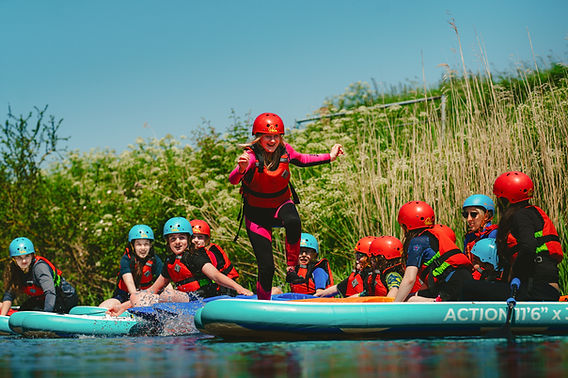

Sleepaway camp for anxious kids can work well when parents prepare their daughter with the right strategies and choose a camp with trained, supportive staff who know how to help nervous campers settle in. Research from Phillips Exeter Academy psychologist Dr. Christopher Thurber shows that 83% of campers experience homesickness on at least one day of camp, which means anxiety before and during camp is the norm, not the exception. More importantly, Thurber’s prevention research found that combining parent coaching with child coping education lowered first-year homesickness intensity by roughly 50%. The anxiety your daughter feels is not a sign she should stay home. It is a signal that she needs preparation, support, and a camp environment designed to meet her where she is. This article covers what causes camp anxiety, how to tell if your child is ready, what the research says about preparation, and how the right camp turns nervous arrivals into confident girls who ask to come back next summer.
Sleepaway Camp for Anxious Kids and Why It Can Still Work
Sleepaway camp for anxious kids can still work because anxiety before a new experience is a normal developmental response, not a disqualifier. The Centers for Disease Control and Prevention reports that 11% of children ages 3 to 17 in the United States have a current diagnosed anxiety disorder. The Anxiety and Depression Association of America puts the number at 4.5 million children living with diagnosed anxiety nationwide. The National Institute of Mental Health estimates that 31.9% of adolescents ages 13 to 18 will experience an anxiety disorder at some point during their teen years. Clinically diagnosed anxiety in children increased by 31% between 2017 and 2021, according to a cohort study of 1.7 million individuals published in JAMA Network Open.
These numbers mean that camps across the country receive anxious children every single session. Camp professionals are trained for this. The American Camp Association (ACA) reports that 92% of campers say camp helped them feel good about themselves, and 70% of parents say their child gained self-confidence during the camp experience. These outcomes do not happen in spite of anxiety. They happen because camp gives anxious children exactly what they need: a structured, supportive environment where they can practice independence, build friendships, and discover they are more capable than they believed. Understanding what campers can expect before arrival helps both parents and daughters picture the experience clearly.
What Causes Camp Anxiety in Children?
Camp anxiety in children is caused by a combination of fear of the unknown, separation from parents, social worry, and loss of familiar routine. Each trigger activates a different part of the anxiety response, and most anxious campers experience more than one at the same time.
- Fear of the unknown. A child who has never slept away from home does not know what the cabin looks like, who will be in her group, what the food tastes like, or where the bathroom is. Uncertainty produces anxiety because the brain cannot predict what will happen next.
- Separation from parents. The American Academy of Pediatrics defines homesickness as distress tied to actual or anticipated separation from home and attachment figures, marked by longing and preoccupying thoughts. Separation anxiety is developmentally normal in very young children and can resurface in older children facing a prolonged time away for the first time.
- Social worry. Girls often worry about fitting in, making friends, and being left out. The fear of not knowing anyone in the cabin can feel overwhelming before arrival, especially for children who struggle with social confidence at school.
- Loss of routine. Anxious children rely on predictability. A new schedule, new people, and new activities all at once can feel like too much change happening simultaneously.
The good news is that every one of these causes has a specific countermeasure. Fear of the unknown responds to information and familiarity. Separation anxiety responds to graduated practice. Social worry responds to structured bonding activities on the first day. Loss of routine responds to a predictable daily schedule that tells a girl exactly what comes next. The preparation strategies later in this article target each cause directly.
What Is the Best Age to Go to Sleepaway Camp?
The best age to go to sleepaway camp is between 8 and 12 years old for most children, although readiness matters more than age alone. The Child Mind Institute and the American Camp Association both note that children are generally ready for overnight camp around ages 10 to 12, though some camps accept children as young as 6 with age-appropriate programming and higher staff ratios.
| Age Range | Typical Readiness Level | Session Length to Consider | What Parents Should Watch For |
| 6 to 7 | Early; benefits from very short sessions with high adult-to-camper ratios | 1-week sessions or shorter mini-camps | Can she handle basic self-care (dressing, bathroom, hygiene) without help? |
| 8 to 9 | Developing; may still need extra support from counselors on first days | 1-week sessions recommended for first-timers | Can she ask an unfamiliar adult for help when she needs it? |
| 10 to 12 | Most common starting age; strong readiness indicators in most children | 1-week or 2-week sessions | Can she recover from a disappointment without a parent stepping in? |
| 13 and older | High readiness; may benefit from leadership or CIT programs | 2-week sessions or longer | Does she want to go, or is a parent pushing the idea? |
Sources: Child Mind Institute; American Camp Association; Dr. Christopher Thurber, Phillips Exeter Academy
A child who has successfully slept at a friend’s house, stayed with a relative for a weekend, or attended a day camp program shows signs she can handle a short separation. A child who has never spent a night away from her parents may benefit from practicing shorter separations first. We offer both one-week and two-week sessions so families can choose the length that fits their daughter’s comfort level. Many first-time families start with a one-week session to build what we call “stay-away-from-home confidence” before trying a longer stay the following summer.
What Are the Signs My Child Is Ready for Sleepaway Camp?
The signs that a child is ready for sleepaway camp include the ability to handle basic self-care, willingness to ask adults for help, capacity to recover from a disappointment, and some prior experience being away from home. Dr. Christopher Thurber’s research for the ACA identifies a practical readiness framework: can your child do basic self-care, ask adults for help, and recover from disappointment without you immediately stepping in? If the answer is yes to all three, your daughter is on the right road.
Readiness does not mean the absence of nervousness. A girl who says “I want to go but I am scared” is showing readiness, because she is expressing both desire and awareness of her feelings. That combination signals maturity. A girl who has no interest at all and is being forced by a parent may not be ready, regardless of her age. The desire to try, even alongside the fear, is the strongest readiness indicator. Parents can review our frequently asked questions to address specific concerns before making the decision.
Should I Send My Anxious Child to Camp?
Yes, you should send your anxious child to camp in most cases, because the controlled challenge of camp is one of the most effective ways to build resilience, independence, and coping skills that anxious children need most. The Child Mind Institute emphasizes that summer camp hones skills critical for future success: resilience, self-reliance, and social adaptability. The camp experience helps children separate in a healthy way from parents, develop social skills, and cultivate independence. These are precisely the skills anxious children get the least practice with at home, where parents naturally step in to smooth out discomfort.
There is one important exception. If your daughter’s anxiety rises to a clinical level that interferes with daily functioning, including eating, sleeping, or attending school, consult a mental health professional before enrolling. The Child Mind Institute advises watching for physical symptoms of fear (cold or clammy hands, persistent nausea, headaches), excessive tearfulness, hiding, nightmares about separation, and questions like “What if something happens to me or you when I am away?” If these symptoms disrupt normal life at home, professional support should come before camp. For the majority of children who feel nervous but can still function, camp is not a place to avoid. Camp is the place where they learn they can handle more than they thought.
How to Prepare a Child for an Overnight Camp
To prepare a child for an overnight camp, start 8 to 12 weeks before departure and work through a graduated series of conversations, practice separations, and practical steps that build familiarity and reduce uncertainty. Dr. Christopher Thurber’s prevention research found that combining parent coaching with child coping education lowered first-year homesickness intensity by roughly 50%. Preparation is not one conversation the night before. It is a systematic process over several weeks that gives an anxious child time to absorb, ask questions, and build confidence gradually.
- 8 to 12 weeks before camp: Involve your daughter in choosing the camp. Look at the website together, watch camp videos, and talk about activities she is excited to try. Ownership over the decision reduces the feeling that camp is something being done to her rather than something she chose.
- 6 to 8 weeks before camp: Begin practice separations. A sleepover at a friend’s house, a weekend at a grandparent’s home, or a night at a cousin’s house all simulate the experience of sleeping away from home. Each successful separation builds evidence that she can handle it.
- 4 to 6 weeks before camp: Shift conversations from abstract feelings to concrete details. Discuss what the cabin looks like, what meals are served, what a typical day includes, and what she should do if she feels homesick. Concrete information replaces the unknown with the known, and the known is far less scary.
- 2 to 4 weeks before camp: Pack together. Let her pick out items that feel personal and comforting. Review the packing list and make it a fun activity. Go through “what if” scenarios: what if you miss home, what if you do not like an activity, what if you do not know anyone in your cabin?
- The week before camp: Set a communication plan. Agree on when you will write letters or emails. Read through the preparation guide one more time. Keep the tone confident and warm.
- Opening day: Keep goodbyes short. A long, emotional departure increases mixed feelings for both of you. Say “I love you, I am proud of you, and I will write to you tonight,” and then walk away. The ACA and Dr. Thurber both emphasize that short goodbyes reduce the intensity of opening-day anxiety significantly.
How Can Practice Sleepovers Help Before Camp?
Practice sleepovers help before camp by giving a child graduated exposure to sleeping away from home in a low-stakes setting. Each successful night away teaches the brain that separation is survivable and even enjoyable. The ACA recommends practice separations as one of the most effective preparation tools for first-time campers. A sleepover at a familiar friend’s home is a small step. A weekend at a relative’s house is a bigger step. A Mother-Daughter Weekend at camp is an even larger step that introduces the camp environment while keeping a parent present. Each step builds on the one before, and by the time camp arrives, your daughter has a track record of successful nights away she can draw on when the nerves hit.
Can Parent Anxiety Make a Child’s Camp Anxiety Worse?
Yes, parent anxiety can make a child’s camp anxiety significantly worse because children absorb their parents’ emotional signals even when those signals are unspoken. The ACA states directly that parent confidence is contagious, and so is parent fear. The Child Mind Institute warns parents not to communicate their own anxiety before camp, because children pick up on feelings even without words. If a parent hovers on opening day, tears up at drop-off, or repeatedly asks “Are you sure you will be okay?”, the child interprets those signals as evidence that camp might actually be dangerous.
The most powerful thing an anxious parent can do is project calm confidence, even if that confidence is not fully felt. Say “I know you will have an amazing time” instead of “I hope you will be okay.” Say “I cannot wait to hear your stories” instead of “Call me if you need me.” Children who hear confidence from their parents arrive at camp with a head start. Children who hear worry arrive carrying their parent’s fear on top of their own. Parents who feel anxious themselves can reach out to the camp director before the session starts. We are happy to talk through concerns, answer questions, and help parents feel as prepared as their daughters.
What Is Homesickness and How Long Does It Last at Camp?
Homesickness is a normal emotional response to separation from home and familiar people, and it typically lasts one to two days for most campers before fading naturally. The American Academy of Pediatrics defines homesickness as distress and impairment tied to actual or anticipated separation from home and attachment figures, marked by longing and preoccupying thoughts. Dr. Christopher Thurber’s research confirms that 90% of children attending summer camp feel some level of homesickness, which means it is nearly universal.
Of the 83% of campers who report homesickness on at least one day, 81% recover relatively quickly with the support of friends, counselors, and engaging activities. Approximately 19% experience moderate-to-severe homesickness with obsessional thoughts of home. A smaller group, roughly 6 to 7%, experiences an intense version that persists throughout the session. For the vast majority, homesickness peaks on the first or second day and then fades as the child settles into the routine, makes friends, and gets absorbed in camp traditions and activities.
Understanding the homesickness timeline helps parents resist the urge to intervene too quickly. A tearful email on the first night does not mean camp is failing. It means camp is doing exactly what it is supposed to do: giving your daughter the chance to work through a hard feeling and come out stronger on the other side.
How Do Counselors Handle Homesick Campers?
Counselors handle homesick campers by acknowledging the child’s feelings, keeping her engaged in activities, connecting her with cabin mates, and providing consistent reassurance without dismissing her emotions. Trained camp counselors know that the worst response to homesickness is telling a child “There is nothing to worry about” or “Everyone loves camp.” Those phrases dismiss the feeling and make the child feel like something is wrong with her for having it.
Effective counselors validate the emotion first. They say things like “It makes sense that you miss your mom. That means you have a great family.” Then they redirect gently: “Let’s go try the activity you picked for this afternoon.” The combination of validation and engagement is what Thurber’s research identifies as the most effective approach. Here on Lookout Mountain, we train our counselors to watch for homesickness signs early, especially in first-time campers. Our opening day includes a cabin bonding activity that begins the moment parents leave, and within about 15 minutes, new girls are laughing, talking, and starting friendships that carry them through the rest of the session.
Should I Pick Up My Child Early If They Are Homesick?
No, you should not pick up your child early if they are homesick in most cases, because homesickness typically resolves within one to two days and leaving early prevents the child from experiencing the recovery that builds resilience. The ACA and Dr. Thurber both advise parents not to promise a “rescue” pickup before camp starts, because that promise gives the child an exit strategy that undermines her motivation to work through the discomfort. A child who knows she can call and go home at any time is less likely to push through the hard first day.
There is a threshold, however. Thurber’s research shows that approximately 7% of homesickness cases are severe. If your daughter is not eating, not sleeping, showing signs of depression, or experiencing anxiety so intense that it prevents her from participating in any activities after the first two to three days, it may be time to bring her home. If that happens, do not frame it as failure. Focus on what she did accomplish, tell her she was brave for trying, and encourage her to try again next summer. A shortened camp stay is still a camp experience, and the effort itself deserves recognition. Families can always sign up for a one-week session the following year and try again with more preparation.
Does Sleepaway Camp Help Children with Anxiety?
Yes, sleepaway camp helps children with anxiety by giving them repeated, real-world proof that they can handle unfamiliar situations, build relationships, and recover from discomfort without a parent’s immediate help. The ACA reports that 92% of campers say camp helped them feel good about themselves, 70% of parents say their child gained self-confidence, and 96% of campers made new friends. These outcomes are especially meaningful for anxious children, because each one directly counters a core anxiety belief: “I cannot do this,” “Nobody will like me,” and “I will not be okay without my parents.”
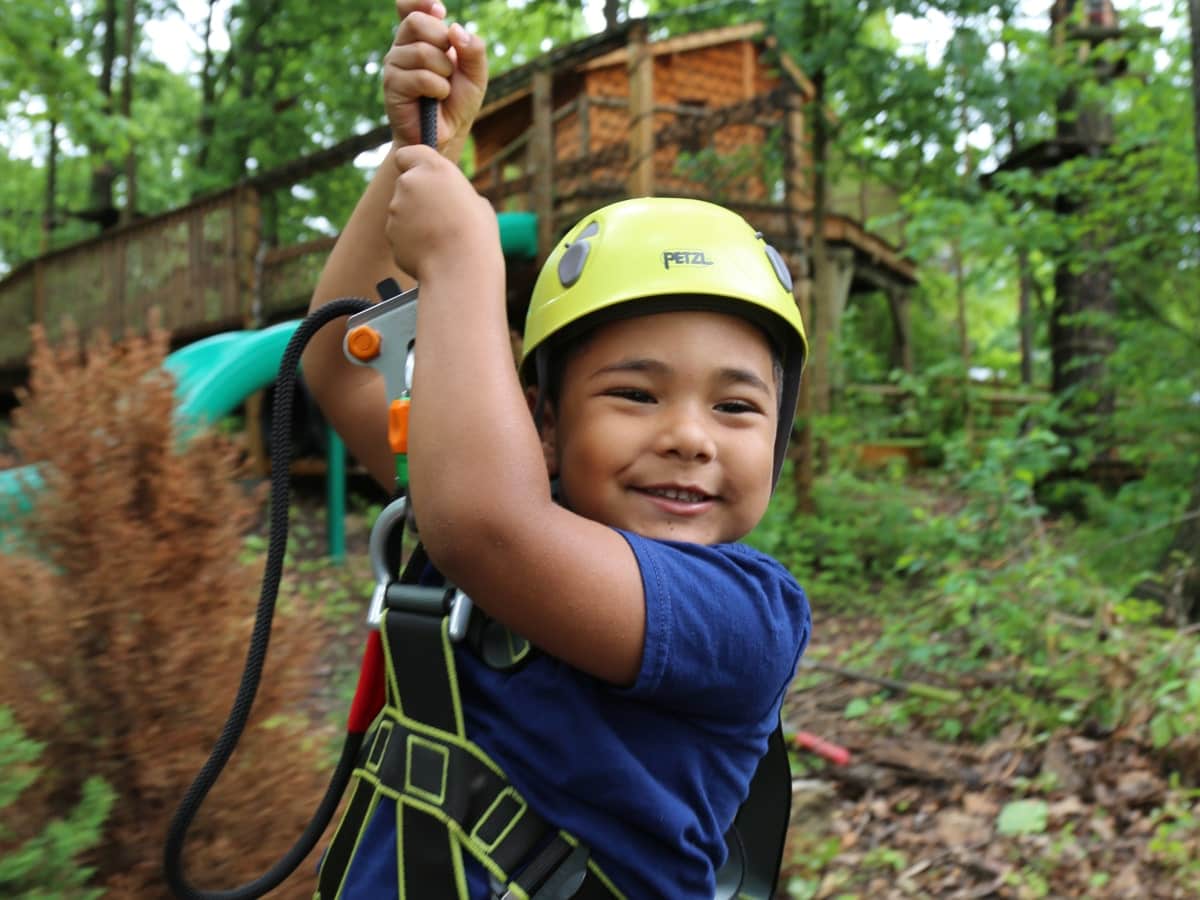
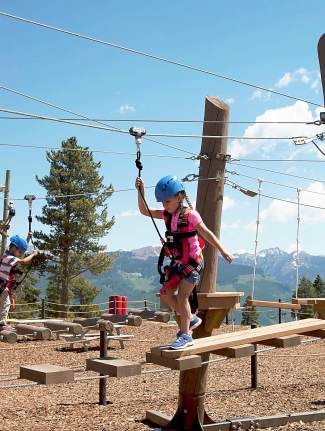
Camp works as an anxiety intervention because it provides what psychologists call mastery experiences, situations where a child succeeds at something she was afraid to try. When an anxious girl climbs a ropes course, paddles across a river, or stands up in front of her cabin to perform a skit, she collects evidence that her fear was bigger than the reality. That evidence accumulates across a one-week or two-week session into a deep, physical sense of “I can do hard things.” Families ready to give their daughter this experience can register for a session that fits her age and comfort level.
The confidence gains from camp do not end when the session is over. Research from the ACA’s National Camp Impact Study shows that campers develop independence, social awareness, and perseverance that persist long after the final campfire. An anxious girl who leaves camp knowing she survived and thrived carries that knowledge into the school year, into friendships, and into every new challenge she faces.
Frequently Asked Questions
Is It Safe to Send Kids to Summer Camp?
Yes, it is safe to send kids to summer camp when the camp is accredited and follows established safety standards. The American Camp Association accredits camps that meet over 300 health and safety standards covering staff training, emergency procedures, food safety, transportation, and camper supervision. ACA-accredited camps undergo regular reviews and inspections. Parents should ask about staff-to-camper ratios, counselor training, medical staff on site, and emergency communication protocols before enrolling.
Why Do Some Parents Hesitate to Send Their Child to Sleepaway Camp?
Some parents hesitate to send their child to sleepaway camp because of their own anxiety about separation, concern about their child’s ability to cope, fear of the child being unhappy, or worry about safety. ACA research shows that parent worry is one of the strongest predictors of camper homesickness, which means that addressing the parent’s fear is just as important as preparing the child. Parents who feel confident about camp produce children who feel confident about camp.
What If My Child Has Never Been Away from Home Before?
If your child has never been away from home before, start with practice separations well before camp begins. A sleepover at a friend’s house, a night with a relative, or a Mother-Daughter Weekend at camp all build the child’s comfort with being away. A one-week camp session is a good starting point for a child with no prior separation experience, because the duration is short enough to feel manageable while still providing a full camp experience.
Can My Child Bring a Comfort Item to Camp?
Yes, most camps allow children to bring a comfort item like a stuffed animal, a family photo, or a special blanket. A familiar object provides a physical connection to home that can ease the first night. We encourage campers to bring something small that makes them feel safe, especially first-time campers who may need that extra layer of comfort during the adjustment period.
What Happens on the First Day of Camp?
On the first day of camp, campers arrive, meet their counselors, settle into their cabins, and begin bonding with their cabin mates. We place first-time campers in cabins with other girls who are also attending for the first time, along with experienced campers who are eager to welcome new friends. After parents leave, a bonding activity begins immediately, and within about 15 minutes, new and returning campers are laughing and connecting. The structured first day removes the uncertainty that drives most opening-day anxiety.
Wrapping It Up
An anxious child and a successful camp experience are not opposites. They are two parts of the same story. The anxiety comes first, and the growth comes after. Research from Dr. Christopher Thurber shows that the right preparation can cut homesickness intensity in half, and data from the American Camp Association confirms that the vast majority of campers, including the anxious ones, leave camp feeling more confident, more connected, and more capable than when they arrived. The key is preparation, a supportive camp environment, trained counselors, and parents who project confidence even when they feel nervous themselves.
At Riverview Camp for Girls, we have been welcoming nervous first-time campers for decades, and we have watched thousands of anxious girls become the ones who beg to come back every summer. If your daughter is anxious about camp, she is not broken. She is normal. And we are ready for her. Reach us at 256-634-4043 or through our contact page to talk about how we can help.