Sleepaway camp builds independence in children by placing them in a structured, supportive environment where they make their own decisions, manage their own daily routines, solve their own problems, and form their own relationships, all without a parent stepping in to do it for them. Research from the American Camp Association (ACA) shows that 92% of campers say camp helped them feel good about themselves, and 70% of parents report their child gained self-confidence at camp. A 2021 study published in Children and Youth Services Review by Warner et al. confirmed that camp develops independence, perseverance, openness to new experiences, and self-identity in youth participants. These are not accidental byproducts of a fun summer. They are the direct result of a carefully designed environment where children practice being capable, resourceful, and brave every single day.
What Is the Point of Sleepaway Camp?
The point of sleepaway camp is to give children an extended, immersive experience of independence in a safe, supervised setting. Camp exists to do something that school, sports leagues, and family vacations cannot do on their own: remove the parent from the equation entirely and let the child discover what she is capable of when she has to rely on herself, her peers, and her counselors instead of her mom or dad.
Tom Rosenberg, former President of the ACA, explained in an interview with Let Grow that camp is fundamentally about independence: “Especially since the pandemic, kids haven’t had the opportunity to spend a lot of time away from home and away from their parents. So it is a growing experience for them.” Rosenberg noted that much of camp time is self-directed, and that self-direction is what produces the confidence gains that parents observe when their daughter comes home.
The ACA’s National Camp Impact Study by Spielvogel, Warner, and Sibthorp (2022) found that positive outcomes from camp, including willingness to try new things and openness to new experiences, persisted three full years after attending. Camp is not a week of fun that fades by September. Camp is a developmental experience that changes how a child sees herself and her ability to handle the world.
How Does Sleepaway Camp Build Independence in Children?
Sleepaway camp builds independence in children through four primary mechanisms that operate simultaneously throughout every day of the session: decision-making practice, self-care responsibility, problem-solving without parental intervention, and cabin community living. Each mechanism targets a different dimension of independence, and together they produce a child who returns home measurably more capable and confident than the one who left.
Choosing Her Own Activities Every Day
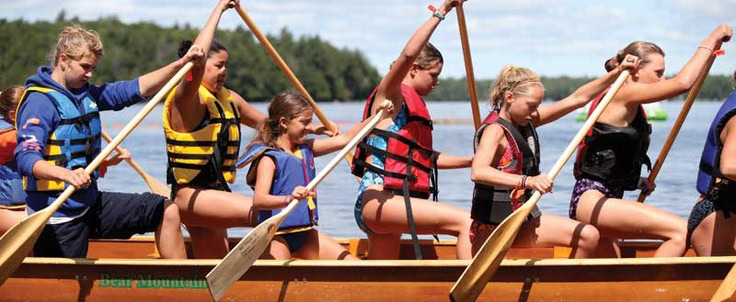
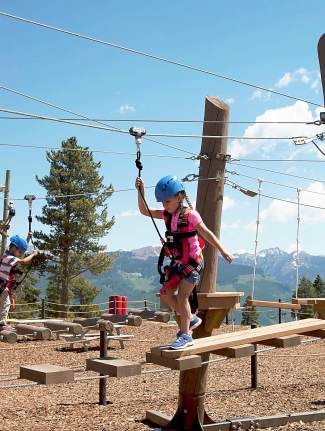
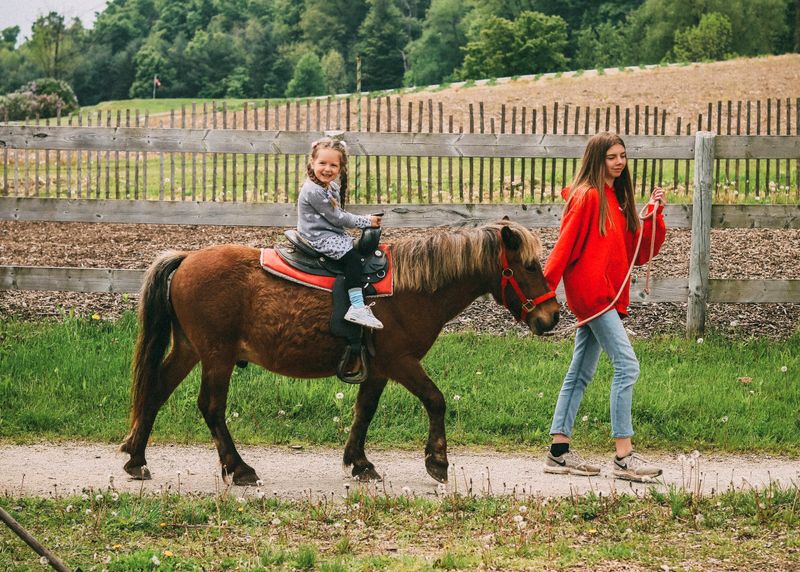
Daily activity selection is the most direct independence-building mechanism at camp because it requires the child to evaluate options, make choices, and live with those choices, all without a parent guiding the decision. At Riverview, each camper selects six activities on her first afternoon from options including horseback riding (both English and Western), swimming, canoeing, archery, tennis, gymnastics, cheerleading, dance, outdoor living skills, ropes course, and more. She participates in those six activities daily for the duration of her session.
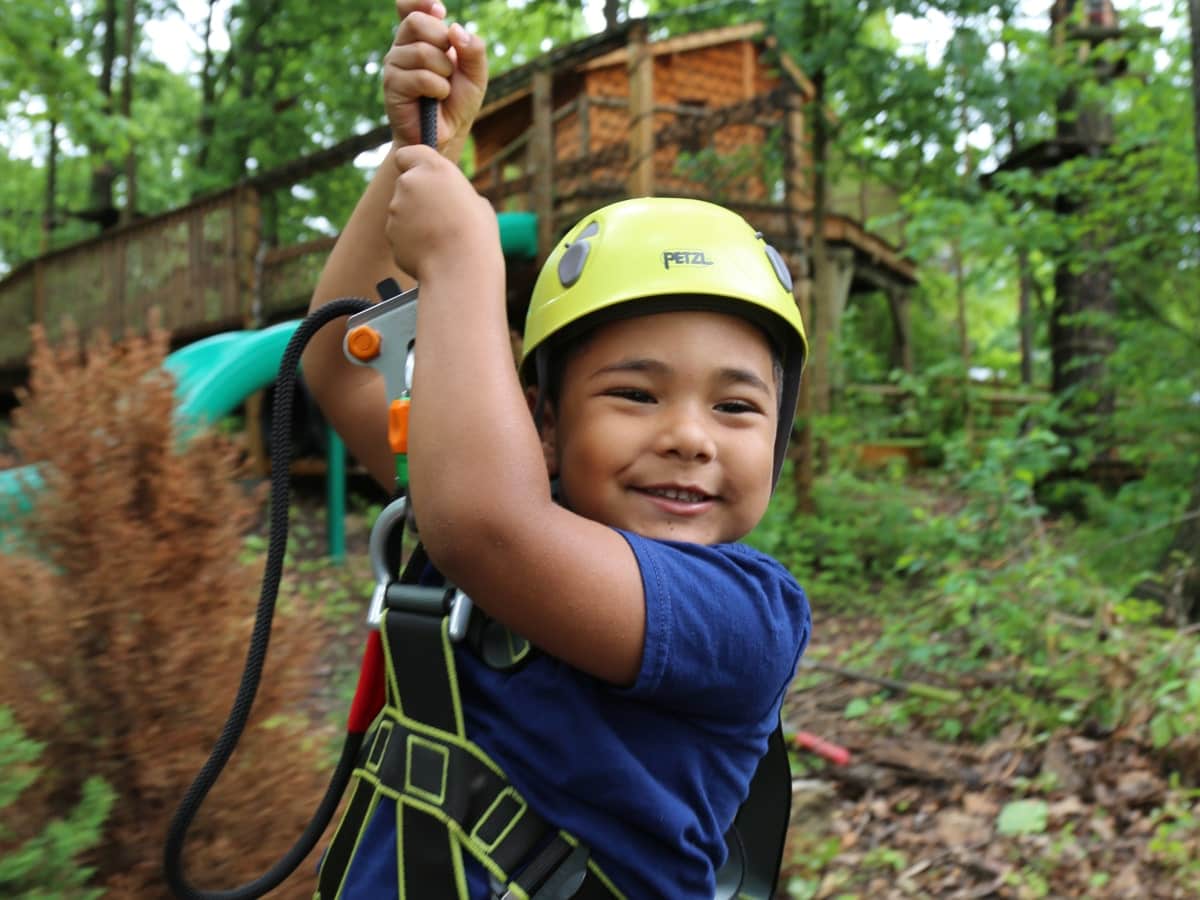
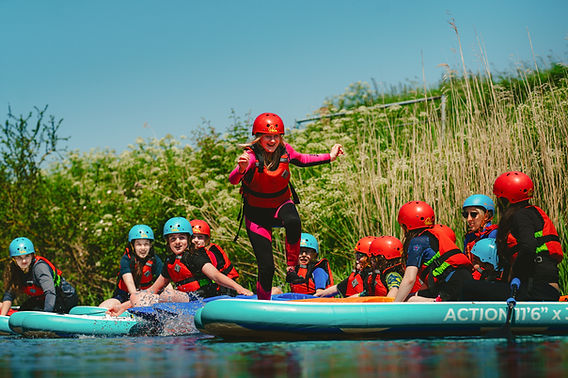
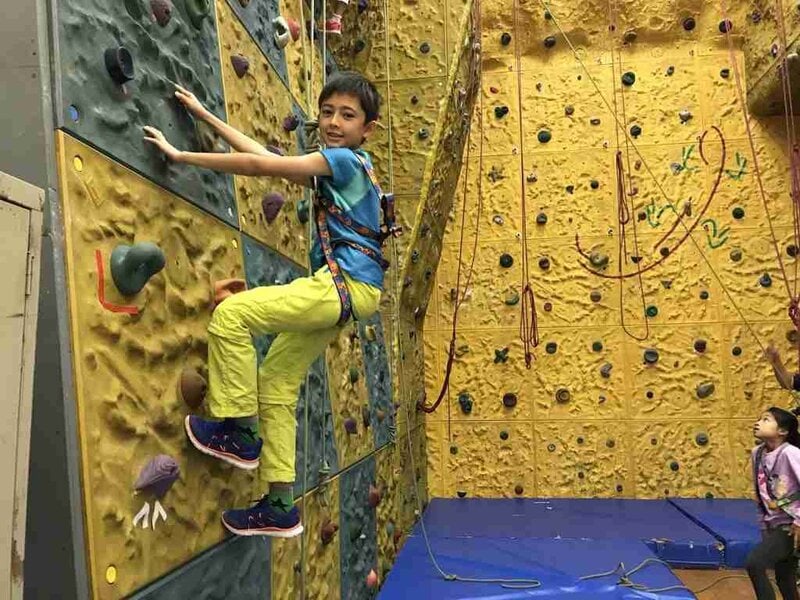
Creative options like arts and crafts, chorus and drama, and knitting give quieter campers a chance to shine in settings that match their temperament, while high-energy options like the climbing tower and river activities challenge more adventurous girls. This system gives the child ownership over her own experience. She is not following a schedule someone else created for her. She built it herself.
Activity selection also teaches her to evaluate her own interests and make decisions based on what she wants, not what her parents think she should want. A 2019 study by Richmond, Sibthorp, and Wilson published in the Journal of Youth Development found that 60% of camp alumni report camp helped them develop independence, self-efficacy, and decision-making skills. Activity selection is where that development begins.
Managing Daily Life Without a Parent
At camp, your daughter is responsible for tasks that you normally handle at home: making her bed, keeping her belongings organized, getting dressed and ready on time, showering and managing her own hygiene, hanging wet towels on the clothesline, and putting dirty clothes in her laundry bag. These sound like small things. They are not small. For a child who has never had to manage her own daily routine without a parent prompting each step, these tasks represent genuine independence practice.
Riverview’s daily schedule provides the structure that makes this self-management possible. Wake-up is at 7:00 a.m., followed by flag raising, morning watch devotional, breakfast, cabin cleanup, and then six activity periods. Each transition requires the child to know where she needs to be and get herself there. The routine is predictable, which means the child can focus on managing herself within it rather than worrying about what comes next.
Research consistently supports the idea that structured routines create the scaffolding children need to practice independence safely. A study published in the Journal of Youth Development by Garst et al. (2009) found that 86% of camp staff report campers become more willing to accept responsibility and include others during the session. The preparation resources Riverview provides help parents practice these skills at home before camp, so the transition feels manageable rather than overwhelming.
Solving Problems on Her Own
At home, parents solve most problems before the child even realizes they exist. At camp, the child encounters problems, small and large, that she must work through herself or with guidance from a counselor rather than a parent. A cabin mate borrows something without asking. The activity she wanted is full. She forgot her water bottle at the swimming pool. It rains during her favorite outdoor period.
Each of these moments is a problem-solving opportunity. The child learns to speak up respectfully, ask for help from a non-parent adult, negotiate with peers, adapt to changing circumstances, and recover from minor setbacks. These experiences build what psychologist Albert Bandura called self-efficacy: the belief that you can handle challenges when they arise. Self-efficacy grows through mastery experiences, and camp delivers mastery experiences every day.
At Riverview, camp counselors are trained to guide rather than rescue. When a camper comes to her counselor with a problem, the counselor does not solve it for her. The counselor helps her think through her options, choose a response, and carry it out. That process, repeated across dozens of small moments during a session, is what transforms a child who says “I can’t” into a child who says “I figured it out.”
Living in a Cabin Community
Cabin life is the social independence engine of camp. Your daughter shares a living space with 8 to 12 other girls and a counselor, which means she practices cooperation, compromise, respect for others’ space, and contribution to a group every single day. Cabin cleanup is a shared responsibility. Rest hour requires quiet consideration for others. Bedtime conversations require turn-taking and listening.
Living in a cabin teaches a form of independence that living at home does not: the independence to function as part of a community without a parent mediating every interaction. Your daughter learns that her actions affect the people around her, that she can resolve conflicts with peers directly, and that belonging to a group requires both giving and receiving. These are the exact social independence skills she will need in college dormitories, shared apartments, and professional workplaces.
How Does a Screen-Free Environment Help Children Grow?
A screen-free environment helps children grow by removing the digital safety blanket that many children use to avoid face-to-face interaction, discomfort, and boredom, three experiences that are essential for building independence. The ACA’s National Camp Impact Study found that 58% of youth reported camp helped them appreciate the importance of being present in the moment, specifically by taking time away from technology and developing in-person relationships.
Without a phone, your daughter cannot text you when she feels uncertain. She cannot scroll through social media when a conversation feels awkward. She cannot retreat into a screen when she is bored during rest hour. Instead, she talks to the girl in the next bunk, writes a letter home, reads a book, or simply sits with her own thoughts. Each of these alternatives builds a capacity that screen time actively undermines: the ability to tolerate discomfort and find her own way through it.
Riverview’s campus along Little River on Lookout Mountain in Mentone, Alabama, creates a natural environment where the pull of the outdoors replaces the pull of the screen. When a child can swim in an Outstanding National Resource Waterway, ride horses through wooded trails, or climb a ropes course tower, the absence of a phone stops feeling like a loss and starts feeling like freedom.
Why Are Phones Not Allowed in Camp?
Phones are not allowed in camp because they prevent the very independence camp is designed to build. A phone in a child’s hand is a direct line to a parent, which means the child never has to figure things out on her own. Every uncertain moment becomes a call home instead of a growth opportunity. Every social challenge becomes a text to a friend from school instead of a face-to-face conversation with a cabin mate.
The ACA’s research confirms that camp’s screen-free structure is one of its most powerful developmental tools. A child who spends even one or two weeks without a phone learns something that children with constant device access often do not: she is capable of handling her own life. That realization is the foundation of independence. Riverview is proudly phone-free, and parents consistently tell us that the screen-free experience is one of the most valuable aspects of the session.
How Does Camp Build Resilience in Children?
Camp builds resilience in children by providing controlled, manageable challenges alongside peer and counselor support. Resilience is not something a child is born with. Resilience is built through experience, specifically through the experience of facing something difficult, working through it, and discovering that she survived it. Camp delivers that experience repeatedly.
The challenges at camp are real but manageable. Homesickness during the first night is a challenge. Trying swimming in the river for the first time is a challenge. Performing in front of the camp during evening programs is a challenge. Sleeping in a cabin full of new people is a challenge. Each time a child works through one of these moments, her brain records the experience as evidence that she can handle difficulty. That evidence accumulates across the session and produces the resilience that parents notice when she comes home.
A 2022 study by Spielvogel, Warner, and Sibthorp confirmed that the resilience benefits of camp persist for years, not weeks. Research from Rustic Pathways found that 33% of parents report increased independence in their children after a camp program. The ACA’s data shows that 76% of campers report learning something new at camp, and the act of learning something new in a supportive environment is itself a resilience-building exercise.
| Independence Skill | How Camp Builds It | How Home Typically Works | How School Typically Works |
| Decision-making | Child chooses 6 activities daily from 20+ options | Parent selects activities and schedules | Teacher assigns tasks and schedules |
| Self-care routines | Child manages bed, hygiene, laundry, and schedule independently | Parent prompts and manages routines | Teacher manages classroom transitions |
| Problem-solving | Counselor guides the child to solve her own problems | Parent solves problems directly | Teacher mediates conflicts |
| Social independence | 24-hour cabin community requires cooperation and self-advocacy | Family unit with parental mediation | Classroom with teacher-directed interaction |
| Emotional regulation | Child manages homesickness, frustration, and excitement with counselor support | Parent provides immediate comfort | Limited opportunity during academic day |
| Screen-free presence | No phones; child uses face-to-face communication exclusively | Devices available throughout the day | Varies by school policy |
Sources: American Camp Association research; Warner et al. (2021), Children and Youth Services Review; Richmond, Sibthorp, & Wilson (2019), Journal of Youth Development
What Life Skills Does Sleepaway Camp Teach?
Sleepaway camp teaches a broad set of life skills that carry directly into school, friendships, college, and careers. The life skills children develop at camp include:
- Communication skills, practiced through daily face-to-face interaction with peers and counselors in a screen-free environment where conversation is the only way to connect
- Teamwork and cooperation, built through cabin responsibilities, group activities, and team challenges that require collaboration
- Time management, practiced by getting to six activities, meals, and evening programs on time every day without a parent reminding her
- Self-advocacy, developed by learning to ask for help, express needs, and speak up in group settings
- Emotional regulation, strengthened by managing homesickness, excitement, disappointment, and social friction throughout the session
- Leadership, cultivated through mentoring younger campers, taking initiative in activities, and eventually progressing into the Counselor-In-Training program
A 2020 study by Richmond et al. published in the Journal of Park and Recreation Administration found that 75% of employers have positive impressions of applicants who list summer camp experience on their resumes. The skills camp develops, leadership, teamwork, communication, and adaptability, are the same skills employers consistently rank as most valuable in new hires. Camp teaches them at an age when the brain is most receptive to forming these habits.
Do the Independence Gains From Camp Last Into the School Year?
Yes, the independence gains from camp last well into the school year and beyond. The ACA’s National Camp Impact Study found that increases in willingness to try new things and openness to new experiences persisted three full years after attending camp. Camp does not produce a temporary confidence spike that fades when school starts. Camp rewires how a child thinks about herself and her capabilities.
Parents who send their daughters to Riverview year after year describe a visible progression. The 7-year-old who cried at drop-off becomes the 9-year-old who walks to her cabin independently. The 9-year-old who needed counselor reminders about cleanup becomes the 12-year-old who mentors younger campers. The 12-year-old who led cabin activities becomes the 16-year-old who enters the Counselor-In-Training program. Each summer builds on the previous one, and the independence compounds.
Spielvogel, Warner, and Sibthorp (2022) also found that high-quality camp experiences result in better academic experiences the following school year. The connection makes sense: a child who has practiced self-management, time management, and problem-solving at camp applies those same skills in the classroom. Independence at camp transfers directly into independence at school.
How to Build Independence in Children
You build independence in children by giving them age-appropriate responsibility, allowing them to experience the natural consequences of their choices, and creating safe environments where they can practice being capable without a parent hovering nearby. Camp is one of the most effective tools for this because it provides all three elements simultaneously in an immersive setting.
Here are practical strategies for building independence in your daughter, starting before camp and continuing after she returns:
- Give her age-appropriate responsibilities at home before camp, such as making her own bed, packing her own lunch, choosing her own clothes, and managing a simple chore routine
- Practice overnight stays at a friend’s or relative’s house so she experiences sleeping away from home in a low-stakes setting
- Let her solve small problems on her own before stepping in; resist the urge to fix every frustration immediately
- Involve her in planning for camp by letting her choose her gear, pack her trunk, and review the camp schedule so she feels ownership over the experience
- Consider starting with a Mother-Daughter Weekend to let her experience the campus and meet the directors before committing to a full session
- After camp, resist the temptation to resume doing everything for her; maintain the responsibilities she practiced at camp so the independence gains stick
How Can Parents Reinforce Independence After Camp Ends?
Parents reinforce independence after camp ends by continuing the patterns their daughter practiced during the session. Keep the chores she managed at camp as part of her daily routine at home. Let her continue making decisions about her own schedule, activities, and social plans. When she encounters a problem at school or with friends, ask “What do you think you should do?” before offering a solution. Talk about her camp growth specifically: “I noticed you handled that on your own. That is the same kind of problem-solving you did at camp.”
The biggest mistake parents make after camp is reverting to pre-camp habits. If she made her own bed every morning for two weeks at camp, she can make her own bed every morning at home. If she resolved conflicts with cabin mates directly, she can try resolving disagreements with siblings before asking a parent to intervene. The independence is already built. The parent’s job is to protect it.
What Is the Right Age for Sleepaway Camp?
The right age for sleepaway camp depends on the child’s maturity, self-care ability, and interest in the experience. Most children are ready for overnight camp between ages 7 and 10, depending on whether they can manage basic hygiene, sleep away from home without significant distress, and express their needs to adults other than their parents. The ACA reports that over 26 million children and adults participate in camp experiences annually, with two-week sessions being the most common overnight format at 47% of programs.
Riverview offers sessions for girls ages 6 to 16, with both one-week and two-week options. A shorter session is ideal for younger or first-time campers, while returning campers often extend to two weeks or combine sessions. The camp’s outdoor living skills program teaches practical self-sufficiency alongside the standard activity rotation, giving campers additional independence-building experience in a wilderness context.
Are Summer Camps Good for Children?
Yes, summer camps are good for children because they produce measurable gains in independence, confidence, social skills, resilience, and emotional regulation that persist years beyond the session. The research is extensive and consistent. The ACA found that 96% of campers make new friends. Richmond, Sibthorp, and Wilson (2019) confirmed that 60% of alumni attribute lasting life skills to their camp experience. Warner et al. (2021) documented gains in independence, perseverance, self-identity, and openness to new experiences. Spielvogel, Warner, and Sibthorp (2022) demonstrated that these gains persist three years post-camp.
For girls specifically, camp provides something that few other environments offer during the critical developmental window of ages 8 to 14, when research shows girls’ self-confidence often drops. Camp counteracts that decline by placing girls in an environment where they are encouraged, celebrated, and challenged every day. At Riverview, we call this “Raising Girls to be Leaders,” and we see it happen with every camper who walks through our gates.
Frequently Asked Questions
Does Camp Help With Decision-Making Skills?
Yes, camp helps with decision-making skills because campers make dozens of independent decisions every day, from choosing activities to deciding how to spend free time to handling social situations. These daily decisions, made without parental input, build the confidence and judgment that children need for school, friendships, and eventually adult life. Research from the ACA confirms that decision-making is one of the core developmental outcomes of the camp experience.
What Is the Difference Between Independence and Self-Sufficiency at Camp?
Independence at camp means making decisions for yourself, such as choosing activities, managing social relationships, and deciding how to spend unstructured time. Self-sufficiency means managing daily tasks on your own, such as making your bed, keeping your belongings organized, getting to activities on time, and handling personal hygiene. Camp builds both simultaneously. Independence grows through decision-making practice, while self-sufficiency grows through daily routine management.
What Role Do Counselors Play in Building Camper Independence?
Counselors play the role of guides rather than replacements for parents. A counselor does not solve a camper’s problem for her. A counselor helps her think through her options, choose a response, and carry it out. Counselors also model independence by demonstrating confidence, responsibility, and problem-solving in their own behavior. At Riverview, many counselors are former campers who returned through the CIT program, which means they understand firsthand the independence journey each camper is on.
Is One Week Enough to Build Independence at Camp?
One week is enough to begin building independence at camp. Most children show noticeable growth in self-care, confidence, and social skills within the first five to seven days. However, two-week sessions produce deeper independence gains because the child has time to move past initial adjustment, settle into routines, and experience the repeated mastery that builds lasting self-efficacy. Many families start with one week and extend to two the following summer.
How Does the Independence Progression Work Across Multiple Camp Summers?
The independence progression across multiple summers follows a clear arc. In the first summer, a camper learns to manage her own daily routine and make basic decisions. In the second and third summers, she takes on more responsibility, mentors newer campers, and handles more complex social dynamics. By her fourth or fifth summer, she may enter leadership roles such as cabin helper or activity assistant. By her teen years, the Counselor-In-Training program provides formal leadership training. Each summer builds on the one before, producing compounding independence gains.
Can an Overprotected Child Still Benefit From Sleepaway Camp?
Yes, an overprotected child can benefit enormously from sleepaway camp, and these children often show the most dramatic growth because the gap between their starting point and their camp experience is the largest. Camp provides a safe, supervised environment where the child can practice independence at her own pace, with counselor support available whenever she needs it. The key is preparation: practice sleepovers before camp, communicate with the directors about your daughter’s needs, and start with a shorter session to set her up for success.
Wrapping It Up
Independence is not something you can teach a child by talking about it. Independence is something a child builds by doing it. Sleepaway camp gives your daughter hundreds of opportunities to practice decision-making, self-care, problem-solving, and social navigation in an environment that is structured enough to be safe and unstructured enough to be real. The confidence she gains at camp is not borrowed. It is earned, and it belongs to her.
We see that earned confidence every summer at Riverview Camp for Girls, and we would love to help your daughter build it too.
If you are ready to explore what camp could mean for your daughter’s growth, reach out to us anytime.