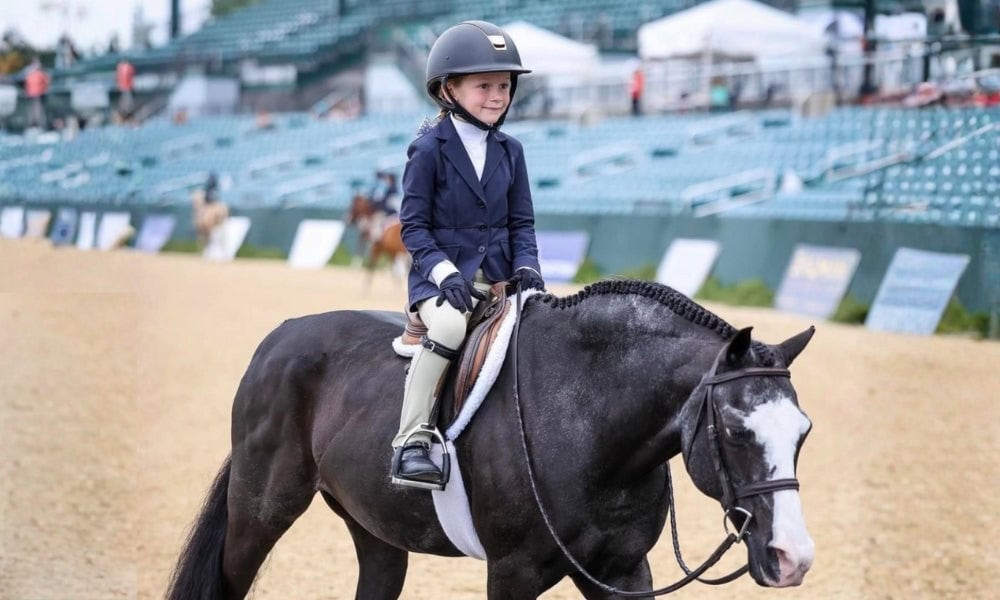

Most children can start formal horseback riding lessons around 6 to 8 years old, though casual pony rides and groundwork can begin as early as 2 to 3 years old. The age breakdown for riding readiness falls into three stages. Children ages 2 to 5 lack the attention span and muscle coordination for structured lessons, but they do well with supervised pony rides on a lead line, gentle grooming, and basic barn interaction. Children ages 6 to 8 can follow multistep directions, hold their balance independently, and build proper posture, which makes this the window most trainers recommend for formal instruction. Children ages 8 and up have the strength and focus needed for rapid skill progression, independent control of the horse, and more advanced riding like cantering and jumping. The signs that a child is ready include whether they can focus for a 30-minute lesson without losing interest, whether they can listen to and follow safety rules and multi-step instructions from an instructor, whether they have the basic balance and core strength to sit upright on a moving animal, and whether they show excited and comfortable interest around large animals rather than fear or forced participation.
What Age Can a Child Start Horseback Riding Lessons?
A child can start horseback riding lessons as early as age 6 to 8 for structured instruction, while children as young as 2 to 3 can participate in supervised pony rides and introductory groundwork. Most equestrian professionals and riding programs set their minimum age for formal horseback riding lessons between 5 and 7 years old. Children in this range have generally developed the balance, listening skills, and attention span needed to follow an instructor’s directions and safely interact with a horse.
The age range is broad because children develop at different rates. A mature 5-year-old who can focus for 30 minutes and follow multi-step directions may be ready for a lead-line lesson. A 7-year-old who has never been near a large animal may need a few sessions of grooming and groundwork before mounting up. According to the American Camp Association (ACA), 34% of American camps offer horseback riding programs, making camp one of the most common ways children first experience horses. The wide availability of these programs means parents have options for every readiness level.
Can a 2 Year Old Go Horseback Riding?
A 2 year old can sit on a small pony with full adult support, but this experience is a pony ride, not a horseback riding lesson. At 2 years old, a child’s cognitive development and attention span are not sufficient for structured riding instruction. Toddlers cannot follow multi-step verbal commands, and their motor control is still developing rapidly. A 2-year-old on a pony needs a handler holding the lead rope, a side-walker supporting the child’s body, and a session lasting no more than 5 to 10 minutes.
Pony rides at this age serve one purpose: building comfort and familiarity around horses. Research published in Frontiers in Public Health by Tokyo University of Agriculture found that the vibrations produced by horses during riding activate the sympathetic nervous system, which improves learning and self-control in children. That activation happens even during brief, gentle rides. Early pony exposure plants the seed for future riding readiness by reducing fear and creating positive associations with horses.
Parents who introduce toddlers to horses should focus on the experience, not the instruction. Let the child touch the horse’s nose, watch other riders, and sit in the saddle for a few minutes. These small interactions build a foundation that makes formal lessons easier when the child reaches the appropriate age.
What Is the Difference Between a Pony Ride and a Riding Lesson?
A pony ride involves a handler leading the horse while the child sits in the saddle; a riding lesson involves structured instruction where the child learns to steer, balance, and communicate with the horse independently. This distinction matters because many parents assume their toddler’s pony ride qualifies as a lesson. The two experiences develop different skills and serve different developmental purposes.
During a pony ride, the child is a passenger. The handler controls the horse’s speed and direction. The child practices sitting upright, feeling the horse’s movement, and getting comfortable with the height and rhythm. Pony rides suit children ages 2 to 5 and typically last 10 to 15 minutes.
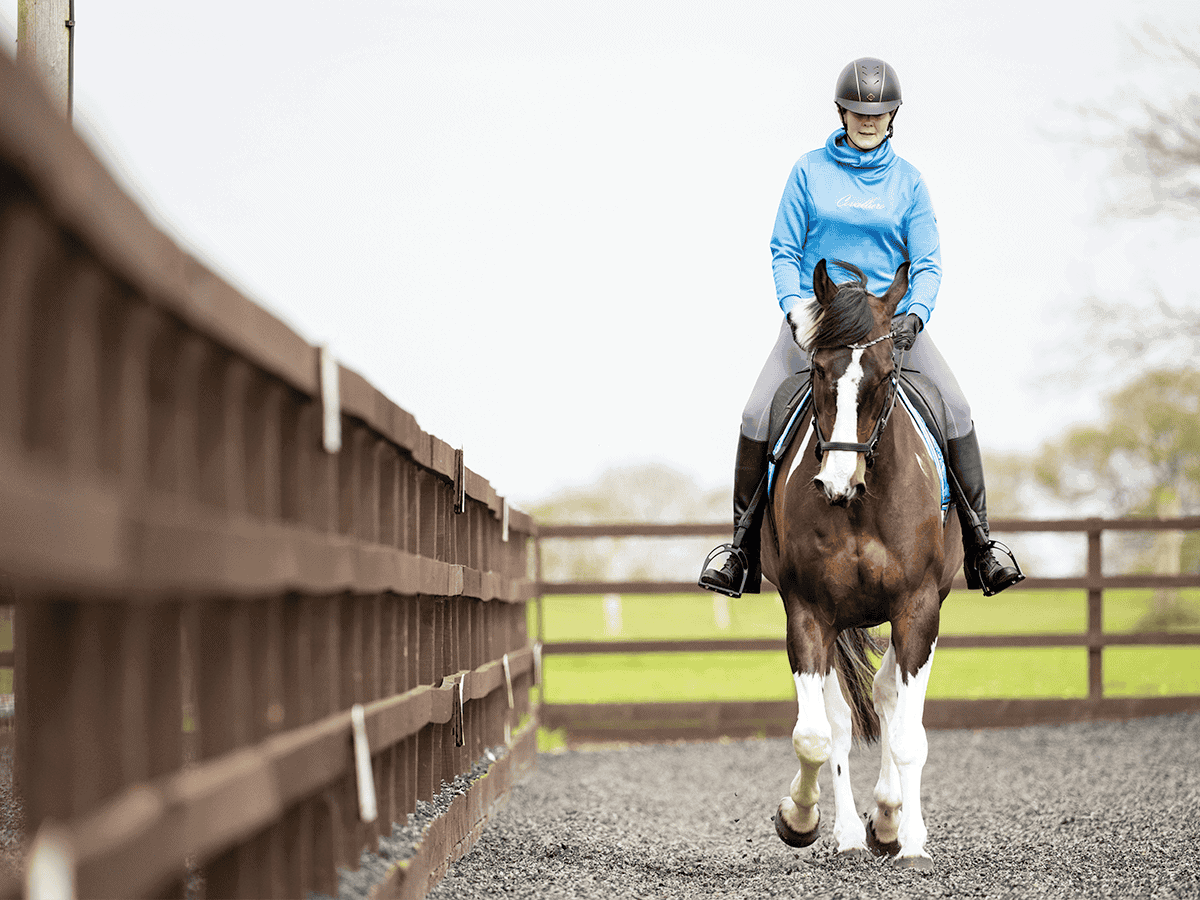
During a riding lesson, the child becomes an active participant. The instructor teaches rein handling, leg cues, steering commands, and proper riding posture. The child practices starting, stopping, and turning the horse. Riding lessons require sustained attention, physical coordination, and the ability to process verbal instructions in real time. Lessons for beginners typically last 30 minutes for children under 8 and 45 to 60 minutes for older children. According to the British Horse Society, 30 minutes of horseback riding three times per week qualifies as moderate-level exercise, making even short beginner lessons a meaningful physical activity.
How Do You Know If Your Child Is Ready for Horseback Riding?
You know your child is ready for horseback riding when they can follow multi-step directions, maintain focus for at least 30 minutes, show comfort around large animals, and express genuine interest in learning to ride. Age is a starting point, not a finish line. A child’s individual readiness matters far more than their birthday.
Riding instructors evaluate several readiness indicators before accepting a young student. These indicators predict how safely and effectively a child will learn in the saddle:
- Attention span: Can the child focus on a single activity for a 30-minute session without losing interest?
- Ability to follow directions: Can the child listen to and act on multi-step instructions like “hold the reins with both hands and sit up tall”?
- Physical coordination and balance: Can the child walk, run, and climb without frequent stumbling?
- Emotional maturity: Can the child manage frustration calmly and recover when something does not go as planned?
- Comfort around animals: Does the child approach horses with curiosity rather than fear?
- Genuine interest: Is the child asking to ride, or is this the parent’s idea?
A child who checks most of these boxes at age 5 may be ready for lead-line lessons. A child who struggles with attention span at age 7 may benefit from a few more months of barn visits and groundwork before mounting up. The readiness checklist applies at every age, and a good riding program adapts its approach to match each child’s development level.
What Does a Child Need Physically to Start Riding?
A child needs sufficient balance, core control, leg length to reach the stirrups, and hand coordination to hold the reins to start riding. A study published in ScienceDirect in 2023 found that eight weeks of horseback riding training significantly increased core muscle strength, core endurance, upper and lower extremity strength, and balance in healthy adolescents. Children do not need to arrive with athletic-level fitness. Riding itself builds the physical qualities it requires.
Core control is the most important physical prerequisite. The child must be able to sit upright without slumping and absorb the horse’s movement through their midsection. Leg length determines whether the child can safely use stirrups or needs a smaller pony. Hand coordination develops with practice, and instructors work with beginners on rein handling from the very first lesson.
What Can Children Learn at Each Age?
Children can learn different horseback riding skills at each age, progressing from passive pony rides to independent riding over several years. The progression follows a predictable developmental arc that mirrors the child’s growing physical and cognitive abilities. Here is what each age range typically looks like:
- Ages 2 to 3 (Early Exposure): Supervised pony rides lasting 5 to 10 minutes. Introduction to grooming tools. Learning to approach a horse calmly. Building comfort with the barn environment.
- Ages 4 to 5 (Lead-Line Basics): Lead-line riding with a handler controlling the horse. Learning to sit in the saddle with correct posture. Simple exercises like touching toes while mounted. Introduction to horse safety rules and barn etiquette.
- Ages 6 to 8 (Formal Lessons Begin): Independent walk and trot with instructor guidance. Learning rein handling, leg cues, and verbal commands. Progression from lead line to lunge line to independent control. Introduction to English riding classes including walk, trot, and basic steering.
- Ages 8 to 10 (Skill Development): Canter work. Introduction to jumping and trail riding. Increased responsibility for tacking up, grooming, and horse care. Development of independent decision-making in the saddle.
- Ages 10 and Up (Advanced Riding): Jumping courses, advanced dressage or Western disciplines. Trail riding with varying terrain. Competition readiness. Leadership roles like helping younger riders.
This progression assumes regular lessons. Children who ride only a few times per year will advance more slowly than children who ride weekly. The key is consistency, not speed. A child who builds a solid foundation in walk and trot at age 7 will canter more confidently at age 9 than a child who was rushed through the basics.
Horseback Riding Lessons for 5 Year Olds
Horseback riding lessons for 5 year olds focus on lead-line instruction, basic safety, and building comfort in the saddle. At 5, most children have completed kindergarten and developed enough discipline to follow simple directions from an instructor. A typical lesson at this age lasts 30 minutes and involves a handler holding the horse’s lead rope while the child practices sitting tall, steering gently, and performing mounted exercises like reaching for their toes or standing briefly in the stirrups.
Not every 5-year-old is ready. Children who have attended kindergarten for at least half a year tend to adapt faster to the lesson structure because they have practiced listening to an adult, waiting their turn, and following group rules. Instructors who specialize in young riders keep the atmosphere playful and positive, turning each skill into a game rather than a drill.
Horseback Riding Lessons for 6 Year Olds and Up
Horseback riding lessons for 6 year olds and up shift from lead-line riding to structured instruction with increasing independence. At 6, most children have the body awareness to isolate and move specific body parts on command (lower leg, hips, shoulders), which is essential for learning proper riding position. A 2017 study published in Frontiers in Public Health tested 106 children ages 10 to 12 and found that riding on a half-breed horse or pony improved the ability to perform Go/No-go tasks and solve arithmetic problems. The cognitive benefits of riding begin building from the first formal lesson.
By 7 or 8, most riders transition from the lunge line to fully independent control. They can walk, trot, steer around obstacles, and halt on command without a handler. This is when archery, swimming, and other activities at camp complement riding by building the overall coordination and confidence that carries back into the saddle.
What Types of Horseback Riding Lessons Are There for Kids?
The main types of horseback riding lessons for kids include lead-line lessons, lunge-line lessons, group lessons, private lessons, and summer camp riding programs. Each format serves a different purpose and suits a different age and experience level.
Lead-line lessons use a handler who walks alongside the horse, controlling its movement while the child focuses on balance and position. This format works best for children ages 3 to 6 who are not yet ready to steer independently. Lunge-line lessons attach the horse to a long line held by the instructor, allowing the horse to walk in circles while the child practices hands-free balance exercises and develops an independent seat. This format bridges the gap between lead-line and independent riding.
Group lessons place 3 to 6 riders in the arena at the same time, each on their own horse, following instructions together. Group lessons build social skills, encourage peer learning, and keep the cost per session lower than private instruction. Private lessons offer one-on-one attention and faster skill progression, which benefits children who need extra support or want to advance quickly.
Summer camp riding programs offer something private barn lessons cannot: daily immersion. When a child rides every day for a week or two, the repetition accelerates learning in a way that weekly lessons cannot replicate. Camp programs also surround the child with peers who are all trying something new together, which reduces self-consciousness and builds camaraderie around the shared challenge.
How Does Horseback Riding at Summer Camp Help Beginners?
Horseback riding at summer camp helps beginners by providing daily practice, certified instructors, age-appropriate horses, and a supportive peer environment that accelerates skill development. The ACA reports that each summer, more than 26 million children and adults take advantage of the camp experience in the United States, and horseback riding is among the most sought-after activities.
At a camp setting on Lookout Mountain in Mentone, Alabama, children who have never been on a horse before can select horseback riding as one of their daily activities and ride every single day for their entire session. That daily repetition builds muscle memory, balance, and confidence faster than a once-a-week lesson at a local barn. The structured camp schedule, with six activities per day, gives children variety while ensuring they return to the saddle consistently.
Camp also removes the performance pressure that some children feel in private lessons. When every girl in the ring is a beginner, nobody feels singled out for being new. Campers cheer for each other, share tips, and celebrate small victories together. Research from Washington State University found that children who participated in a 12-week equine-assisted learning program had significantly lower cortisol (stress hormone) levels compared to a waitlisted control group. The combination of horses, outdoor activity, and supportive community creates a low-stress environment where children learn faster and enjoy the process more.
We see this firsthand. Girls arrive for their first session nervous about horses and leave two weeks later trotting around the ring independently. The camp environment, with its trails through forests full of native wildflowers and rock formations, makes every trail ride feel like an adventure rather than a test.
Is Horseback Riding Safe for Young Children?
Yes, horseback riding is safe for young children when proper safety equipment, certified instructors, and well-trained lesson horses are part of the program. Like any physical activity involving animals, horseback riding carries inherent risk. Data from Nationwide Children’s Hospital shows that more than 65,500 people visit U.S. emergency departments each year for horse-related injuries, and 29.6% of those cases involve children ages 5 to 18. However, the injury rate in structured lesson environments with trained horses and proper supervision is far lower than these broad population figures suggest.
The overall injury rate in horseback riding among youth under 25 is 0.6 per 1,000 riding hours, according to a study published in the Journal of Family Practice using CDC data. Structured programs with certified instructors, properly fitted helmets, and well-trained lesson horses reduce that rate further. The vast majority of serious injuries occur during unsupervised recreational riding, not during professional instruction.
Parents should look for programs that require ASTM/SEI-certified helmets for every mounted activity, use horses specifically selected and trained for youth instruction, employ instructors with recognized certifications (CHA, PATH International, or equivalent), maintain a low student-to-instructor ratio, and enforce clear barn safety rules. ACA-accredited camps, for example, must meet up to 300 health and safety standards, including specific horseback riding standards that set high expectations for trained supervision and emergency procedures.
Should a Child Wear a Helmet When Horseback Riding?
Yes, a child should always wear an ASTM/SEI-certified helmet when horseback riding, without exception. The American Medical Equestrian Association calculates that ASTM/SEI-approved helmets have reduced all riding-related head injuries by 30% and severe head injuries by 50%. The U.S. Pony Club documented a 29% decrease in head injuries after implementing mandatory helmet use across its programs.
Head injury is the most common reason for hospitalization related to horseback riding. A fall from a horse can drop a rider 8 feet or more to the ground, and the human skull can fracture at impacts as low as 7 to 10 kilometers per hour. Every reputable riding program and summer camp requires helmets for all mounted activities. We provide riding helmets and require hard-soled shoes or boots with a defined heel to prevent the foot from sliding through the stirrup. Parents can consult the packing list for specific gear requirements before arrival.
What Safety Gear Does a Child Need for Riding?
A child needs three pieces of safety gear for horseback riding: an ASTM/SEI-certified equestrian helmet, boots or hard-soled shoes with at least a one-inch heel, and long pants that protect the legs from chafing against the saddle. The helmet protects against traumatic brain injury in the event of a fall. The heeled footwear prevents the foot from sliding too deeply into the stirrup and becoming dangerously wedged. Long pants reduce friction burns and provide a layer of protection against scratches from brush on trail rides.
Gloves are optional but recommended for beginners because they improve rein grip and prevent blisters. Safety vests, sometimes called body protectors, shield the chest, spine, and internal organs during a fall. While not universally required for beginner lessons, some programs recommend them for children learning to jump or ride at faster gaits.
Why Is Horseback Riding Good for Kids?
Horseback riding is good for kids because it builds physical fitness, strengthens emotional resilience, develops responsibility, and improves cognitive function simultaneously. Few activities offer the same combination of whole-body exercise, animal interaction, outdoor exposure, and problem-solving that horseback riding provides. Two out of three U.S. households with children (66%) participate in outdoor activities, according to the 2025 Outdoor Participation Trends Report, and riding offers benefits that go well beyond general outdoor recreation.
The physical benefits of horseback riding begin from the first lesson. Riding engages the core muscles, inner thighs, lower back, and arms continuously. The rider must absorb the horse’s three-dimensional movement (forward-backward, side-to-side, up-and-down), which activates the central and autonomic nervous system and builds balance that transfers to other sports and activities. Ann Swinker, Ph.D., a professor of Animal Science at Penn State University, found that handling, riding, and caring for a horse develops responsibility, accountability, patience, empathy, and self-confidence in children.
Research from multiple institutions confirms that horseback riding benefits children across physical, cognitive, and emotional development simultaneously. A 2023 study published in ScienceDirect documented the physical gains after eight weeks of riding training. A 2017 study in Frontiers in Public Health by Tokyo University of Agriculture measured the cognitive improvements in children ages 10 to 12. Research from Washington State University by Dr. Patricia Pendry measured the emotional and stress-related changes in students grades 5 through 8. The following table organizes the specific benefits each study documented.
| Benefit Category | Specific Benefits |
|---|---|
| Physical Development | Core muscle strength, balance, coordination, posture, upper and lower extremity strength |
| Cognitive Development | Improved Go/No-go reaction, arithmetic problem-solving, learning, memory, critical thinking |
| Emotional and Social Development | Reduced cortisol levels, improved self-awareness, self-management, empathy, relationship skills |
The emotional and social benefits deserve particular attention for children who struggle with confidence or stress. The Washington State University study measured cortisol levels in approximately 130 students and found that children who participated in a 12-week equine program had significantly lower stress hormone levels compared to a waitlisted control group. Lower afternoon cortisol levels, specifically, are considered protective against the development of mental health problems later in life.
How Does Horseback Riding Build Confidence in Children?
Horseback riding builds confidence in children by placing them in control of a large, powerful animal and rewarding calm, clear communication with immediate results. When a child asks a 1,000-pound horse to walk, trot, or turn, and the horse responds, the child experiences a sense of competence that is difficult to replicate in any other setting. Horses respond to the rider’s body language, emotional state, and physical cues. A nervous, hesitant rider produces a nervous, hesitant horse. A calm, decisive rider produces a responsive, cooperative horse. Children learn this connection quickly, and the feedback loop teaches them that their own emotional regulation directly affects outcomes.
We see this transformation happen at camp every summer. A girl who arrives on opening day afraid to touch a horse’s nose is cantering confidently by closing day. The ropes course builds a similar kind of physical bravery, but horseback riding adds the relational dimension of partnering with a living creature. That partnership deepens the confidence because the child knows the horse chose to cooperate, not because it was mechanical, but because the rider communicated effectively.
What Do Children Learn From Horseback Riding?
Children learn responsibility, patience, empathy, problem-solving, and physical self-awareness from horseback riding. Riding is not just a sport. The time before and after mounting teaches as much as the time in the saddle. Grooming a horse, picking hooves, carrying a saddle, and leading a horse to the ring all require focus, physical effort, and respect for the animal’s needs.
Responsibility comes from understanding that the horse depends on the rider for correct handling. Patience develops through the repetitive practice that riding demands. Trotting smoothly takes weeks of practice; rushing produces bouncing and discomfort. Empathy grows through the nonverbal communication that horses require. Children learn to read a horse’s ear position, body tension, and breathing to understand its emotional state. Problem-solving emerges when the horse does not respond as expected and the child must adjust their approach rather than force the outcome.
These skills transfer directly to school, friendships, and family life. A child who has learned to make friends at camp through shared horseback riding experiences carries those social skills home. The combination of physical challenge, emotional connection, and daily responsibility makes horseback riding one of the most developmentally rich activities available to children.
How Long Should a Child’s First Horseback Riding Lesson Be?
A child’s first horseback riding lesson should last 30 minutes for children under 8 and 45 to 60 minutes for children 8 and older. Shorter sessions prevent physical fatigue and mental overload, both of which reduce learning and increase injury risk. A 30-minute lesson gives a young beginner enough time to groom the horse, mount, practice basic skills at a walk, dismount, and help untack, without exhausting their attention or their leg muscles.
Children tire faster in the saddle than adults expect. Riding uses muscles that most children have never engaged in daily life, particularly the inner thighs, lower back, and abdominal stabilizers. After 30 minutes of concentrated effort, a 6-year-old’s core muscles fatigue, their posture deteriorates, and their ability to absorb instruction drops sharply. A good instructor ends the lesson while the child still feels successful, not after they have become frustrated or sore.
How Often Should a Child Take Horseback Riding Lessons?
A child should take horseback riding lessons at least once per week to maintain consistent progress, though two to three times per week accelerates skill development significantly. Weekly lessons work well for children attending school who ride at a local barn. The gap between lessons allows muscle recovery while keeping the skills fresh enough to build on the following week.
Summer camp programs offer a distinct advantage here. At camp, girls ride daily as one of their six chosen activities. That daily repetition compresses months of weekly learning into a single two-week session. A camper who arrives as a complete beginner can be steering independently at a walk and beginning to trot by the end of her stay. The camp schedule, which includes swimming, canoeing, and other activities between riding sessions, provides natural cross-training that strengthens the balance and coordination riding demands.
What Should Parents Look for in a Riding Program?
Parents should look for certified instructors, ACA or CHA accreditation, age-appropriate lesson horses, mandatory helmet policies, and a structured safety plan when choosing a riding program for their child. Not all riding programs are created equal, and the quality of instruction directly affects both the child’s safety and the pace of their learning.
Certified instructors hold credentials from organizations like the Certified Horsemanship Association (CHA) or the Professional Association of Therapeutic Horsemanship International (PATH). These certifications require demonstrated competence in both riding instruction and youth safety. Programs affiliated with the American Camping Association must meet up to 300 health and safety standards, including specific horseback riding standards that cover instructor qualifications, horse selection, emergency procedures, and equipment requirements.
Age-appropriate lesson horses are calm, well-trained animals specifically chosen for their temperament around children. These horses tolerate beginner mistakes without spooking, respond to gentle cues, and remain steady in unpredictable situations. A good riding program evaluates its horses regularly for behavioral suitability and retires any horse that shows signs of impatience or unpredictability with young riders.
Parents should also visit the facility before enrolling their child. Look for clean, organized barns with clear safety signage, well-maintained fencing, and horses that appear healthy and calm. Ask about the instructor-to-student ratio (4:1 or lower is ideal for beginners), the progression pathway for new riders, and the program’s emergency action plan. A program that welcomes parent questions and encourages facility visits demonstrates the transparency that good instruction requires.
Frequently Asked Questions
At What Age Can a Child Ride a Pony?
A child can ride a pony with full adult support as early as age 2 to 3. At this age, the child sits in the saddle while a handler leads the pony and a side-walker provides physical support. These sessions are brief, lasting 5 to 10 minutes, and focus on building comfort and familiarity rather than teaching riding skills. Children typically transition from led pony rides to formal pony lessons around age 5 to 6, when they develop the balance and attention span needed for structured instruction.
What Is the Best Age for a Child to Start Horse Riding Lessons?
The best age for a child to start horse riding lessons is between 6 and 8 years old for most children. At this age, children have developed sufficient body awareness, attention span, and physical coordination to follow an instructor’s directions and maintain balance independently. Some children are ready at 5, while others benefit from waiting until 8 or 9. Readiness depends on the individual child’s maturity, not a fixed birthday.
How Does Horseback Riding Compare to Other Youth Activities for Physical Development?
Horseback riding engages the core, legs, arms, and back simultaneously, providing a full-body workout that builds balance, coordination, and postural strength. Unlike team sports that emphasize running and ball-handling, riding requires the child to maintain dynamic equilibrium on a moving animal, which activates the vestibular system and deep stabilizer muscles in ways that ground-based activities do not. The British Horse Society classifies 30 minutes of riding three times per week as moderate-level exercise comparable to cycling or brisk walking.
Can Children Who Are Afraid of Horses Still Learn to Ride?
Yes, children who are afraid of horses can still learn to ride, but they should begin with groundwork rather than mounted activities. Spending time grooming, feeding, and leading a calm, gentle horse helps the child build trust and comfort at their own pace. Forcing a fearful child into the saddle creates negative associations that make future learning harder. A good instructor recognizes fear, respects it, and introduces horse contact gradually until the child expresses genuine readiness to mount.
What Should a Child Wear to Their First Riding Lesson?
A child should wear long pants, a fitted shirt (no loose fabric that could catch on equipment), and boots or hard-soled shoes with at least a one-inch heel to their first riding lesson. The heel prevents the foot from sliding through the stirrup. An ASTM/SEI-certified equestrian helmet is required for all mounted activity. Most riding programs provide helmets for beginners, but families who plan to ride regularly should invest in a properly fitted helmet of their own.
Do Children Need Their Own Horse to Take Lessons?
No, children do not need their own horse to take lessons. Riding programs and summer camps provide lesson horses that are trained specifically for youth instruction. These horses are selected for their calm temperament, steady gaits, and patience with beginner riders. Using a lesson horse actually benefits young riders because the horse already knows the routine and responds reliably to basic cues, which gives the child consistent feedback as they learn.
Putting It All Together
The right age to start horseback riding depends on the child, not the calendar. Toddlers as young as 2 or 3 can begin with supervised pony rides that build comfort and curiosity. Children ages 4 to 5 benefit from lead-line lessons and barn activities that teach safety and respect for horses. Formal structured lessons work best starting around ages 6 to 8, when most children have the physical coordination, attention span, and emotional maturity to learn independently. From there, the progression into trotting, cantering, trail riding, and beyond unfolds naturally with consistent practice.
What matters most is finding a program that matches the child’s readiness level, prioritizes safety, and creates an environment where learning feels like fun rather than pressure. Whether your daughter tries horseback riding for the first time at a local barn or selects it as one of her daily activities at Riverview Camp for Girls, the experience builds physical strength, emotional resilience, and a sense of accomplishment that stays with her long after she dismounts. If you are ready to give her that first ride, we would love to welcome her to camp. You can enroll today or call us at 256-634-4043 to learn more about our sessions and riding program.