Summer camp prevents summer learning loss by keeping children mentally active, physically engaged, and socially connected through structured daily routines and hands-on experiences that reinforce the skills they built during the school year. Unlike unstructured summer breaks where children lose academic ground, camp fills each day with problem-solving, teamwork, reading, creative expression, and real-world application of concepts that classrooms teach in theory.
This blog covers what summer learning loss is, how much academic ground children actually lose, why camp is one of the most effective ways to prevent it, and what specific camp activities keep young minds sharp from June through August.
What Is Summer Learning Loss and Why Does It Happen?
Summer learning loss, often called the “summer slide,” is the measurable decline in academic skills and knowledge that children experience during extended breaks from school. The summer slide happens because the brain treats unused skills the same way muscles treat unused movement. Without regular practice, reading fluency slows down, math computation weakens, and writing stamina drops. A child who could multiply fractions confidently in May may struggle with the same problems in September.
Summer learning loss is a real and well-documented phenomenon. A landmark meta-analysis published by the American Educational Research Association found that students typically experience a decline in achievement scores over summer vacation equivalent to one month of school-year learning. The decline hits math harder than reading because math computation depends on procedural repetition that stops entirely when school ends. Reading, by contrast, can be maintained through informal activities like pleasure reading, storytelling, and conversation, but only if those activities actually happen.
The summer slide matters because its effects are cumulative. A child who loses one month of learning each summer does not simply start the next year one month behind. That child starts behind and stays behind, because the teacher must spend weeks reteaching old material instead of introducing new concepts. By the time a student reaches middle school, those yearly losses compound into a gap that can span years of grade-level equivalency.
What Percentage of Learning Is Lost Over the Summer?
The percentage of learning lost over the summer ranges from 17% to 34% of the prior school year’s academic gains, according to research conducted by Brown University. Students who experienced learning setbacks during one summer were more likely to experience similar setbacks the following summer, confirming that the summer slide compounds over time.
Research from Harvard Graduate School of Education found that students lose approximately two months of grade-level equivalency in mathematical computation skills over the summer. A separate analysis by Math and Movement, drawing on multiple national studies, reported that 70% to 78% of elementary students lose math knowledge during the break, while 62% to 73% lose skills in reading. The numbers vary by study and measurement tool, but the pattern holds consistently: summer breaks cause measurable academic regression, and math suffers more than reading.
| Subject Area | Typical Summer Loss | Key Finding |
|---|---|---|
| Math Computation | Up to 2 months of grade-level equivalency | Procedural skills decline fastest without daily practice |
| Reading Comprehension | 1-2 months of grade-level equivalency | Low-income students lose reading skills; middle-income students hold steady or gain |
| Writing | Regression in fluency and stamina | Teachers rank writing regression as the 2nd or 3rd most common summer loss |
| Overall Achievement | 17-34% of prior year’s gains | Losses compound each summer and widen the achievement gap by middle school |
Sources: Harvard Graduate School of Education (math computation); Brown University / Atteberry & McEachin (overall achievement); American Educational Research Association / Cooper et al. (reading); Progress Learning 2024 national teacher survey (writing).
How Much Learning Do Kids Lose Over Summer?
Kids lose enough learning over summer that teachers must dedicate the first several weeks of the new school year to reteaching material from the previous grade. A national survey conducted by the National Summer Learning Association (NSLA) of 500 teachers across 16 school districts found that 66% of teachers spend at least 3 to 4 weeks reteaching skills at the start of each school year. Another 24% reported needing 5 to 6 weeks of reteaching time. Combined, 90% of teachers lose at least three weeks of potential new learning to summer recovery.
With approximately 180 instructional days in a typical school year, losing 15 to 30 days to review represents 8% to 17% of total learning time spent catching up rather than moving forward. The 2025 Education Recovery Scorecard, published jointly by Harvard University and Stanford University, reported that the average U.S. student was still nearly half a grade level behind pre-pandemic achievement levels in both math and reading based on spring 2024 test data. Summer learning loss contributed to and compounded those pandemic-era losses.
How Summer Camp Prevents Summer Learning Loss
Summer camp prevents summer learning loss by replacing unstructured idle time with a consistent daily rhythm of activities that exercise the same cognitive, social, and physical skills children use during the school year. Camp does not look like school, and that is exactly why it works. Children at camp solve problems, communicate with peers, follow instructions, manage time, read letters from home, write in journals, count scores, measure distances, and make decisions all day long. The learning happens through experience rather than lecture, which means children stay engaged without feeling like they are studying.
The American Camp Association’s National Camp Impact Study, the first longitudinal research project of its kind (2017-2022), confirmed that high-quality camp experiences promote lasting youth outcomes, with the strongest evidence emerging in independence, social awareness, and affinity for nature. These outcomes align directly with the social-emotional learning (SEL) competencies that schools explicitly teach during the academic year: self-awareness, self-management, responsible decision-making, relationship skills, and social awareness.
A Gallup survey conducted in partnership with the NSLA and the American Camp Association found that 30 million youth participated in structured summer opportunities in 2023. Nine in 10 U.S. superintendents regard summer learning programs as important, and 87% ranked maintaining or improving academic skills as a top benefit, according to the 2024-2025 Gallup/NSLA/AASA superintendent survey. Camp is one of the most widely used and research-supported tools for keeping children on track.
Why Is Routine Important for Preventing Summer Slide?
Routine is important for preventing summer slide because the disruption of daily structure is the single biggest contributor to summer learning loss. In a 2024 national survey of nearly 1,000 teachers by Progress Learning, 71% of educators ranked the disruption of routine and the lack of structured learning opportunities as a top-three factor driving summer regression. Twenty-eight percent ranked it as the number one issue outright.
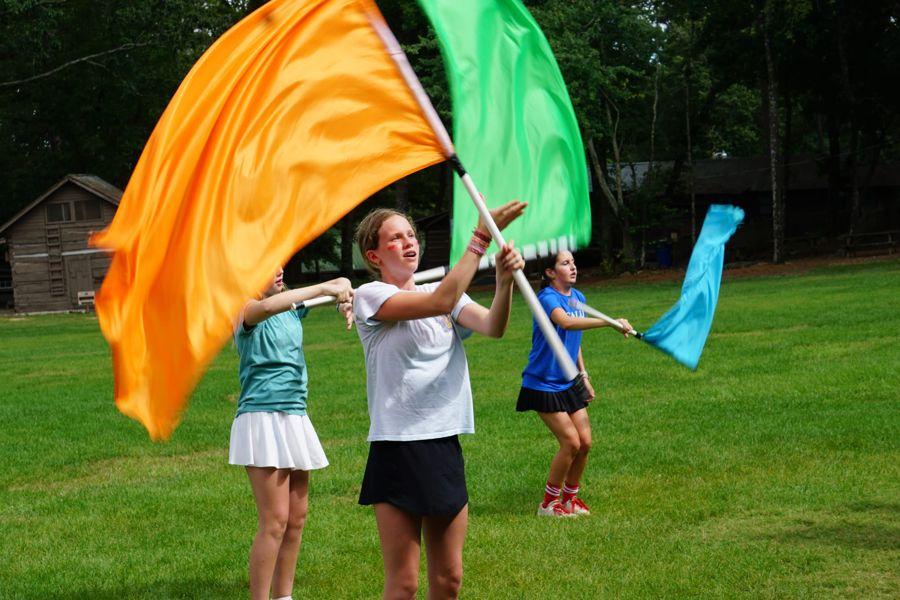
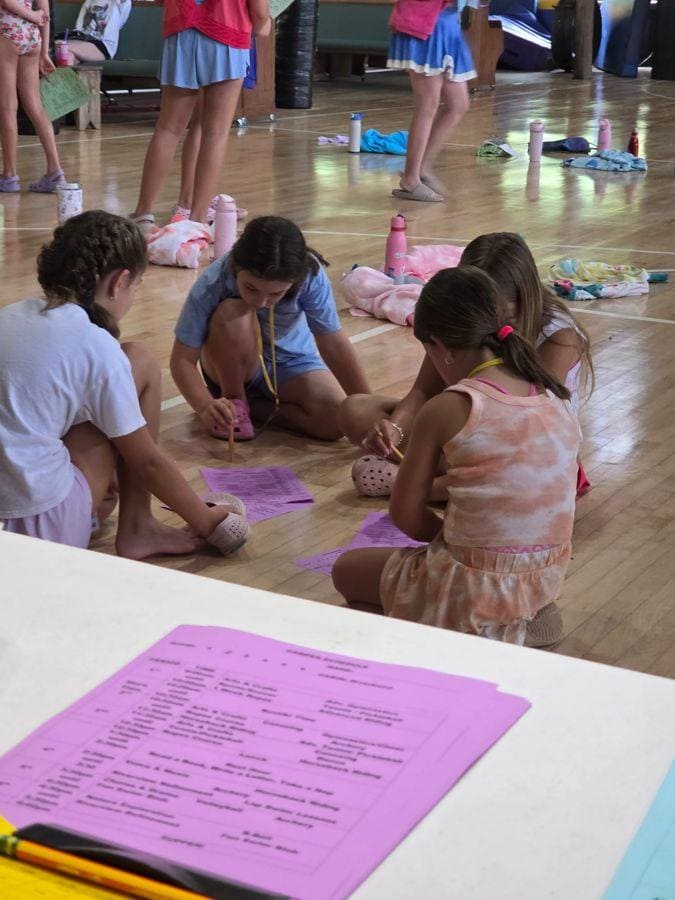
Camp provides the consistent structure that summer at home often lacks. Our daily schedule runs from 7:00 a.m. to 9:15 p.m. and includes wake-up, flag raising, a morning devotional, breakfast, cabin clean-up, six camper-chosen activities, meals, rest hour, shower time, evening programs, campfire songs, and lights-out. Every hour has a purpose. Every transition teaches time management. The rhythm of camp mirrors the rhythm of the school day closely enough that the brain maintains its pattern of focused engagement, but the activities are different enough that the experience feels like adventure, not obligation.
How Does Outdoor Learning Help Kids Retain Knowledge?
Outdoor learning helps kids retain knowledge by engaging multiple senses simultaneously and connecting abstract concepts to tangible, real-world applications. A child who learns about ecosystems by walking along a riverbank retains more than a child who reads about ecosystems in a textbook. The visual, auditory, and tactile engagement of outdoor learning creates stronger neural pathways for memory storage and recall.
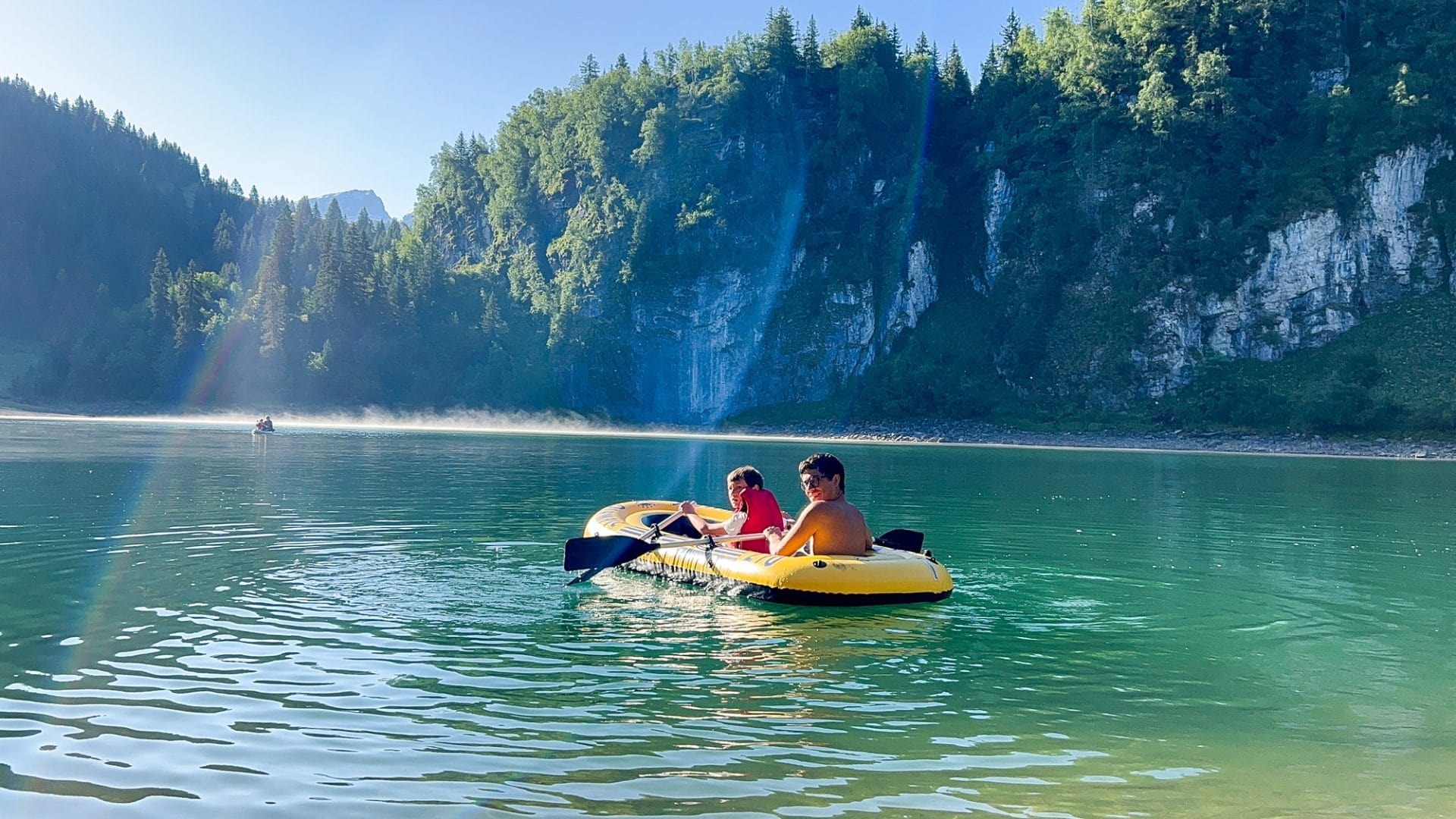
Outdoor living skills at camp teach measurement, navigation, observation, and cause-and-effect reasoning without ever opening a worksheet. A camper learning to canoe calculates distance, adjusts for current speed, and solves real-time physics problems about leverage and resistance. A camper on a nature hike atop Lookout Mountain identifies plant species, observes weather patterns, and practices the scientific method through direct observation. These activities reinforce the math, science, and critical-thinking skills that classrooms spend months teaching.
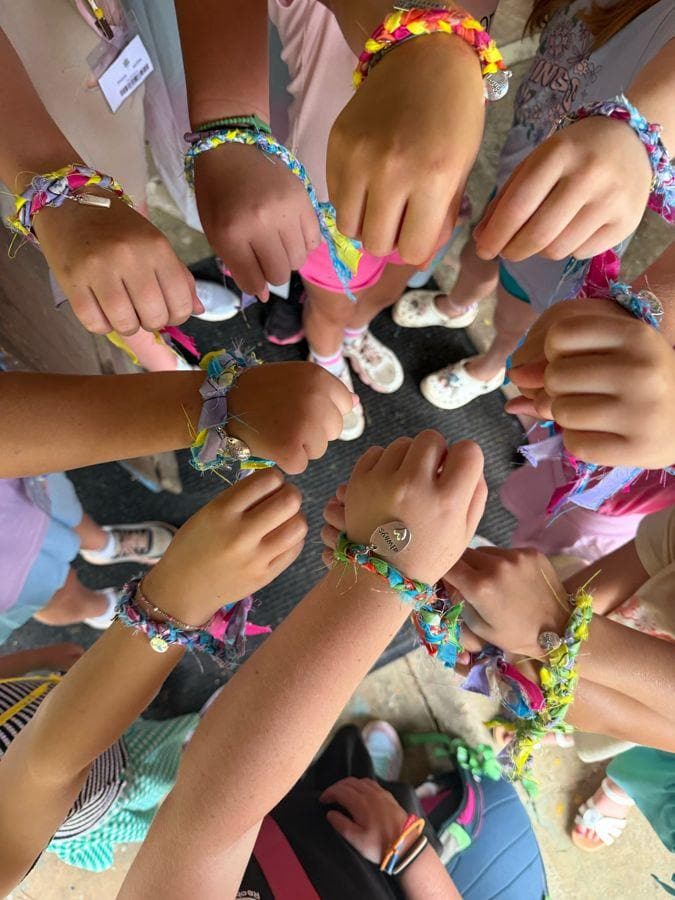
The RAND Corporation, which has conducted some of the most extensive research on summer learning programs, recommends that effective summer programs anchor learning in experiential, hands-on curriculum rather than worksheet-based review. Camp delivers exactly that. Every activity, from archery (which requires spatial reasoning and focus) to arts and crafts (which develop fine motor skills and creative problem-solving), functions as applied learning in a setting children love.
What Skills Do Kids Learn at Summer Camp?
Kids learn problem-solving, communication, cooperation, critical thinking, self-management, and creative expression at summer camp. These skills overlap significantly with the academic competencies that schools assess, which is why camp participation helps children maintain and even advance their learning during the break.
The skills camp builds follow a developmental progression, starting with the most immediate and building toward the most lasting:
- Listening and following instructions. Camp activities require campers to absorb verbal directions, process sequential steps, and execute tasks independently. This reinforces the same comprehension and procedural skills that classroom instruction depends on.
- Communication and vocabulary development. Campers talk with peers, counselors, and activity instructors throughout the day. Chorus and drama activities specifically develop verbal expression, memorization, and narrative structure. Letter-writing during rest hour reinforces written communication skills.
- Mathematical reasoning through real-world application. Counting scores in sports, measuring materials in crafts, calculating distances on hikes, and managing spending account balances all exercise math skills in practical contexts.
- Critical thinking and decision-making. Campers choose their own activities, solve cabin-group conflicts, and navigate social situations with counselor support. The ropes course specifically challenges campers to assess risk, plan strategy, and adapt under pressure.
- Social-emotional learning. Sharing cabin space, cooperating during team activities, managing homesickness, and building friendships all develop the SEL competencies that schools prioritize: self-awareness, empathy, relationship skills, and responsible decision-making.
- Creative expression and cognitive flexibility. Art projects, campfire skits, and themed evening programs require imagination, improvisation, and the ability to shift between different modes of thinking, a skill researchers call cognitive flexibility.
The ACA Youth Outcomes Study found that 76% of campers report learning something new at camp. Learning something new in a supportive, low-pressure environment builds the confidence that transfers directly back into the classroom when school resumes.
Does Summer Camp Count as Educational?
Yes, summer camp counts as educational. Camp provides experiential learning, social-emotional skill development, and cognitive engagement that complement and reinforce the skills children build during the formal school year. Margaret Raymond, PhD, founding director of the Center for Research on Education (CREDO) at Stanford University, has highlighted summer camps as uniquely effective settings for project-based, experiential learning that addresses educational gaps conventional remediation struggles to close.
Camp is not a substitute for classroom instruction, and it does not follow a formal curriculum with graded assessments. What camp does is maintain the neural pathways that school builds. A child who spends the summer solving problems, communicating with peers, reading mail, writing letters, and following a structured daily routine returns to school with those pathways intact. A child who spends the summer on a couch with a screen returns to school with pathways that have weakened from disuse.
How Does Physical Activity Improve Learning?
Physical activity improves learning by increasing blood flow to the brain, enhancing focus and memory, improving mood, and reducing the stress hormones that interfere with cognitive function. The connection between movement and academic performance is well established in neuroscience and education research. Children who move more think more clearly, retain more information, and demonstrate stronger executive function, the set of mental skills that includes working memory, flexible thinking, and self-control.
A randomized clinical trial published in the International Journal of Behavioral Nutrition and Physical Activity found that children who attended structured summer programs accumulated 15 or more additional minutes per day of moderate-to-vigorous physical activity (MVPA) and spent 30 fewer minutes in sedentary time compared to children who did not attend. At camp, swimming, horseback riding, field sports, gymnastics, and outdoor adventures keep campers moving for hours each day, far exceeding the activity levels most children reach during an unstructured summer at home.
Physical activity at camp also displaces screen time. Common Sense Media reported that tweens ages 8 to 12 average 5 hours and 33 minutes of daily entertainment screen time. A National Institutes of Health study found that children who spent more than two hours daily on screens scored lower on language and thinking tests. Camp replaces those sedentary screen hours with active, cognitively engaging experiences. The ACA’s National Camp Impact Study found that 58% of youth reported their camp experience helped them appreciate being present in the moment by taking time away from technology and developing in-person relationships.
What Are the Effects of Summer Camp on Child Development?
The effects of summer camp on child development include measurable gains in self-esteem, independence, social awareness, physical fitness, and emotional resilience. These are not abstract benefits. The ACA’s research, drawing on data from thousands of campers, parents, and staff across multiple years, documents specific developmental outcomes that camp produces.
The documented effects of camp on child development include:
- Self-esteem: 92% of campers report that camp helped them feel better about themselves, according to the ACA Youth Outcomes Study. Self-esteem directly supports academic performance because a child who believes she can succeed is more likely to persist through difficult schoolwork.
- Independence: The ACA National Camp Impact Study identified independence as one of the three strongest camp outcomes. Campers manage their own schedules, care for their belongings, and make daily decisions without parental guidance. This self-sufficiency carries into the school year as stronger self-management skills.
- Social awareness: Camp exposes children to peers from different backgrounds, communities, and perspectives. Living and working closely with others who think and act differently builds the empathy and perspective-taking that schools measure under social-emotional learning frameworks.
- Physical health: Camp attendance replaces sedentary screen time with active outdoor play. The physical fitness gains support cognitive function, mood regulation, and sleep quality, all of which influence academic performance.
- Affinity for nature: The ACA study found that camp strengthens children’s connection to the natural world. Time spent outdoors supports attention restoration, reduces anxiety, and promotes curiosity, the emotional foundation for learning.
These effects compound with each additional summer of camp traditions and community participation. Girls who return to our campus year after year demonstrate progressively stronger outcomes because the skills and relationships build on a growing foundation.
How to Prevent Learning Loss in the Summer
The most effective way to prevent learning loss in the summer is to keep children in a structured, engaging environment that exercises academic, social, and physical skills daily. Summer camp is one of the strongest options available because it combines all three dimensions into a single experience. Parents who cannot send their child to camp can still reduce the summer slide by maintaining daily routines, encouraging consistent reading, and incorporating learning into everyday activities.
Practical steps parents can take to prevent summer learning loss:
- Enroll your child in a structured summer program. Camp, enrichment programs, and community activities all provide the routine and engagement that unstructured time at home does not.
- Maintain a consistent daily schedule at home. Wake-up times, reading times, and bedtimes that mirror the school-year routine help the brain maintain its patterns of focused engagement.
- Encourage daily reading. Even 20 minutes per day of pleasure reading preserves vocabulary, comprehension, and fluency. Let children choose books that interest them.
- Use everyday activities for math practice. Cooking, grocery shopping, measuring for projects, and keeping score during games all reinforce number sense without feeling like homework.
- Limit recreational screen time. Replace passive screen hours with active, social, and creative activities that engage multiple cognitive skills simultaneously.
- Encourage writing. Journals, letters to friends or family, and creative stories keep writing skills active and build the stamina children need for school-year assignments.
Can Summer Camp Replace Summer School?
Summer camp cannot fully replace summer school because the two serve different purposes. Summer school targets specific academic deficiencies with formal instruction and graded assessments. Summer camp provides whole-child development through experiential learning, physical activity, and social-emotional growth. The two approaches complement each other rather than compete.
For children who are not academically at risk, camp alone is often sufficient to prevent summer learning loss. The structured routine, hands-on learning, daily reading and writing opportunities, and consistent social engagement maintain the cognitive pathways that school builds. For children with significant academic gaps, a combination of targeted instruction and camp participation produces the strongest outcomes. RAND Corporation research found that students who attended structured summer programs for at least 20 days across two consecutive summers outperformed peers in math, English language arts, and social-emotional learning.
Frequently Asked Questions
How Long Does It Take for a Child to Recover from Summer Learning Loss?
Recovery from summer learning loss typically takes three to six weeks at the start of the new school year. A national survey by the National Summer Learning Association found that 66% of teachers spend 3 to 4 weeks reteaching previous-year skills, while 24% need 5 to 6 weeks. Children who participated in structured summer programs, including camp, generally require less reteaching time because their skills remained active throughout the break.
Does Overnight Camp Prevent More Learning Loss Than Day Camp?
Overnight camp provides a more immersive experience than day camp because the structured environment extends across 24 hours, including morning routines, evening programs, and cabin-based social learning. The total immersion reinforces routine maintenance, independence, and interpersonal skills continuously, which provides broader developmental benefits. Both formats help prevent learning loss, but overnight camp offers the added dimension of self-sufficiency and around-the-clock community living.
What Age Should Kids Start Summer Camp for Academic Benefits?
Children as young as 6 or 7 can benefit academically from summer camp, according to the American Camp Association. The academic benefits of camp grow as children develop the self-management skills to engage independently in activities. Starting camp earlier establishes the annual routine of structured summer engagement that prevents the cumulative effects of year-over-year learning loss.
Do Kids Who Attend Camp Perform Better in School?
Research supports a positive association between camp attendance and school performance. The ACA’s National Camp Impact Study found that camp participation leads to improvements in engagement, belonging, and supportive youth-adult relationships, all of which are predictors of academic success. The 92% self-esteem gain reported by campers translates into greater willingness to take on academic challenges and persist through difficulty.
How Can Parents Reinforce Camp Learning at Home?
Parents can reinforce camp learning at home by asking children to share what they did and learned each day, encouraging them to write about their experiences, maintaining the camp routine’s early bedtimes and structured mornings, and continuing outdoor activities that keep the body and mind active. Reading together as a family and incorporating math into daily activities like cooking and shopping extend the camp’s learning benefits through the rest of the summer.
Is Summer Learning Loss Worse in Math or Reading?
Summer learning loss is consistently worse in math than in reading. Research from Harvard Graduate School of Education documents a loss of approximately two months of grade-level equivalency in math computation over the summer, compared to one to two months in reading. Math declines faster because computation depends on daily procedural practice, while reading skills can be partially maintained through informal activities like pleasure reading and conversation.
The Takeaway
Summer learning loss is real, measurable, and preventable. The research is clear: children who spend their summers in structured, engaging environments retain more of what they learned during the school year and return to school better prepared to move forward. Camp is one of the most effective tools available because it combines the three pillars that prevent the summer slide, consistent routine, experiential learning, and daily physical activity, into a single experience that children genuinely love.
We see the effects every summer. Girls arrive at Riverview Camp for Girls and spend their days solving problems on the ropes course, expressing themselves through chorus and drama, writing letters home during rest hour, and learning cooperation through cabin life. They leave camp with sharper minds, stronger bodies, and the kind of confidence that shows up in the classroom the moment school starts again. If you are looking for a summer experience that keeps your daughter learning while giving her the best weeks of her year, we would love to hear from you through our enrollment page.