Separation anxiety before camp is normal, and it is manageable with the right preparation. Nearly every child feels some degree of nervousness about leaving home for overnight camp, and most parents feel it too. Research by Dr. Christopher Thurber of Phillips Exeter Academy found that 96% of children spending two weeks or more at overnight camp report some homesickness on at least one day, which means your daughter’s anxiety about being away from you is not unusual. It is the rule, not the exception. The good news is that separation anxiety before camp responds well to specific strategies: honest conversations, gradual exposure to overnight stays, involvement in camp planning, and the support of trained counselors once she arrives. This article covers everything you need to know about why separation anxiety happens, how it differs from homesickness, what to say and what not to say, and how camp itself becomes one of the most powerful tools for helping your daughter build lasting confidence.
What Is Separation Anxiety and Why Does It Happen Before Camp?
Separation anxiety is the worry, fear, or distress a child experiences when she is apart from her primary caregiver or away from home. Separation anxiety before camp happens because overnight camp introduces multiple unknowns at once: a new place, new people, new routines, and an extended period away from the safety of family. The child’s brain reads those unknowns as potential threats, and anxiety is the body’s natural response to perceived threat.
According to the National Library of Medicine (NIH StatPearls), separation anxiety disorder (SAD) is the most frequently diagnosed childhood anxiety disorder, accounting for 50% of all referrals for anxiety-related mental health treatment in children. The clinical disorder affects approximately 4% of children ages 7 to 11. However, the vast majority of children who feel anxious before camp do not have a clinical disorder. They have a normal, healthy, temporary emotional response to a new experience. The distinction matters because normal pre-camp anxiety responds to preparation and reassurance, while clinical SAD may require professional support.
Children who are temperamentally cautious, who have had limited experience sleeping away from home, or who have gone through a recent life change such as a move, a new school, or a family transition are more likely to experience heightened anxiety before camp. Common signs of pre-camp separation anxiety include:
- Stomach discomfort, nausea, or headaches in the days before camp, especially on the morning of drop-off
- Difficulty sleeping or nightmares about being away from home
- Crying, clinginess, or repeated requests to stay home
- Excessive worry about what will happen at home while she is at camp
- Avoidance behaviors such as refusing to pack or talk about camp
- Asking repeated “what if” questions about unlikely worst-case scenarios
These symptoms do not mean your daughter is not ready for camp. They mean the experience matters to her, and her brain is doing what brains do when something new and significant is approaching.
What Triggers Separation Anxiety?
Separation anxiety is triggered by situations that involve physical distance from a caregiver, unfamiliar environments, unpredictable routines, and a loss of the child’s sense of control. For camp specifically, the most common triggers include the anticipation of drop-off day, sleeping in a new place surrounded by unfamiliar children, not knowing the daily routine, and worrying about what will happen at home while she is away.
Parental anxiety is also a powerful trigger. Children are remarkably skilled at reading their parents’ emotions. A study cited by the American Psychological Association confirms that children pick up on parental anxiety even when it is not verbalized. If a parent is visibly nervous about drop-off, the child interprets that nervousness as confirmation that there is something to be afraid of. Managing your own emotions on opening day is one of the most effective things you can do for your daughter.
What Are the Three Stages a Child Goes Through During Separation Anxiety?
The three stages a child goes through during separation anxiety are protest, despair, and detachment. These stages were first identified by psychiatrist John Bowlby in his research on attachment theory, and they describe the emotional arc a child follows when separated from a caregiver.
During the protest stage, the child actively resists the separation. At camp, this looks like crying at drop-off, clinging, bargaining to go home, or physical symptoms like stomachaches. During the despair stage, the child becomes quieter and withdrawn. She may seem sad or disengaged during the first activities. During the detachment (or adjustment) stage, the child begins engaging with the new environment, forming connections with counselors and cabin mates, and finding her rhythm in the daily routine. Most children at camp move through all three stages within the first 24 to 48 hours.
What Is the Difference Between Homesickness and Separation Anxiety?
The difference between homesickness and separation anxiety is timing. Separation anxiety happens before and during the moment of departure. It is the fear of what will happen once the child is away from her parent. Homesickness happens after the child has already arrived at camp. It is the longing for the familiar things she left behind: her bed, her routines, her family, her pets.
The two conditions overlap, and a child who arrives at camp with strong separation anxiety is more likely to experience homesickness during the first day or two. However, the coping strategies differ. Separation anxiety responds best to preparation before camp: practice sleepovers, previewing the schedule, and building familiarity with the environment. Homesickness responds best to in-camp support: counselor attention, activity engagement, mail from home, and the natural bonding that happens in the cabin.
Research by Dr. Christopher Thurber found that 83% of campers report homesickness on at least one day. The critical finding is that only 7% of cases are severe enough to disrupt functioning. The other 76% experience mild to moderate homesickness that passes quickly, often within 24 hours, as the excitement of camp takes over.
At What Age Does Separation Anxiety Typically Peak?
Separation anxiety typically peaks between 10 and 18 months in infants, according to Nationwide Children’s Hospital and the Children’s Hospital of Philadelphia. This infant peak is a normal developmental milestone tied to the child’s growing understanding of object permanence, the realization that a parent who leaves the room still exists somewhere else.
Separation anxiety typically resolves by age 3 in most children. However, a second wave of separation anxiety can appear during the school-age years, particularly between ages 6 and 9. A study published in Psychiatric Quarterly found that SAD prevalence is highest in the 6-to-9 age range in a cross-sectional analysis of 29,699 children. This age range aligns directly with the age many children attend overnight camp for the first time.
The Children’s Hospital of Philadelphia reports that separation anxiety affects 3% of children and 8% of teens at clinical levels. Even outside clinical diagnosis, many school-age children experience temporary anxiety before new separations such as camp, school trips, or sleepovers. The anxiety is not a regression. It is the child’s brain processing a genuinely new and significant experience.
What Age Is Hardest for Separation Anxiety?
The hardest age for separation anxiety at camp is typically between 6 and 8, when children are old enough to anticipate the separation in advance but not yet experienced enough with independent overnight stays to know they will be fine. A child in this age range may worry for days or weeks before camp begins, imagining worst-case scenarios that a 10- or 12-year-old with previous camp experience would not consider.
At Riverview, we see first-time campers in this age range move through their anxiety quickly once they settle into the daily schedule and begin choosing their six activities. The structured routine removes the uncertainty that fuels anxious thinking, and the excitement of horseback riding, swimming in the river, and arts and crafts replaces the worry with engagement.
Is It Normal for Older Kids to Have Separation Anxiety About Camp?
Yes, it is completely normal for older kids to have separation anxiety about camp. Older children and teens experience anxiety differently than younger children. Instead of crying and clinging, a 10- or 13-year-old may express her anxiety verbally: “What if something happens to you while I’m gone?” or “What if I don’t fit in?” Research from Riley Children’s Health confirms that older children can verbalize fears that younger children express through behavior, and these verbal fears deserve the same empathy and attention.
The strategy for older children is the same in principle but different in execution. Instead of role-playing goodbye scenes, you have honest conversations about her specific concerns, help her make a communication plan for writing and receiving letters, and encourage her to connect with the camp counselors as a trusted support system.
How Do You Prepare a Child With Separation Anxiety for Camp?
You prepare a child with separation anxiety for camp by building familiarity, practicing separations in low-stakes settings, involving her in every step of the planning process, and communicating openly about what she can expect. Preparation is the single most effective tool for reducing pre-camp anxiety because it replaces the “unknown” with the “known.”
Follow this preparation plan in the weeks before camp:
- Preview the camp together by watching the camp video, browsing photos, and reviewing the preparation page so your daughter can picture the cabins, the dining hall, and the activities she will choose
- Practice overnight stays at a friend’s or relative’s house, starting with one night and building to two; each successful sleepover proves to your daughter that she can handle being away from home
- Involve her in packing by letting her choose her clothes, her comfort items, and her stationery for writing letters home; ownership over her belongings gives her a sense of control
- Role-play the goodbye on drop-off day so she knows exactly what the moment will look like; rehearsed goodbyes reduce the shock of the real one
- Build a communication plan together by deciding how often you will write letters, what she should do if she feels sad, and who she can talk to at camp (counselors, the camp directors)
- Consider attending a Mother-Daughter Weekend first so your daughter can walk the grounds, meet the directors, and experience the campus in a low-pressure setting before the full summer session
- Prepare cheerful letters in advance and leave them with the camp on opening day so she receives mail at the very first mail call; according to Riverview’s preparation guides, there is nothing worse than being the only camper who does not get mail all week
The American Camp Association’s research consistently shows that children who are prepared for what to expect at camp adjust faster and report higher satisfaction. The ACA’s National Camp Impact Study found that 70% of parents reported their child gained self-confidence at camp, and that confidence begins building from the moment a child successfully manages her own anxiety.
What Should Parents Say to a Child Who Is Anxious About Camp?
Parents should say things that validate feelings, express confidence, and focus on concrete details. “It makes sense that you feel nervous. Camp is something new, and new things can feel scary at first. But you have done hard things before, and you handled them. Your counselors will be there for you the whole time, and I know you are going to have fun once you settle in.” This language acknowledges the anxiety without dismissing it and reinforces the child’s capability.
Ask open-ended questions instead of leading ones. “How do you feel about going to camp?” invites genuine reflection. “Are you worried about making friends?” plants a worry the child may not have had. Focus your conversations on concrete, positive details: what activities she might choose, what her cabin will look like, what songs they sing around the campfire.
What Should You Not Say to a Child With Separation Anxiety?
You should not say “I’ll come pick you up if you don’t like it.” This creates a mental escape hatch that undermines the child’s motivation to push through discomfort. Dr. Christopher Thurber’s research on homesickness confirms that “pick-up deals” become self-fulfilling prophecies. The child arrives at camp already focused on the exit, not the experience.
You should also avoid dismissing her feelings with phrases like “There’s nothing to worry about” or “Everyone loves camp.” These statements tell the child that her feelings are wrong, which makes her feel alone in her anxiety. Avoid comparing her to siblings or friends who adjusted more easily. Every child’s timeline is different. The goal is to help her believe she can handle the experience, not to shame her into pretending she is not afraid.
Does Ignoring Separation Anxiety Help?
No, ignoring separation anxiety does not help. Ignoring or dismissing a child’s anxiety communicates that her feelings are not valid, which can increase the anxiety rather than reduce it. Research from the Child Mind Institute confirms that trivializing a child’s concerns, such as saying “You’ll be fine” or “Just don’t think about it,” discourages the child from coming to you with problems in the future and can worsen the emotional distress.
The effective approach is acknowledgment paired with empowerment. You acknowledge that the feeling is real and understandable, and then you help her build a plan for managing it. “I know you feel nervous about being away from me. That is a normal feeling. Let’s talk about what you can do if that feeling comes up at camp.” This approach validates the emotion while shifting the child’s attention from the fear to the solution.
Psychologist Dr. Elesia Hines of Riley Children’s Health explains that parents should avoid removing the trigger entirely, because avoidance prevents children from learning to move past their anxieties. Instead, help your child build a tolerance to separation through gradual exposure: short stays at a friend’s house, then a full overnight, then a weekend, and finally a camp session.
What Helps a Kid With Separation Anxiety at Camp?
What helps a kid with separation anxiety at camp is a combination of trained counselor support, a predictable daily routine, activity engagement, communication with home, and a small comfort item from home. Camp itself is designed to address separation anxiety through structure, connection, and accomplishment.
The structured camp schedule removes the uncertainty that fuels anxiety. When your daughter knows that wake-up is at 7:00 a.m., followed by flag raising, morning watch, breakfast, and then her six chosen activities, she does not have to wonder what comes next. Predictability calms the anxious brain.
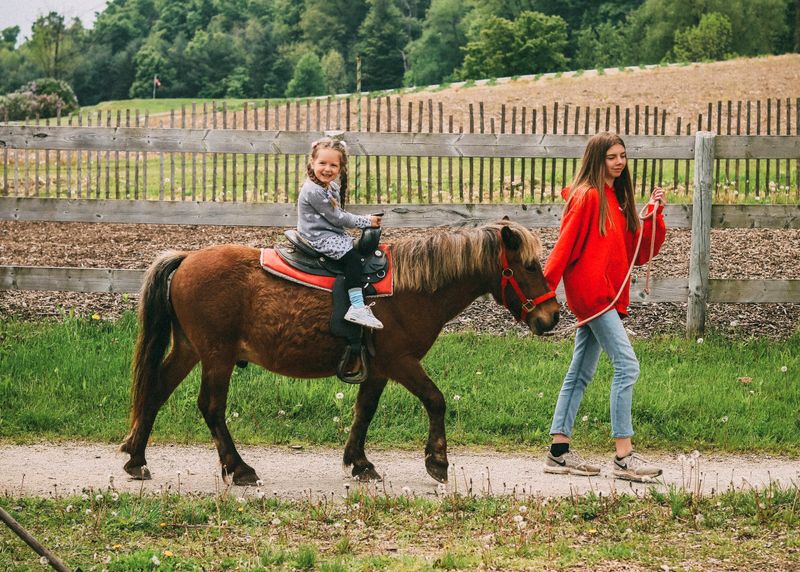
Activity engagement redirects her attention from what she is missing to what she is doing. Two hours of horseback riding, archery, and swimming leave very little mental space for worry.
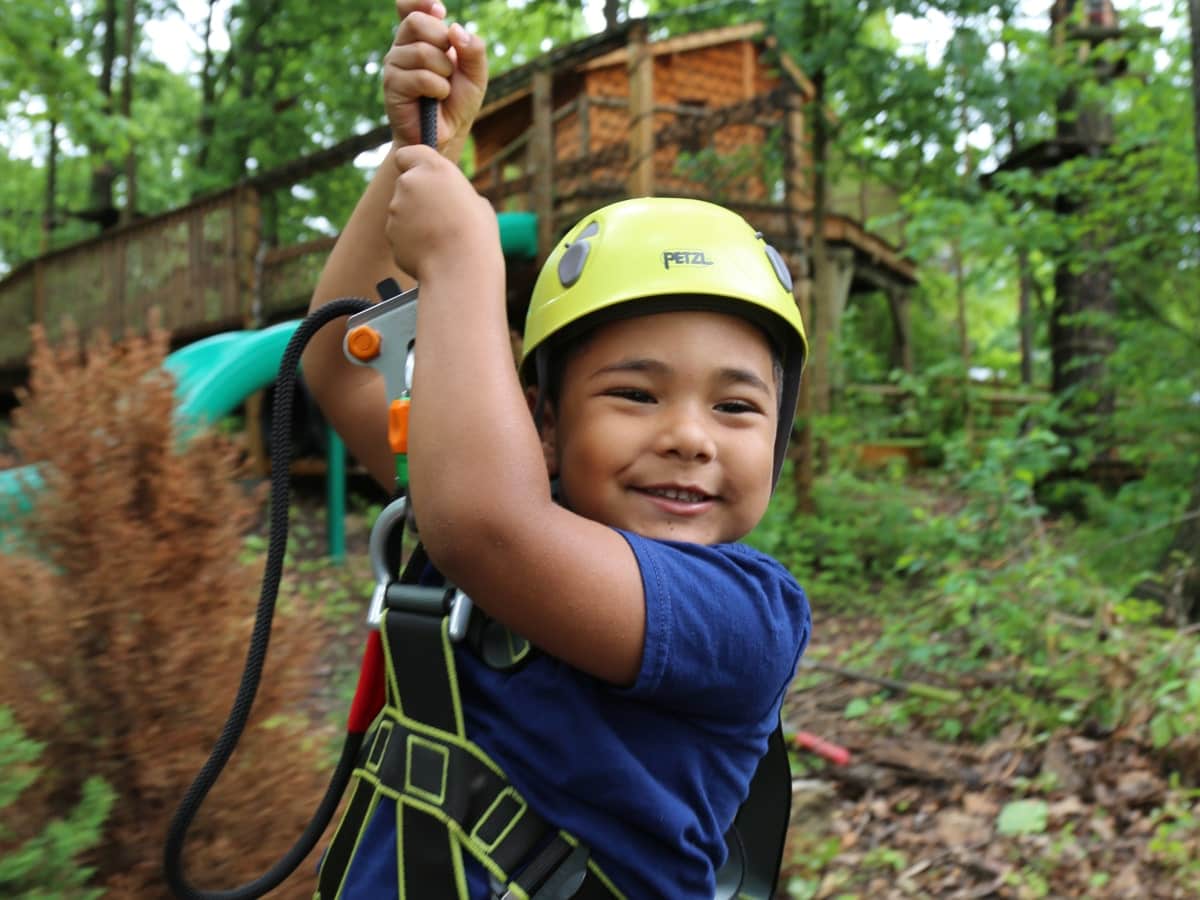
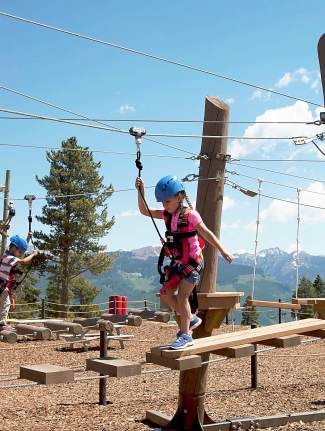
Physical challenges like the ropes course and climbing tower provide a rush of accomplishment that directly counteracts the helpless feeling anxiety creates. When a child conquers something that scared her, her brain learns that fear does not have to stop her.
Mail from home is one of the most effective homesickness and anxiety reducers. The ACA encourages parents to write short, cheerful letters that focus on what the child is doing rather than what the family is doing without her. You can email your camper at Riverview, which means your encouragement arrives quickly.
A comfort item from home, such as a favorite stuffed animal, a family photo, or a piece of a parent’s clothing, provides a tangible connection to the familiar. The item does not replace the parent, but it gives the child something physical to hold during the moments when the missing feeling peaks, like rest hour or bedtime.
How Do Camp Counselors Help Children With Separation Anxiety?
Camp counselors help children with separation anxiety through intentional check-ins, cabin bonding activities, gentle encouragement, and close communication with camp directors. At Riverview, many counselors grew up attending camp as campers themselves and returned through the Counselor-In-Training program. They understand what anxiety feels like because they experienced it firsthand.
During the first 24 to 48 hours, counselors pay extra attention to campers who are quiet, tearful, or withdrawn. They pair anxious campers with welcoming cabin mates, include them in small-group conversations, and check in during transitions between activities. Parents who communicate with the camp directors before the session about their daughter’s temperament give the staff the information they need to place her with the right counselor and the right cabin group.
How Long Does It Take an Anxious Child to Adjust at Camp?
Most anxious children adjust to camp within the first 24 to 48 hours. The adjustment happens because camp fills the child’s day with activity, connection, and routine, which leaves less and less mental space for the anxiety that dominated her thinking before arrival. By the second or third day, inside jokes are forming in the cabin, she has a favorite activity, and she is looking forward to evening campfire rather than counting the days until pickup.
The ACA’s research supports this timeline. While 83% of campers report some homesickness on at least one day, only 19% experience “significant distress,” and just 7% of cases are severe. The overwhelming majority of children who arrive anxious adjust quickly and report positive outcomes. A 2019 study by Richmond, Sibthorp, and Wilson found that 60% of camp alumni report camp helped develop independence, teamwork, self-efficacy, leadership, and communication. Those skills grow directly from the early experience of managing anxiety and discovering that the fear was temporary.
How Long Does Separation Anxiety Last in Kids?
Separation anxiety lasts different lengths depending on the child’s age and the type of anxiety. Normal developmental separation anxiety in infants begins around 6 to 9 months and typically resolves by age 3, according to Nationwide Children’s Hospital. Camp-specific separation anxiety in school-age children typically lasts 1 to 3 days after arrival, with the most intense feelings concentrated in the first 24 hours. Clinical separation anxiety disorder, which involves persistent worry lasting four weeks or longer that interferes with daily functioning, requires professional evaluation and may last longer without treatment.
According to NIH StatPearls, approximately 4.1% of children exhibit clinical-level separation anxiety, and roughly one-third of those cases persist into adulthood if left untreated. For the overwhelming majority of children heading to camp, the anxiety is temporary and resolves as the camp experience takes hold.
| Characteristic | Normal Pre-Camp Anxiety | Homesickness | Separation Anxiety Disorder |
| When it appears | Days or weeks before camp | After arrival at camp | Persistent pattern across multiple settings |
| Duration | Resolves within 1-2 days of arrival | Usually 1-3 days, often passes within 24 hours | 4+ weeks of persistent worry |
| Typical age range | Any age, most visible at 6-8 | Any age, common across all campers | Average onset around age 6; affects 4% of children ages 7-11 |
| Common symptoms | Nervousness, stomach butterflies, tearfulness at drop-off | Missing home, sadness during quiet moments, wanting to call parents | Refusal to attend school/camp, nightmares about separation, persistent physical complaints |
| Response | Preparation, practice sleepovers, reassurance | Counselor support, activity engagement, mail from home | Professional evaluation; cognitive behavioral therapy often recommended |
Sources: Dr. Christopher Thurber / American Camp Association; Children’s Hospital of Philadelphia (CHOP); NIH StatPearls, National Library of Medicine; Riley Children’s Health
Should You Send an Anxious Child to Overnight Camp?
Yes, you should send an anxious child to overnight camp, provided the anxiety is within the normal range and you have taken steps to prepare her. Avoiding camp because of anxiety teaches the child that avoidance is the correct response to fear, which reinforces the anxiety cycle. Successful separations, on the other hand, teach the child that she can handle uncomfortable situations and come out stronger on the other side.
Psychologists at GroundWork Counseling in Orlando explain that anxious children who avoid everything that makes them uncomfortable become more anxious over time, not less. Camp provides a structured, supervised, and supportive environment where the child can practice independence with a safety net of trained adults around her. The ACA’s research confirms that 92% of campers say camp helped them feel good about themselves, and those positive feelings grow directly from overcoming the early discomfort.
If your daughter’s anxiety is severe enough that it interferes with daily functioning at home or school, or if it has persisted for more than four weeks, consult her pediatrician before committing to a session. For moderate anxiety, consider starting with a one-week session at Riverview rather than a two-week session. A shorter experience lets her succeed in a manageable window, and that success becomes the confidence foundation for a longer session the following summer. Riverview offers both one-week and two-week camp sessions for girls ages 6 to 16.
Can Camp Help With Separation Anxiety in Children?
Yes, camp can help with separation anxiety in children because it provides a real, successful separation experience that rewrites the child’s internal narrative from “I can’t be away from my parents” to “I did it, and I was fine.” The ACA’s National Camp Impact Study by Spielvogel, Warner, and Sibthorp (2022) found that increases in willingness to try new things and openness to new experiences persisted three full years after attending camp. Camp does not just manage anxiety for a week. Camp builds the kind of transferable confidence that carries into school, friendships, and every future separation.
A parent whose daughter attended Riverview on Lookout Mountain in Mentone, Alabama, shared that after spending two weeks at camp, her 8-year-old performed a solo dance routine at a national competition with complete confidence. The mother’s explanation: “Because of Camp Riverview. If she can spend two weeks away from me, she can dance on stage for two and a half minutes.” That is what successful separation looks like in action.
When Should You Worry About Separation Anxiety?
You should worry about separation anxiety when the fear is persistent, excessive, and interfering with your child’s ability to function normally. According to the Children’s Hospital of Philadelphia, the threshold for clinical concern is anxiety that lasts four or more weeks, causes significant distress to the child and family, and limits what the child can do, such as refusing to attend school, refusing sleepovers entirely, or developing chronic physical symptoms like stomachaches and headaches before separations.
The NIH StatPearls review notes that the average onset age for clinical separation anxiety disorder is approximately 6 years old. Symptoms that warrant professional evaluation include persistent nightmares about separation, excessive fear that something bad will happen to a parent, refusal to sleep alone, and panic-level distress at the prospect of being away from home. If these symptoms describe your daughter, a conversation with her pediatrician is the right first step before signing up for overnight camp.
Do Kids Outgrow Separation Anxiety Disorder?
Most kids do outgrow separation anxiety disorder with appropriate support. Research published in NIH StatPearls indicates that approximately one-third of children with clinical-level separation anxiety will carry the disorder into adulthood if it goes untreated. The other two-thirds resolve with a combination of cognitive behavioral therapy, gradual exposure to separations, and supportive parenting. Early identification and treatment produce the best outcomes.
What Can Be Mistaken for Separation Anxiety?
Several conditions can be mistaken for separation anxiety. General anxiety disorder produces worry across many areas of life, not just separation. Social anxiety disorder creates fear of social evaluation that may look like separation resistance but is actually about the new people, not the absence of the parent. Adjustment disorder can appear after a major life change and temporarily mimic separation anxiety. Normal developmental nervousness before new experiences, such as a first camp session, is often mistaken for clinical anxiety when it is simply a healthy response to the unknown.
The distinction between normal pre-camp nervousness and clinical separation anxiety matters because the response is different. Normal nervousness responds to preparation and resolves quickly at camp. Clinical anxiety may require professional support alongside the camp experience.
Frequently Asked Questions
What Causes Separation Anxiety in a 4 Year Old?
Separation anxiety in a 4 year old is caused by the child’s developing understanding that separations happen, combined with limited experience managing those separations independently. At age 4, children have strong attachments to their caregivers and have not yet built the cognitive framework to fully trust that separations are temporary and safe. Life changes such as a new sibling, a move, or starting preschool can intensify the anxiety. According to the Cleveland Clinic, developmental separation anxiety typically begins between 6 and 12 months and resolves by age 3, but some children continue to experience it through age 4 or 5.
Does Separation Anxiety Get Worse Right Before Camp?
Yes, separation anxiety often gets worse in the days immediately before camp because the child’s anticipation of the separation intensifies as the date approaches. This is normal. The anxiety peaks at the moment of goodbye and then begins declining as the child engages with the camp environment. Parents can manage the pre-camp spike by keeping routines normal, avoiding countdown language (“only three days left”), and focusing conversations on what she will do at camp rather than how long she will be away.
What Is the Best Therapy for Separation Anxiety in Children?
The best therapy for separation anxiety in children is cognitive behavioral therapy (CBT), which teaches children to identify anxious thoughts, challenge them with evidence, and gradually face the situations they fear through controlled exposure. Research consistently supports CBT as the gold-standard treatment for childhood anxiety disorders. For children who do not meet the threshold for clinical diagnosis, the principles of CBT, such as gradual exposure, positive reinforcement, and coping skill development, can be applied at home through practice sleepovers, open conversations about feelings, and small steps toward independence.
How Can Parents Manage Their Own Separation Anxiety When a Child Goes to Camp?
Parents can manage their own separation anxiety by focusing on preparation rather than worry, staying busy during the first few days, maintaining a communication plan with the camp, and reminding themselves that their daughter’s independence is one of the greatest gifts they can give her. The American Camp Association’s research shows that 58% of youth say camp helped them appreciate being present and away from technology, and that appreciation develops precisely because the child had the space to grow without a parent managing every moment.
Should You Call Your Child at Camp If She Is Anxious?
Most camps, including Riverview, have specific communication policies designed to support healthy adjustment. Calling in the first few days can actually prolong anxiety by interrupting the adjustment process. Writing cheerful, short letters is more effective because it gives the child a connection to home without pulling her out of the camp experience in real time. If you are genuinely concerned about your daughter’s wellbeing, contact the camp directors directly; they can give you an honest update on how she is adjusting without disrupting her day.
What Comfort Items Help a Child With Separation Anxiety at Camp?
Comfort items that help a child with separation anxiety at camp include a favorite stuffed animal, a family photo for her cabin area, a piece of a parent’s clothing that smells like home, a special flashlight for nighttime, and pre-written letters from home that she can open on specific days. The item should be small enough to keep in her trunk or under her pillow but meaningful enough to provide genuine comfort during the moments when she misses home most, such as rest hour and bedtime.
The Takeaway
Separation anxiety before camp is one of the most common concerns parents share with us, and it is one of the most solvable. The combination of honest preparation, practical coping strategies, and the structured, supportive environment of camp means that the vast majority of anxious children adjust within the first day or two and go on to have an experience that builds confidence, independence, and friendships that last for years.
Your daughter does not need to be fearless to thrive at camp. She needs a parent who prepares her, a counselor who supports her, and a chance to discover that she is braver than she thought. We see that discovery happen every summer at Riverview Camp for Girls, and we would love to help your daughter experience it too.
If you have questions about how we support anxious campers or want to talk through your daughter’s readiness, reach out to us anytime.