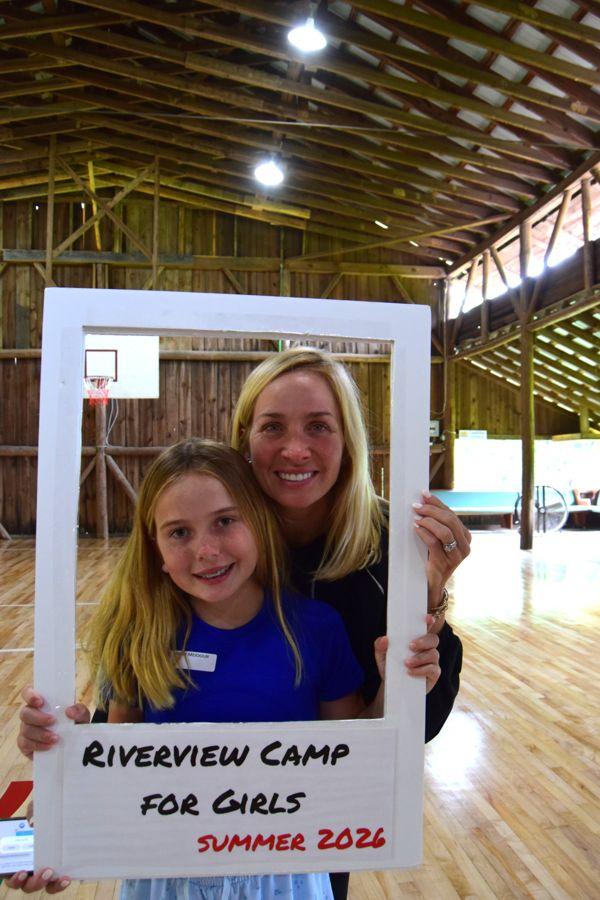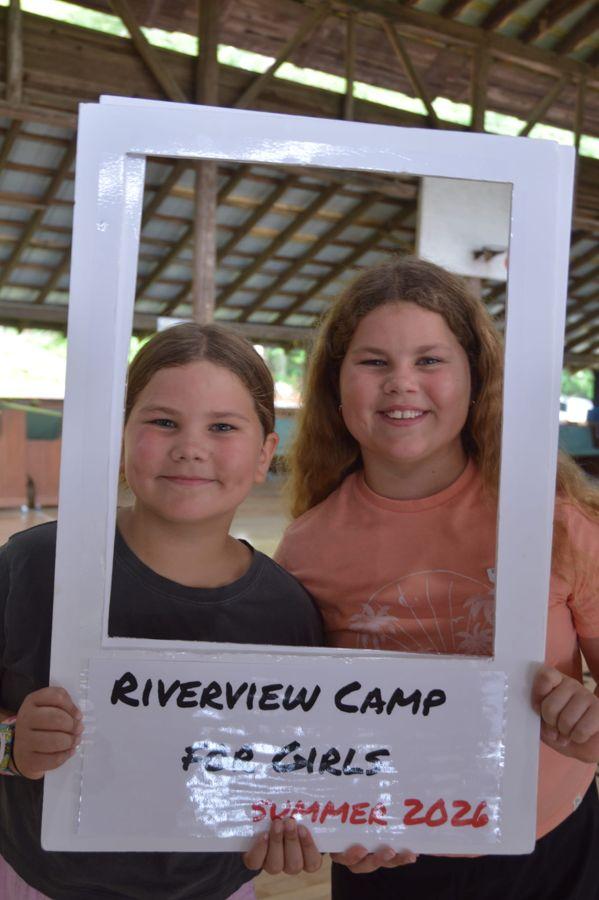

A shy child can absolutely make friends at camp, and camp is one of the best places for it to happen. The combination of shared activities, trained counselors, cabin bonding, and a screen-free environment creates conditions that help quiet, cautious children build friendships at their own pace. Research from the American Camp Association (ACA) shows that 96% of campers make new friends during their camp session, and 92% say camp helped them feel good about themselves. Those numbers include shy children, anxious children, and children who arrived on day one unsure whether they belonged. The rest of this article walks through exactly why camp works so well for shy kids, what you can do to prepare your daughter before she goes, and how counselors support friendship-building from the very first afternoon.
How Can a Shy Child Make Friends at Camp?
A shy child can make friends at camp by joining structured activities, living alongside other girls in a cabin, and receiving support from trained counselors who know how to include every camper. Camp friendship works differently than school friendship. Camp removes the social hierarchies, phone screens, and rigid cliques that make school cafeterias so intimidating for a quiet child. The whole environment is designed so that connections happen naturally through shared experience rather than forced conversation.
According to research by Dr. Christopher Thurber of Phillips Exeter Academy and the ACA, 70% of parents reported their child gained self-confidence at camp. Self-confidence and friendship are connected; a child who feels capable in an activity is more willing to talk to the girl standing next to her. Camp builds confidence and friendship simultaneously, each one feeding the other.
Shyness itself is more common than most parents realize. Research by psychologist Philip Zimbardo at Stanford University found that self-reported shyness has risen from 40% to 48% since 1975. A study published in the Journal of the American Academy of Child and Adolescent Psychiatry found that 62.4% of parents in the United States reported their adolescents were shy to some degree. Your daughter is not unusual, and she is not broken. She is one of millions of children who warm up slowly in new social situations. Camp meets her where she is.
What Makes Camp Different From School for Shy Kids?
Camp is different from school for shy kids because the social structure removes the two biggest barriers quiet children face: evaluation pressure and digital withdrawal. At school, social interaction happens in hallways, cafeterias, and classrooms where everyone watches. A shy child feels observed. At camp, bonding happens side by side, while doing something together. Two girls paddling a canoe do not need to make eye contact or come up with conversation topics. The activity creates the conversation.
Camp is also completely screen-free. A 2023 report from the ACA National Camp Impact Study found that 58% of youth said camp helped them appreciate the importance of being present, taking time away from technology, and developing in-person relationships. For shy children, phones are a retreat, a way to look busy and avoid approaching someone new. When screens are gone, every child in the room faces the same reality: you have to talk to the people around you. That shared vulnerability levels the playing field. The outgoing child and the shy child are both standing in line for archery with nothing to do but talk to each other.
School friendships often form around pre-existing social groups. Camp friendships form around shared experiences that are new for everyone. Nobody has an established friend group on day one. Every girl is a first-timer in at least one activity, which means every girl knows what it feels like to be a beginner. That mutual newness creates openness, and openness is exactly what a shy child needs from her social environment.
How Does Cabin Life Help Shy Children Bond?
Cabin life helps shy children bond because it creates a small, consistent micro-community where your daughter spends every morning, every rest hour, and every evening with the same group of girls. The cabin is where most camp friendships start. While large-group activities can feel overwhelming for a quiet child, the cabin is a small space with 8 to 12 girls and a counselor who knows every one of them by name.
The bonding happens in the ordinary moments. During cabin cleanup, girls share tasks. During rest hour, they write letters home side by side and flip through books together. During the quiet minutes before lights out, conversations turn personal. A shy child who struggles to introduce herself in a crowd of 50 often finds her voice in a cabin of 10, where the counselor has already introduced her and the routines are predictable.
Predictable routines matter enormously for shy and anxious children. When a child knows what comes next, she can stop worrying about logistics and start paying attention to the people around her. At Riverview, each day follows a clear daily schedule, from 7:00 a.m. wake-up through morning watch, six activities, meals, evening programs, and campfire songs before lights out at 9:15. That predictability gives shy children room to relax.
Parents can support cabin bonding before camp even starts. Riverview offers cabin assignments that take parent input into account. If you let the camp directors know your daughter is shy, they can place her with a particularly warm counselor and a cabin group that includes other first-time campers.
What Activities Help Shy Kids Come Out of Their Shell at Camp?
Activities that help shy kids come out of their shell at camp are the ones that create side-by-side interaction without demanding immediate social performance. The best activities for quiet children share three features: they have a clear structure, they require cooperation but not competition, and they give each child a defined role.
Activities that work especially well for shy campers include:
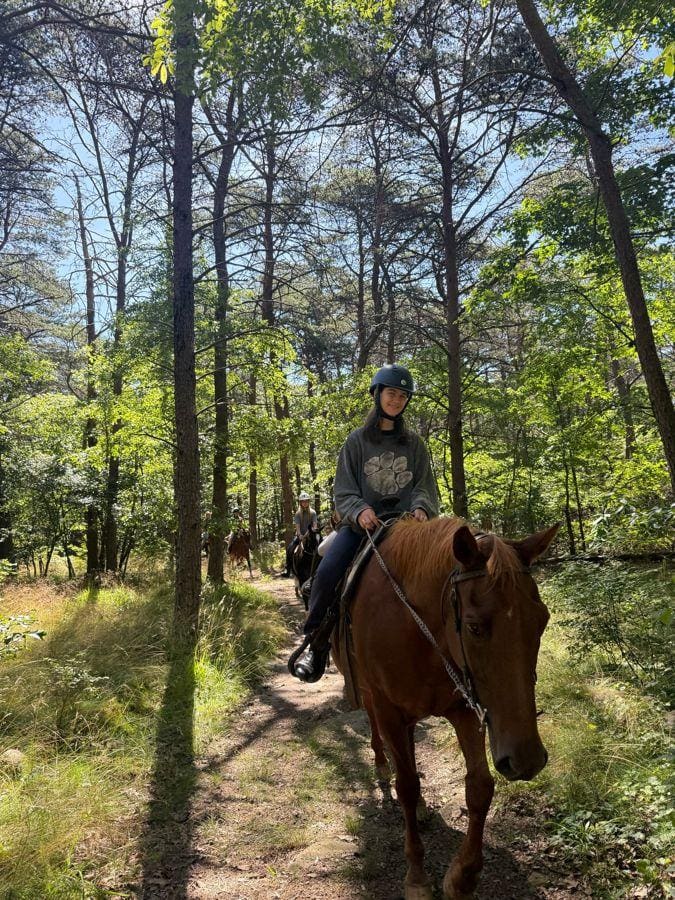
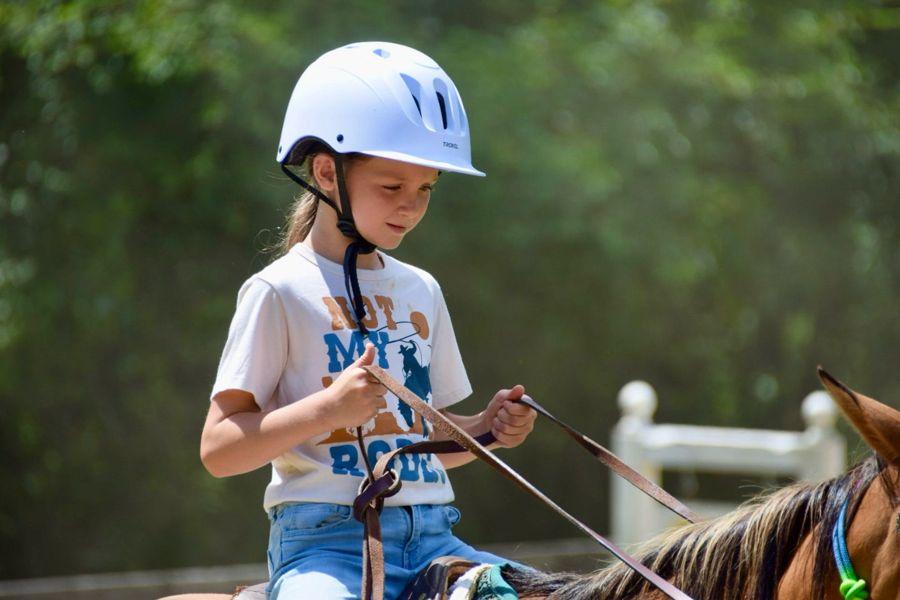
- Horseback riding, where the focus is on the horse and the instructor, not on small talk with peers; confidence comes from mastering a skill, and conversations grow from shared experience in the ring
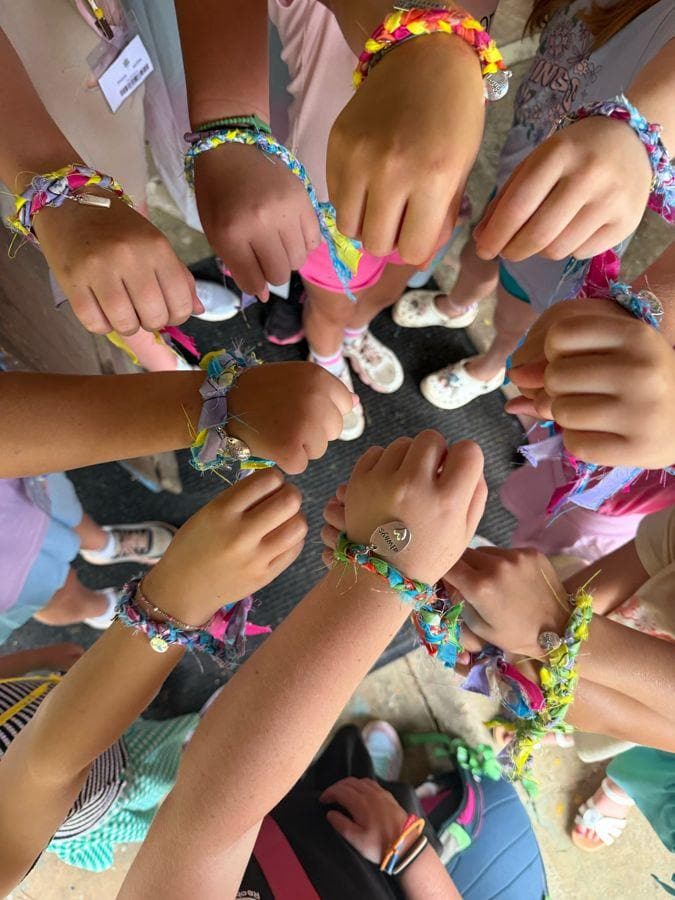
- Arts and crafts, where girls work on individual projects at a shared table, creating natural low-pressure conversation (“What are you making?”)
- Ropes course and climbing activities, where every child cheers for the one on the wall; the shared adrenaline creates instant bonding
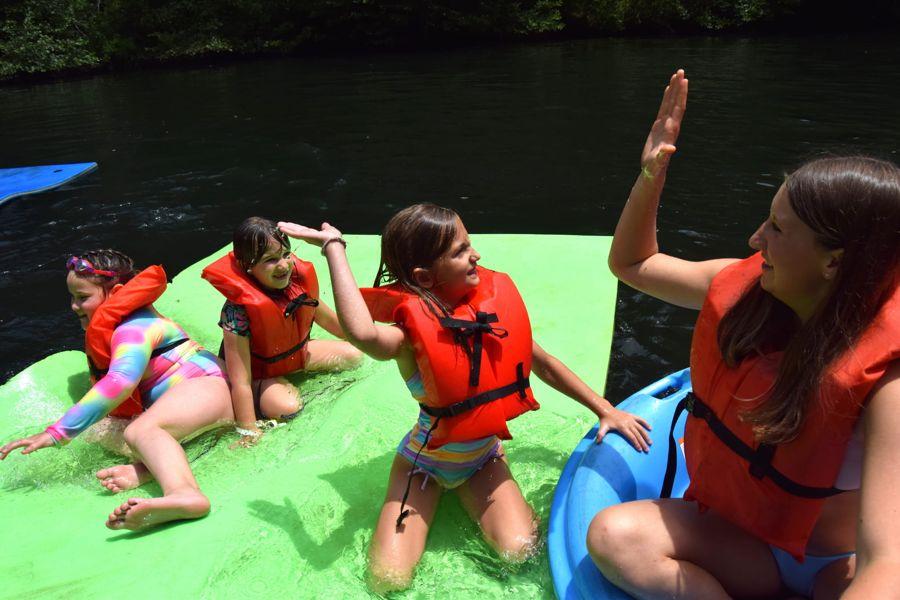
- Canoeing and waterfront activities, where two-person boats require cooperation and build trust quickly
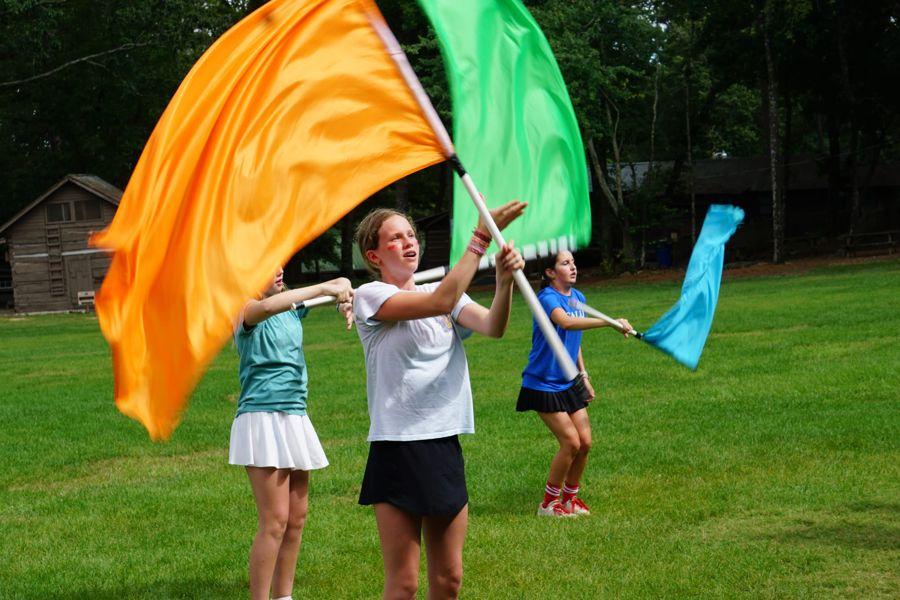
- Chorus and drama, where performing together in a group lets a quiet child contribute without needing to stand out alone
At Riverview, each camper selects six activities on her first afternoon and participates in them daily for the session. A study published in Children and Youth Services Review by Warner et al. (2021) confirmed that camp develops independence, perseverance, openness to new experiences, and self-identity in youth participants. Those six daily activities become six daily opportunities for a shy child to try something new, succeed at it, and talk about it with the girls who shared the experience.
Research from the ACA confirms that 76% of campers report learning something new at camp. For shy children, learning a new skill alongside other beginners is one of the fastest paths to friendship. Two girls who both fell off the blob on the same afternoon will be laughing about it together by dinner.
Do Camp Counselors Help Shy Kids Make Friends?
Yes, camp counselors actively help shy kids make friends through intentional inclusion strategies, icebreaker activities, and one-on-one check-ins throughout the day. Counselors are trained to watch for the child standing at the edge of the group and to gently create openings for her to join. A good counselor does not force participation. She creates a moment, like pairing two girls for a team challenge or asking a quiet camper to help lead a cabin activity, that makes connection feel natural rather than pressured.
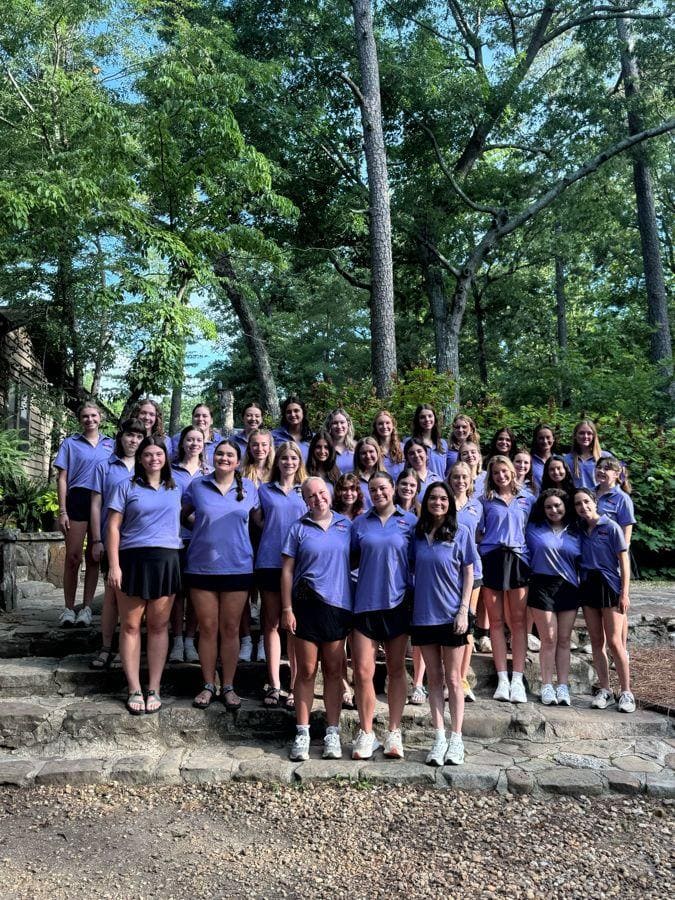
At Riverview, many camp counselors grew up attending Riverview as campers themselves and returned through the Counselor-In-Training program. They understand what it feels like to be the new girl because they were once that girl. The staff earns Red Cross training in First Aid and CPR and completes an extensive orientation covering both activity instruction and cabin responsibility, which includes supporting campers who need extra encouragement socially.
A 2019 study by Richmond, Sibthorp, and Wilson published in the Journal of Youth Development found that 60% of camp alumni report camp helped develop independence, teamwork, self-efficacy, leadership, and communication. Those outcomes do not happen by accident. They happen because trained counselors are investing in each child, including the quiet ones.
How Do You Prepare a Shy Child for Her First Time at Camp?
You prepare a shy child for her first time at camp by building familiarity, practicing social skills at home, and communicating openly with the camp directors before the session begins. Preparation reduces the “unknown” factor that drives most camp anxiety. The more your daughter knows about what to expect, the less energy she will spend worrying and the more she will have left for connecting with other girls.
Here is a preparation plan that works well for shy first-time campers:
- Preview the camp together by watching the camp video, browsing photos on the website, and reviewing the daily schedule so your daughter can picture herself there
- Practice sleepovers with friends or relatives to build comfort with sleeping away from home; start with one night and work up to two or three
- Role-play conversation starters at home, like “Where are you from?” or “What activities did you pick?” so she has go-to phrases ready
- Practice basic cabin skills such as making her bed, folding clothes, hanging wet towels, and taking showers independently
- Talk about homesickness honestly and let her know it is normal; research by Dr. Christopher Thurber shows that 96% of campers spending two weeks or more at overnight camp report some homesickness on at least one day
- Consider attending a Mother-Daughter Weekend first to let your daughter see the campus, meet the directors, and experience the environment in a lower-stakes setting
- Write short, cheerful letters in advance and leave them with the camp on opening day so she receives mail at the very first mail call
Research consistently shows that preparing for camp in advance reduces anxiety and improves a child’s adjustment during the first few days. The goal is not to eliminate nervousness entirely. Nervousness means she cares. The goal is to give her enough familiarity that she can move through the nervousness and into engagement.
Should You Tell the Camp Your Child Is Shy?
Yes, you should tell the camp your child is shy. Communicating your daughter’s temperament to the camp directors before the session gives the staff the information they need to support her well. When directors and counselors know a camper is slow to warm up, they can place her with a particularly encouraging counselor, pair her with another first-timer in the cabin, and keep an extra eye on her during the first 48 hours when adjustment is hardest.
This is not labeling your child. It is giving the people who will care for her the context they need to do it well. Most experienced camp directors, including our own, hear this from parents regularly and are grateful for the heads-up.
How Long Does It Take a Child to Make a Friend at Camp?
Most children make at least one friend at camp within the first 24 to 48 hours. The bonding timeline at overnight camp moves faster than parents expect because the living situation accelerates connection. Your daughter will eat every meal, do every activity, and sleep every night alongside the same group of girls. That level of proximity, combined with shared new experiences, compresses what might take weeks at school into a matter of days.
The typical bonding timeline looks like this: day one brings nervous introductions and cabin settling; day two brings the first real conversations during activities and meals; by day three, inside jokes begin forming; by the end of the first week, friendships feel established. Some children bond within hours. Others take the full first week. Both timelines are normal.
Research from the ACA’s longitudinal National Camp Impact Study by Spielvogel, Warner, and Sibthorp (2022) found that increases in willingness to try new things and openness to new experiences persisted three full years after attending camp. Camp friendships create not just short-term connections but long-term shifts in how a child approaches social situations.
How to Encourage a Shy Child to Make Friends
You encourage a shy child to make friends by teaching specific social skills at home, celebrating small social wins, and resisting the urge to rescue her from discomfort. Shy children do not lack the desire for friendship. They lack confidence in their ability to initiate it. The parent’s role is to build that confidence before and during camp.
Teach your daughter a few go-to conversation starters she can use anytime she is standing near another girl: “What activities did you pick?” or “Is this your first time at camp?” or “Where are you from?” Having a plan reduces the anxiety of not knowing what to say. Practice these at home until they feel natural.
Encourage active listening. A study funded by the Harris Poll for First Tee found that 94% of parents believe participation in group activities helps children build confidence and social skills. Shy children are often already good listeners by nature. Help your daughter see that skill as a strength, not a deficit. The child who genuinely listens to what someone else is saying stands out in a world of kids waiting for their turn to talk.
Celebrate small steps. Making eye contact with a new girl is a win. Saying hello at the breakfast table is a win. Asking someone to walk to an activity together is a win. Avoid comparing her to more outgoing children. Every small act of social courage builds the foundation for the next one.
Do not make a “pick-up deal.” Never tell your daughter you will come get her if she does not like camp. Research on homesickness consistently shows that pick-up deals become mental crutches and self-fulfilling prophecies. Instead, tell her that her counselors and the camp directors are there for her 24 hours a day and that she can talk to them about anything.
What If My Child Does Not Make Friends at Camp?
If your child does not make friends at camp right away, the counselors will step in with structured support. It is extremely rare for a child to leave camp without making at least one connection; the ACA’s research shows 96% of campers make new friends during their session. But some children take longer than others, and camp staff are trained to recognize and respond to that.
When a counselor notices a camper who is withdrawn or isolated, she will use intentional pairing strategies: assigning her a buddy for an activity, asking her to help with a cabin task alongside another girl, or including her in a small-group conversation during rest hour. Camp directors also do regular check-ins with counselors to identify any camper who may need extra attention.
If your daughter is especially anxious, consider starting with a one-week session rather than a two-week session. A shorter experience lets her succeed in a smaller window, and that success becomes the foundation for a longer session the following summer. Riverview offers both one-week and two-week sessions, plus combination options that let you customize the camp experience to match your daughter’s readiness.
At What Age Do Kids Really Start Making Friends?
Kids really start making friends based on mutual interest and personal connection around ages 6 to 8. Before that age, most children engage in parallel play (playing near each other) or cooperative play (sharing a task) without forming the kind of reciprocal, loyalty-based friendships that parents think of as “real” friendships.
Between ages 6 and 8, children begin choosing friends based on shared interests, humor, and compatibility. Between ages 9 and 12, friendships deepen further into trust-based relationships where loyalty, fairness, and emotional support matter. This 6-to-12 age range is exactly the window Riverview serves, with camp sessions for girls ages 6 to 16.
Is It Normal for a 5 Year Old to Not Have Friends?
Yes, it is completely normal for a 5 year old to not have close friends yet. At age 5, children are still developing the social and emotional skills needed for reciprocal friendship. Most 5 year olds engage in cooperative play, where they share toys and take turns, but they do not yet form the kind of exclusive, preference-based friendships that emerge around ages 6 to 8. A 5 year old who plays alongside other children but does not have a “best friend” is developing on a normal timeline.
What Is the Hardest Age to Make Friends?
The hardest age to make friends is typically between 9 and 12, when children become more socially self-conscious and peer approval begins to carry significant weight. During these transition years, social hierarchies in school become more rigid, cliques form, and the fear of rejection intensifies. A study published in Frontiers in Psychiatry confirmed that social anxiety symptoms increase between late childhood and adolescence. Camp is especially valuable during this window because it provides a social reset. Every girl arrives on equal footing, free from the school-year dynamics that may have held her back.
Can a Shy Child Enjoy Overnight Camp?
Yes, a shy child can enjoy overnight camp, and shy children often benefit from camp more than their outgoing peers because camp teaches them that they can handle new social situations independently. The confidence a shy child gains at camp is not just about making friends during those one or two weeks. It is about proving to herself that she can walk into something unfamiliar and come out the other side successful.
A parent whose daughter attended Riverview shared that her 8 year old went on to win a national dance competition alone on stage, and when friends asked how she performed with such confidence, the answer was “Because of Camp Riverview. If she can spend two weeks away from me, she can dance on stage for two and a half minutes.” That kind of transferred confidence, where camp courage carries into school, sports, and daily life, shows up consistently in the research. The ACA’s National Camp Impact Study confirmed that positive camp experiences drive outcomes that support learning throughout the school year.
| Factor | School Environment | Camp Environment |
| Group size | 25-30 students per class | 8-12 girls per cabin |
| Screen access | Phones available throughout the day | Completely screen-free |
| Adult support ratio | 1 teacher per 25+ students | 1 counselor per 8-12 campers |
| Activity structure | Seated academic work | Active, hands-on experiences |
| Social hierarchy | Established cliques carry over year to year | Fresh start; no pre-existing social groups |
| Bonding time | 6-7 hours per day, weekdays only | 24 hours per day, including evenings and weekends |
| Evaluation pressure | Grades, tests, and academic performance | No grades; emphasis on participation and personal growth |
Sources: American Camp Association (ACA) research; National Center for Education Statistics (NCES) average class size data; ACA National Camp Impact Study (Spielvogel, Warner, & Sibthorp, 2022)
What to Do When Your Daughter Has No Friends at School
When your daughter has no friends at school, the most effective response is to create friendship opportunities outside the school environment where she can start fresh. School friendship struggles often stem from rigid social groups that formed years ago, limited unstructured interaction time, and the pressure of academic performance layered on top of social performance. A child who is quiet in the classroom may simply need a different context to shine.
Camp provides exactly that context. At camp on Lookout Mountain in Mentone, Alabama, there are no pre-existing cliques. Every girl arrives without the social baggage of school. The playing field is genuinely level. A child who sits alone at lunch every day at school may discover at camp that she is funny, helpful, brave on the climbing wall, or the best horseback rider in her group. Those discoveries change the way she sees herself, and that shift carries back into the school year.
Why Is My Child a Loner?
Your child may appear to be a loner because she is introverted, which means she recharges through alone time and prefers a few deep connections over many surface-level friendships. Introversion is not the same as shyness, and neither one is a problem to solve. Introverted children often thrive in environments that offer a mix of social activity and quiet time. Riverview’s daily schedule includes rest hour after lunch, evening campfire time, and cabin conversations before bed, all of which give introverted girls space to process and recharge between active social periods.
If your daughter prefers one or two close friends over a large group, that is a healthy social pattern, not a warning sign. Camp supports that pattern by placing girls in small cabin groups where deep one-on-one bonds can form naturally.
Is Having No Friends Rare?
Having no friends is not as rare as parents fear. Many children go through periods where they struggle to find their social footing, especially during transitions like changing schools, moving to a new town, or entering the self-conscious middle childhood years between ages 9 and 12. A 2019 survey published by the ACA found that over 26 million children and adults participate in camp experiences annually, and a major reason parents cite for enrolling their children is the desire for their kids to build social skills and develop independence. You are not alone in this concern, and your daughter is not alone in this experience.
How to Make New Friends at Camp
You make new friends at camp by introducing yourself early, asking questions, joining activities with an open mind, and leaning on your counselors when you feel stuck. Camp friendships start faster than you expect because everyone around you is in the same situation: new place, new faces, new routines. The girl in the bunk next to you is just as nervous as you are.
Here are the most effective strategies for making friends from day one. Start by introducing yourself to your cabin mates within the first hour. A simple “Hi, I’m [your name], where are you from?” opens the door. Have two or three go-to questions ready: “Is this your first time at camp?” “What activities did you pick?” “Do you have any pets?” These questions are easy for anyone to answer and create natural conversation.
Sit with someone new at meals. Camp dining is one of the best friendship-building settings because everyone is relaxed, the conversation is casual, and the counselor at your table keeps things moving. At Riverview, the Little River campus along the banks of this Outstanding National Resource Waterway creates a setting where girls gather outside for evening programs and campfire singing, providing even more natural moments for connection.
Try an activity you have never done before. When you are a beginner at something, you bond instantly with the other beginners. Two girls figuring out archery together, or cheering each other through the ropes course, form connections that girls who stick to familiar skills never experience.
If you feel stuck, talk to your counselor. Camp counselors are specifically trained to help campers navigate social situations. They can pair you with another girl, include you in a conversation, or simply check in to make sure you feel seen. You are never alone at camp, even on the days it feels that way.
Frequently Asked Questions
How Long Do Camp Friendships Usually Last?
Camp friendships often last for years, and many last a lifetime. The ACA’s National Camp Impact Study found that positive social outcomes from camp persist at least three years after the experience. Because camp friendships form through shared challenge, vulnerability, and 24-hour togetherness, they tend to be deeper than friendships formed in lower-intensity settings. Many Riverview campers return summer after summer and maintain friendships well into adulthood.
Does Overnight Camp Help With Social Anxiety in Children?
Overnight camp helps with social anxiety in children by providing a structured, supportive environment where a child can practice social skills daily with consistent encouragement from trained counselors. The predictable routine, small cabin groups, and activity-based interaction reduce the unstructured social ambiguity that triggers anxiety in many children. Camp is not therapy, but the social confidence gains are real and well-documented.
What Should Parents Avoid Saying to a Shy Child Before Camp?
Parents should avoid saying “If you don’t like it, I’ll come get you,” which creates a mental escape hatch that undermines the child’s ability to push through early discomfort. Avoid labeling your child as “shy” in front of her, as children internalize labels and act accordingly. Avoid comparing her to more outgoing siblings or friends. Instead, focus on what she will enjoy, reassure her that nervousness is normal, and express confidence in her ability to handle the experience.
Can a Child Attend Camp If She Has Never Had a Sleepover?
A child can attend camp without prior sleepover experience, but practicing overnight stays at a friend’s or relative’s house beforehand helps reduce first-night anxiety. If sleepovers are not possible, focus on other forms of independence building: letting her order for herself at restaurants, spending time with other families without you present, and managing her own bedtime routine. Camp staff are experienced in helping first-time overnight campers adjust.
How Do Shared Activities Help Children Form Friendships?
Shared activities help children form friendships by creating a common reference point that makes conversation easy and natural. Psychologists call this “side-by-side bonding,” where two people connect through a shared task rather than through direct social evaluation. Camp activities like canoeing, team sports, and arts and crafts naturally produce this bonding. Research published in Psychology Today confirms that shared experiences create stronger social bonds than conversation alone.
How Do You Know If Your Child Is Ready for Overnight Camp?
Your child is ready for overnight camp when she can manage basic self-care (showering, dressing, making her bed), sleep away from home for at least one night without significant distress, express her needs to an adult other than her parents, and show interest in going. Readiness does not require the absence of nervousness. Most children who are “ready” are also somewhat nervous. If your daughter is interested but anxious, a one-week session or a Mother-Daughter Weekend can serve as a gentle first step.
Putting It All Together
A shy child does not need to become outgoing to make friends at camp. She needs the right environment, the right support, and a chance to discover what she is capable of when the social playing field is level. Camp provides all three. The structured activities, the small cabin community, the trained counselors, and the screen-free setting work together to create conditions where quiet children build friendships at their own pace, on their own terms.
The confidence your daughter gains at camp will follow her home. It will show up in the classroom, on the sports field, and in every new social situation she faces. We see it happen every summer at Riverview Camp for Girls, and we would love to see it happen for your daughter too.
If you have questions or want to talk through whether your daughter is ready, reach out to us anytime.