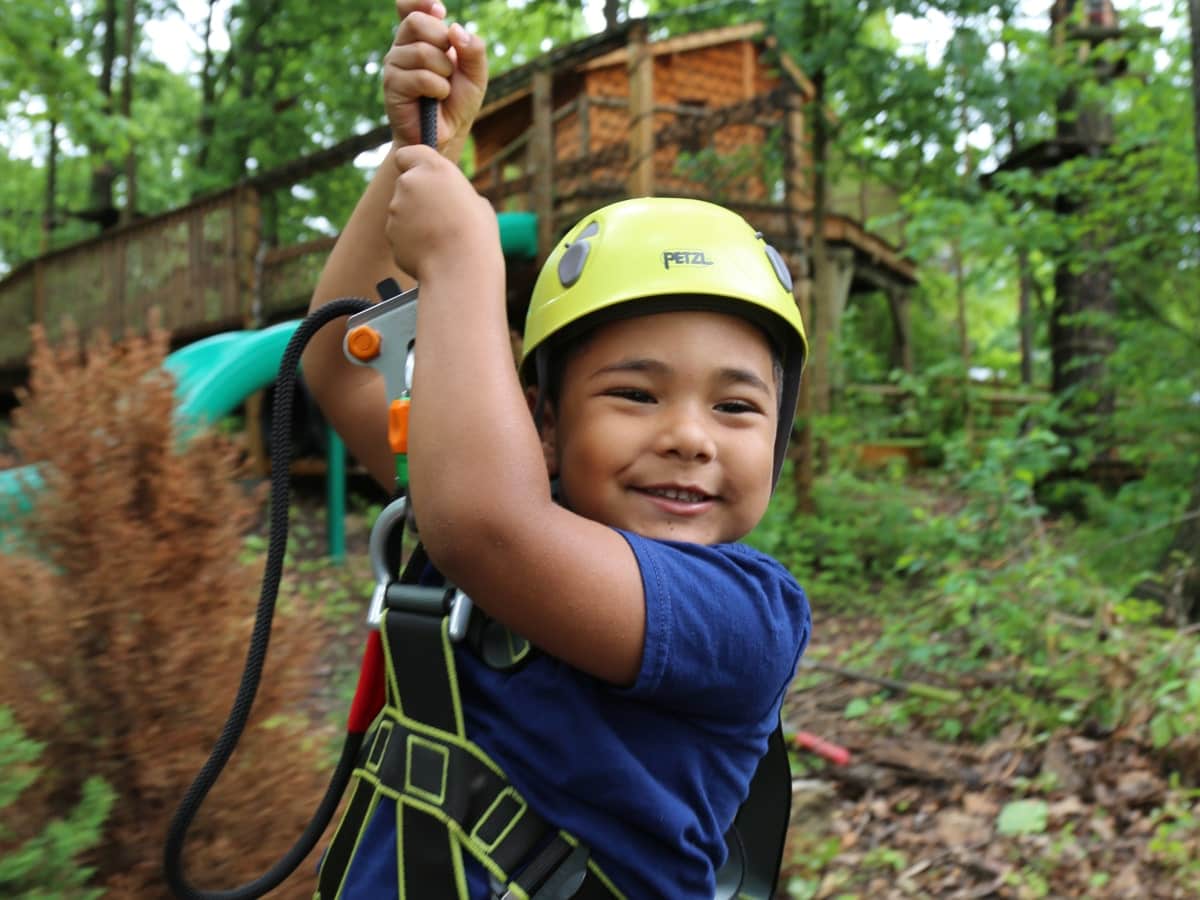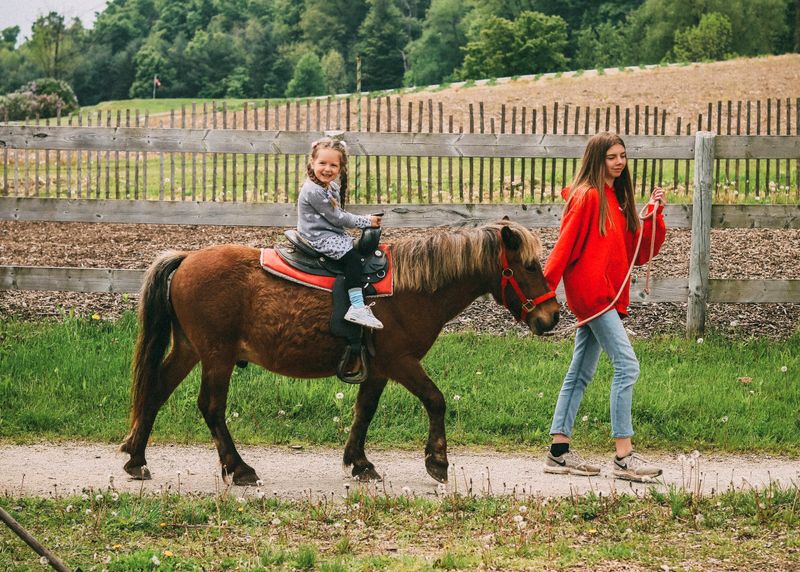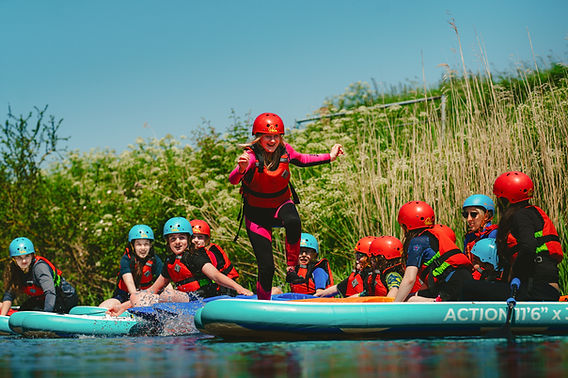

The signs your child is ready for overnight camp include handling basic self-care independently, expressing interest or curiosity about going, sleeping away from home successfully at least once, following instructions from non-parent adults, and being able to ask for help when she needs it. The American Camp Association (ACA) identifies showering independently as one of the key maturity indicators for overnight camp readiness, and research from Phillips Exeter Academy psychologist Dr. Christopher Thurber confirms that children who express personal interest in attending camp transition more smoothly than children who are pushed into the decision. Readiness is not a single milestone. It is a collection of small, observable behaviors that tell parents their daughter can handle the independence, social dynamics, and daily routines that camp requires. This article covers the specific signs to look for, the emotional indicators that are harder to see, the signs your child is not yet ready, what to do if the signs are mixed, and how to build readiness over time.
Signs Your Child Is Ready for Overnight Camp
The signs your child is ready for overnight camp show up in daily life long before she ever sets foot on a campground. Parents who know what to watch for can evaluate their daughter’s readiness based on real behaviors rather than guesswork. The ACA reports that 92% of campers say camp helped them feel good about themselves, 70% of parents say their child gained self-confidence, and 96% of campers made new friends. These outcomes happen most reliably when a child enters camp with a baseline level of readiness that allows her to engage with the experience rather than fight through it. Understanding what campers can expect helps both parents and daughters see what readiness needs to look like in practice.
Readiness is not a binary switch that flips on a certain birthday. It is a spectrum. A girl may show strong signs in self-care and social confidence but still struggle with sleeping away from home. Another girl may sleep at friends’ houses easily but get overwhelmed in large groups. The goal is not perfection across every indicator. The goal is enough readiness across enough areas that the camp experience becomes a growth opportunity rather than a source of distress.
How Do You Know If Your Child Is Ready for Overnight Camp?
You know your child is ready for overnight camp when she demonstrates a cluster of specific, observable behaviors that predict she can manage daily life, social interaction, and emotional challenges away from home without a parent present. Here are the signs camp directors, child development experts, and the ACA consistently identify as the strongest readiness indicators:
| Readiness Sign | What It Looks Like at Home | Why It Matters at Camp |
| Self-care independence | She showers, dresses, brushes teeth, and manages hygiene without step-by-step direction | Camp counselors assist but cannot manage every child’s routine individually; Pine Cove recommends completing self-care tasks in about 15 minutes |
| Interest in going | She asks about camp, shows curiosity about activities, or says “I want to try that” | The ACA confirms that children who express personal interest transition more smoothly |
| Successful time away from home | She has slept at a friend’s or relative’s house without extreme distress | Prior separation experience builds the “separation muscle” camp depends on |
| Follows non-parent adults | She listens to teachers, coaches, or other adults and follows their instructions | At camp, counselors replace parents as the primary adult authority |
| Asks for help | She can approach an unfamiliar adult and say “I need help with this” | Camp requires self-advocacy; a child who suffers silently misses out on support |
| Recovers from disappointment | She gets upset but moves on within a reasonable time without a parent fixing it | Camp includes losses, schedule changes, and moments of frustration; bouncing back is essential |
| Sleeps independently | She falls asleep in her own bed without a parent staying in the room | Camp bedtime is group-based; counselors say goodnight but do not stay until each child falls asleep |
| Social curiosity | She shows interest in meeting new people, joining group activities, or making new friends | Camp is a social experience; a child who avoids all unfamiliar people will struggle to engage |
Sources: American Camp Association; Camp Walt Whitman (Jed Dorfman, Director); Pine Cove Camps; Camp Ondessonk; Dr. Christopher Thurber, Phillips Exeter Academy
A girl does not need to check every single box to be ready. Camp Walt Whitman director Jed Dorfman emphasizes that readiness is not as simple as hitting a certain age. If your daughter shows five or six of these signs strongly and is working on the others, she is likely ready, especially with a supportive camp that is designed for first-time campers. You can review our frequently asked questions to see how we support girls at every readiness level.
How Do I Know If My Child Is Emotionally Ready for Camp?
You know your child is emotionally ready for camp when she can name her feelings, tolerate temporary discomfort, and accept that not every moment will go the way she wants. Emotional readiness is harder to observe than self-care skills because it shows up internally rather than in visible daily tasks. Camp Starfish, a specialized overnight camp, notes that children who can express when they feel nervous, excited, overwhelmed, or confused, and can seek assistance from a trusted adult, tend to thrive in camp settings where communication is the foundation of every interaction.
The strongest emotional readiness indicator is the combination of desire and awareness: a girl who says “I want to go but I am a little scared” is showing both motivation and self-knowledge. That combination predicts success far better than either total fearlessness or total reluctance. Emotional readiness also includes comfort with imperfection. Camp includes rainy days, activities she does not love, and moments when she is not the center of attention. A girl who can tolerate those imperfections without shutting down is emotionally prepared for the camp experience.
Dr. Christopher Thurber’s research shows that 83% of campers experience homesickness on at least one day, which means even emotionally ready children will have hard moments. Emotional readiness does not mean the absence of hard feelings. It means the presence of coping capacity. She will miss home. She will feel out of her comfort zone. The question is whether she can feel those feelings and keep going. Understanding how homesickness works helps parents assess this dimension of readiness before departure. Engaging with camp traditions like campfire songs, cabin bonding, and team activities gives emotionally ready girls a way to channel their feelings into shared experiences.
What Are the Signs My Child Is NOT Ready for Camp Yet?
The signs that your child is not ready for camp yet include extreme distress at any separation from parents, inability to sleep independently, severe anxiety that interferes with daily functioning, total lack of interest in going, and an inability to manage basic self-care without adult direction. These signs do not mean your daughter will never be ready. They mean she is not ready right now, and pushing forward before she is prepared increases the risk of a negative experience that could make future camp attempts harder.
- Extreme separation distress. A child who panics, becomes physically ill, or refuses to function when separated from a parent for any length of time needs gradual separation practice before overnight camp. Brief separations at a grandparent’s house or a friend’s home should come first.
- Cannot sleep independently. If she still requires a parent in the room to fall asleep every night, the transition to a cabin with peers and counselors will be a significant leap. Practice independent bedtime routines at home for several weeks before considering camp.
- Clinical anxiety. The Centers for Disease Control and Prevention reports that 11% of children ages 3 to 17 have a current diagnosed anxiety disorder. If your daughter’s anxiety is severe enough to interfere with school, friendships, or daily activities, consult a mental health professional before enrolling in overnight camp.
- Zero interest. A child who expresses no curiosity about camp and is being enrolled entirely because a parent wants her to go is unlikely to engage with the experience. Interest, even small and nervous, is a prerequisite. Without it, camp becomes something that is done to her rather than something she chooses.
- Cannot manage basic self-care. If she needs a parent to direct every step of dressing, bathing, and eating, the independence demands of camp will overwhelm her. Self-care skills can be practiced at home over several weeks before trying camp.
Recognizing “not yet” is not a failure. It is good parenting. A girl who attends camp before she is ready may associate camp with distress rather than growth. A girl who waits one more year, builds her skills, and then attends with a stronger foundation is far more likely to have the positive, confidence-building experience that makes her want to return.
Does My Child Need to Have Had a Sleepover Before Camp?
No, your child does not need to have had a sleepover before camp, but successful sleepovers are one of the strongest readiness indicators available. The ACA recommends practice separations, such as sleepovers at a friend’s house, as effective preparation tools. Camp Walt Whitman director Jed Dorfman advises parents to debrief after each sleepover: Did she enjoy it? Was she able to sleep? Did she show signs of high anxiety? If sleepovers go well multiple times, the door to overnight camp is open.
Camp Echo Lake makes an important counter-intuitive point: sleepaway camp is often easier than sleepovers. At a sleepover, a child sleeps in an unfamiliar bed in someone else’s house, surrounded by unfamiliar sounds, and has to walk through a dark house to find an adult if she gets scared. At camp, she sleeps in her own bed with her own sheets, in a room full of cabin mates, with counselors right there in the room. Camp also gives her the advantage of time. The first night may feel unfamiliar, but by the second or third night, the cabin feels like her own space. A Mother-Daughter Weekend provides another pathway for girls who have not yet had a sleepover, letting both parent and daughter experience the camp environment together before committing to a full session.
Does the Parent Need to Be Ready Too?
Yes, the parent needs to be ready too, because a child’s camp readiness is directly influenced by the confidence or anxiety her parents project. The ACA states that parent confidence is contagious, and so is parent fear. Dr. Fran Walfish, a family psychotherapist in Beverly Hills, explained in Medical Daily that separation from parents is “the primary key psychological and emotional benefit” of sleepaway camp for both children and parents. If a parent cannot let go, the child picks up on that reluctance and interprets it as a signal that camp might not be safe.
Parent readiness means being able to drop your daughter off on opening day with a short, confident goodbye and walk away without lingering, crying, or repeatedly asking if she will be okay. It means trusting the camp staff to care for her. It means writing positive, encouraging letters instead of “We miss you so much.” Thurber’s research shows that preparation lowers homesickness intensity by roughly 50%, and a large portion of that preparation involves coaching the parent, not just the child. If you feel anxious about sending your daughter to camp, address your own worry with another adult, with the camp director, or with a counselor, but do not transfer it to your daughter.
How Can I Help My Child Get Ready If They Are Not Showing All the Signs?
If your child is not showing all the readiness signs, you can build the missing skills deliberately over the weeks and months before camp. Readiness is not fixed. It develops through practice, and every skill on the readiness checklist can be strengthened at home with intentional effort.
- Practice self-care independence. Let her shower, dress, and manage her morning routine without your direction for two to three weeks. Guide but do not do it for her. The ACA notes that showering independently is one of the key maturity markers.
- Schedule practice sleepovers. Start with one night at a close friend’s house, then try a weekend at a grandparent’s home. Each successful separation builds evidence she can handle being away.
- Build bedtime independence. If she needs you in the room to fall asleep, begin a gradual transition. Stay in the room for five minutes, then leave. Increase the time apart over several nights until she falls asleep on her own.
- Encourage asking for help from other adults. Have her order her own food at a restaurant, ask a librarian for a book, or approach a coach with a question. Each interaction builds comfort with non-parent adults.
- Start with a shorter session. A one-week camp session gives a partially ready child enough time to settle in without the pressure of a longer commitment. Many families use the first year as a stepping stone and sign up for a longer session the following summer.
- Try a Mother-Daughter Weekend or day camp first. A Mother-Daughter Weekend introduces the camp setting while keeping a parent present. Day camp introduces the group-activity structure without the overnight component. Both bridge the gap between home life and full overnight camp.
- Read through the camp’s preparation guide together. Familiarity reduces fear. When your daughter knows what the cabin looks like, what the daily schedule includes, and what activities she can choose, the unknown shrinks and confidence grows.
Building readiness is not a race. Some girls need a few weeks of practice. Others need a full year. The investment in readiness always pays off in a better camp experience.
Frequently Asked Questions
What Is a Good Age to Start Sleepaway Camp?
A good age to start sleepaway camp is between 7 and 12 for most children, with 8 to 9 being the most common starting point. The ACA and multiple camp directors confirm that readiness matters more than a specific birthday. A mature 7-year-old who sleeps independently and shows excitement about camp may be more ready than an anxious 11-year-old who has never spent a night away from home. The right age is the age at which your daughter shows enough readiness signs to predict a positive experience.
What Do Child Psychologists Say About Sleepovers and Camp Readiness?
Child psychologists say that sleepovers serve as a useful test of separation readiness but are not a perfect predictor of camp success. Dr. Fran Walfish notes that the ability to separate from parents is the primary developmental benefit of sleepaway camp. A child who handles sleepovers well demonstrates that she can sleep in an unfamiliar setting, manage her own bedtime routine, and cope without her parents nearby. However, camp offers built-in support systems (counselors, cabin mates, structured schedules) that sleepovers do not, which is why many children who struggle with sleepovers thrive at camp.
Can a Child Who Is Nervous Still Be Ready for Camp?
Yes, a child who is nervous can absolutely still be ready for camp. Nervousness before a new experience is normal and does not disqualify a child from being ready. The ACA reports that 83% of campers experience homesickness on at least one day, which means even the most “ready” children feel some discomfort. The key distinction is between normal nervousness (butterflies, questions, mild worry) and clinical anxiety (inability to eat, sleep, or function). Normal nervousness paired with interest and curiosity is actually a sign of readiness, because it shows the child cares about the experience and is thinking ahead.
Is Comfort Without Screens a Sign of Camp Readiness?
Yes, comfort without screens is an increasingly relevant sign of camp readiness. Camp Walt Whitman identifies device-free comfort as one of the telltale readiness indicators because camp requires children to go without phones, tablets, and video games for the entire session. A child who becomes extremely anxious or distressed without her devices may need gradual screen-reduction practice at home before camp. Most campers, however, adapt quickly once they are engaged in activities, friendships, and the daily rhythm of camp life.
What Self-Care Skills Does My Child Need for Camp?
The self-care skills your child needs for camp include showering independently, washing and drying her hair, brushing her teeth, applying sunscreen, getting dressed without help, making her bed, and managing her personal belongings. Pine Cove Camps recommends that a camp-ready child should be able to complete these daily “personal maintenance” tasks in about 15 minutes. She does not need to be perfect at all of them, but she should be able to handle the basics without a parent directing each step. We provide counselors trained to support younger campers with daily routines, especially during the first few days.
What It All Comes Down To
Readiness for overnight camp is not about reaching a certain age or checking every box on a list. Readiness is about your daughter showing enough independence, emotional flexibility, and social curiosity that camp becomes a place where she grows rather than a place where she struggles. The signs are observable. You can see them in how she handles her morning routine, how she responds to a tough day at school, how she behaves at a friend’s house, and how she reacts when you mention the idea of camp. Trust what you see. If most of the signs point to “ready,” she probably is.
At Riverview Camp for Girls, we have been helping first-time campers discover what they are capable of for decades. Here on Lookout Mountain in Mentone, Alabama, we see girls arrive unsure and leave transformed. If you are trying to decide whether your daughter is ready, we are happy to talk through the signs with you and help you find the session that fits her best. Reach us at 256-634-4043 or through our contact page.