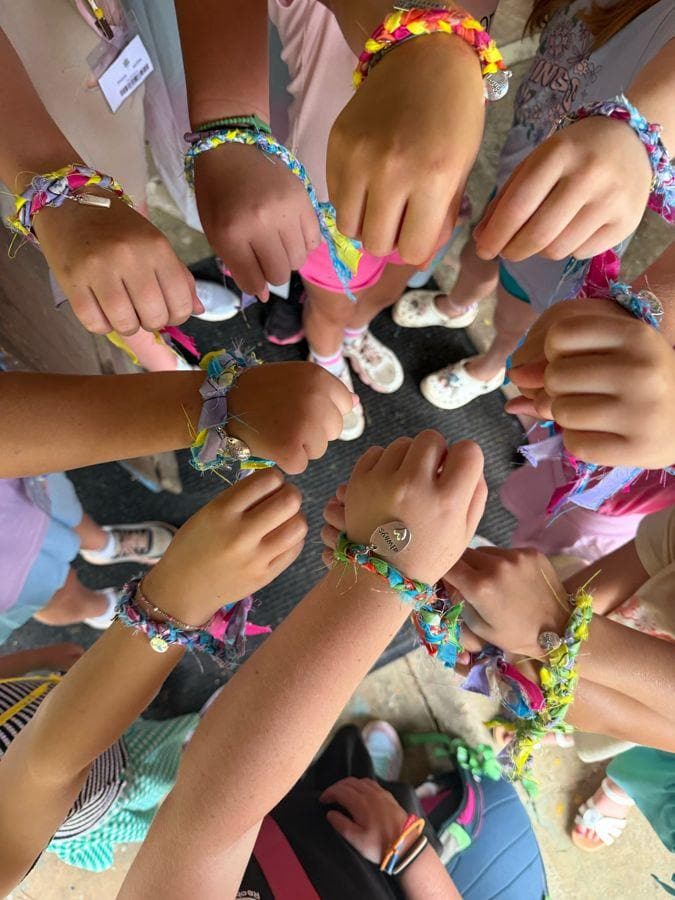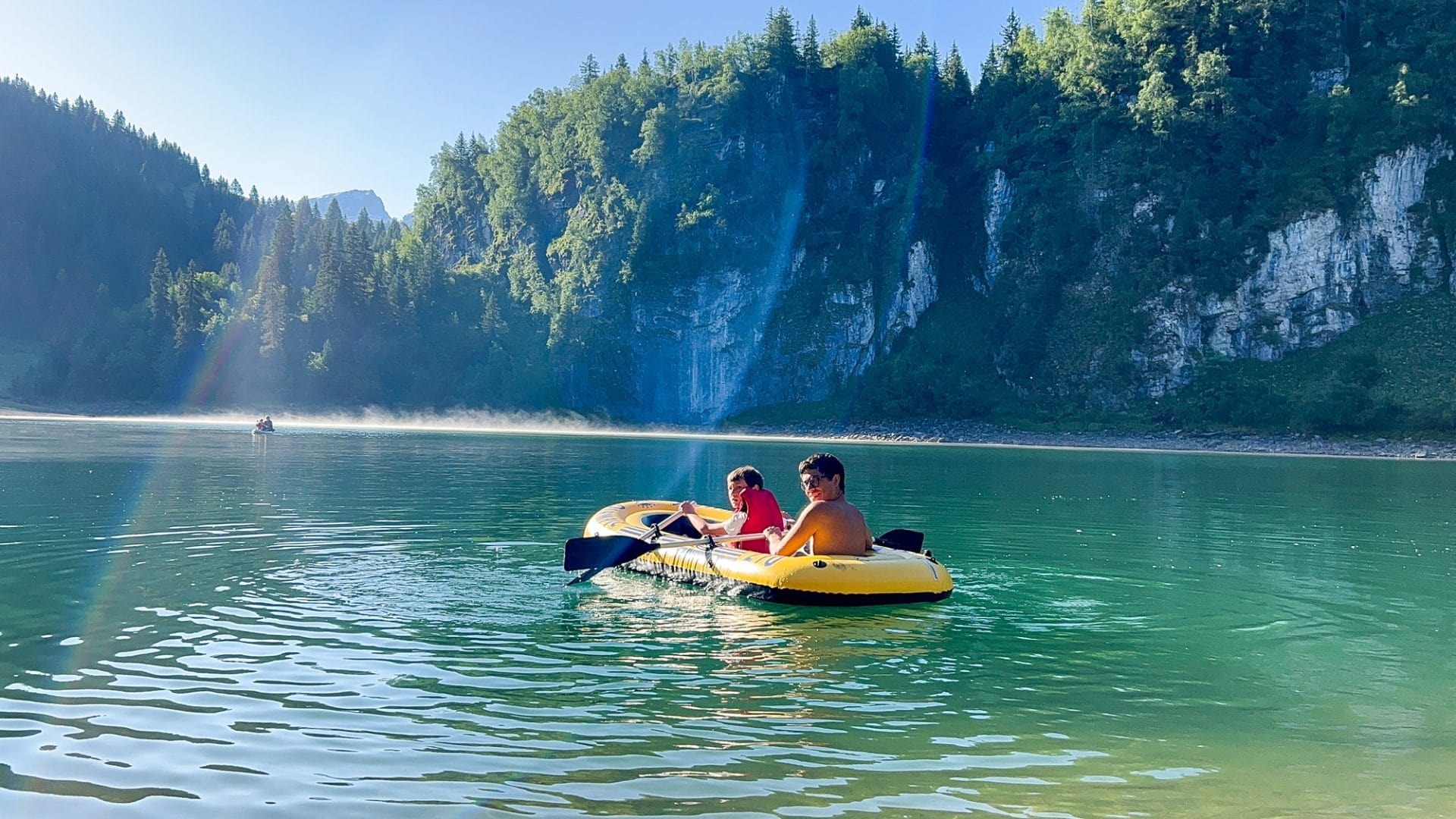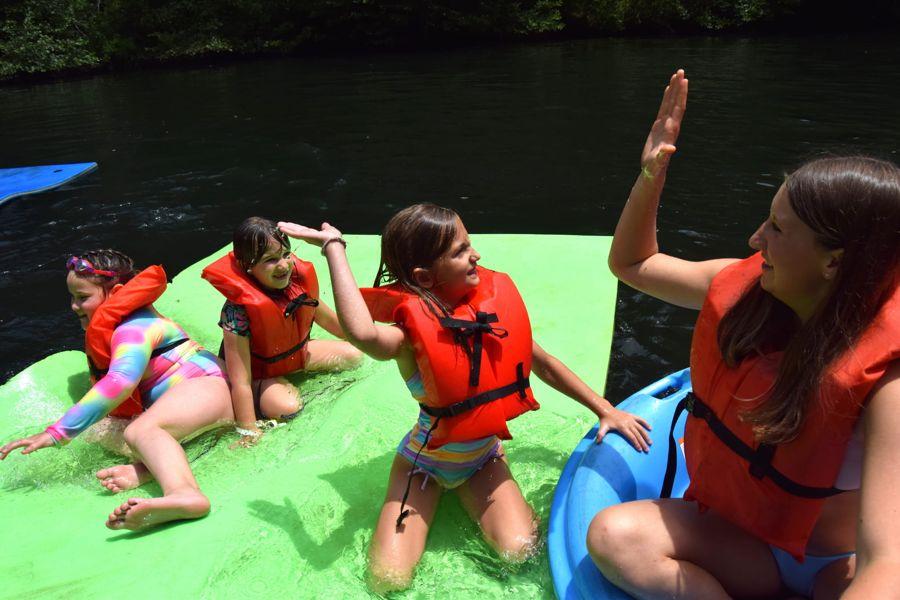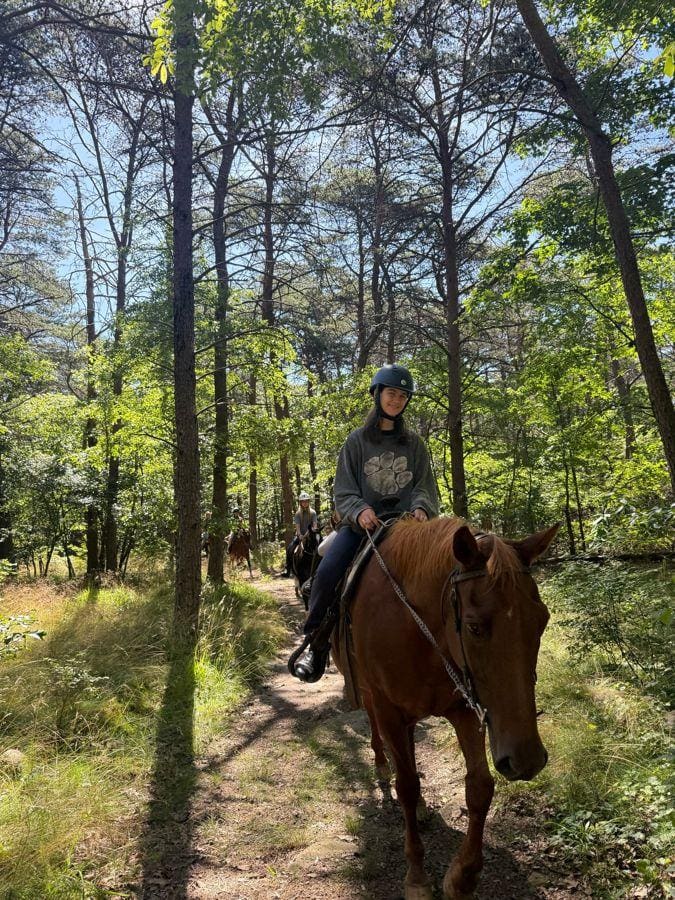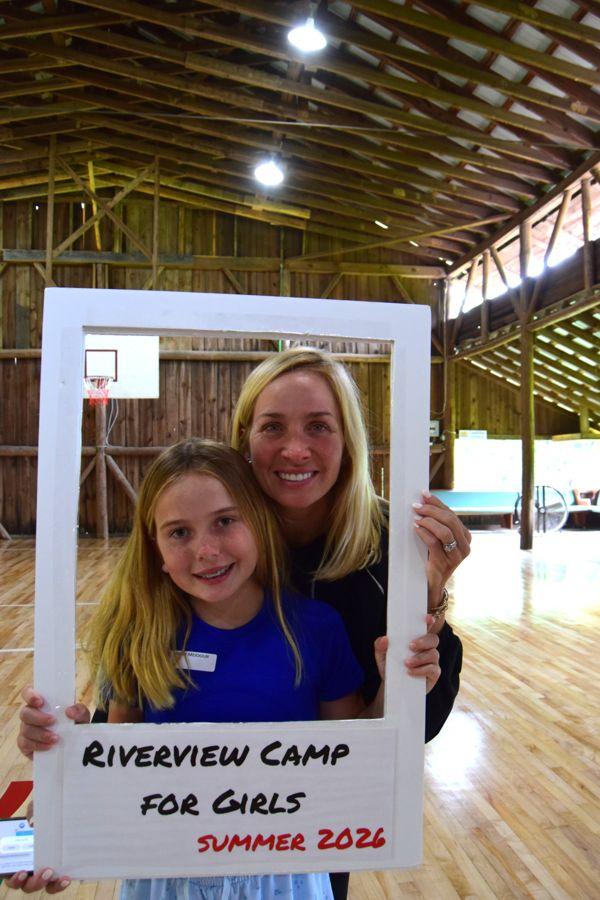

Cabin life at summer camp is the experience of living, sleeping, and growing alongside a group of cabin mates and counselors in a shared space for days or weeks at a time. Campers sleep in bunk beds inside rustic cabins, follow a daily routine together, create cabin rules, share meals, and form friendships that often last well beyond the summer. For many children, cabin life represents their first real taste of independence away from home.
This blog covers what cabin life actually looks like from day one, how many campers share a cabin, what a typical day involves, how friendships form, what skills campers develop, how to handle homesickness, and why so many parents choose overnight camp for their daughters year after year.
What Cabin Life at Summer Camp Looks Like
Cabin life at summer camp looks like a group of girls sharing a cozy, rustic space filled with bunk beds, cubbies for personal belongings, and walls that quickly fill with inside jokes, cabin name signs, and memories. The cabin itself becomes a second home. At our campus, cabins sit among tall pines and hardwoods on the edge of Little River atop Lookout Mountain. Each cabin has indoor restrooms and showers, so campers have everything they need under one roof.
The first impression matters. A camper walks into her assigned cabin, picks her bunk, meets the girls who will become her closest friends for the session, and starts settling in. Counselors greet each camper by name and help her feel at home right away. That first afternoon sets the tone for the entire stay. Cabin mates unpack together, learn each other’s names, and begin forming the bonds that make the rest of the summer possible.
Cabin life is not just about sleeping in the same room. Cabin life is about sharing a daily rhythm with people who start as strangers and become family. The American Camp Association reports that over 26 million Americans participate in camp experiences each year, and the cabin is where the most meaningful part of that experience happens.
How Many Campers Share a Cabin at Summer Camp?
The number of campers who share a cabin at summer camp typically ranges from 8 to 28, depending on the age group and the camp’s design. Younger campers usually live in smaller groups so counselors can give each girl more individual attention. Older campers live in slightly larger groups because they are more comfortable managing social dynamics and personal space on their own.
We organize our cabins into two areas. Hickory Hollow houses our junior girls in groups of 14 to 18 campers per cabin. The Lodges accommodate our senior campers in groups of 20 to 28. As girls grow and become more skilled at handling expanded social situations, cabin sizes increase. Counselors are selected carefully for each group, and multiple counselors live in every cabin to ensure each camper feels safe, supported, and known.
Our rustic cabins all include indoor restrooms and showers, so campers have modern conveniences within a classic camp setting. Cabin size also plays a direct role in social development. Research published in the journal Child Development found that children who regularly share living spaces show measurable gains in negotiation skills, emotional regulation, and adaptability. A cabin of 14 to 18 girls creates enough variety for rich social learning without overwhelming a child who is still building her confidence.
Do Camp Counselors Sleep in the Same Cabin as Campers?
Yes, camp counselors sleep in the same cabin as campers. Counselors live with their cabin group around the clock, providing supervision, emotional support, and mentorship from wake-up to lights-out. This arrangement means a trusted adult is always nearby if a camper needs help during the night or simply wants to talk before bed.
Our counselors go through thorough orientation before the summer begins. Staff members earn Activity Certifications and receive Red Cross training in First Aid and CPR. Many of our counselors grew up attending camp themselves and returned to give back to a place they love. That personal connection to camp life means they understand exactly what a first-time camper feels because they once stood in the same spot. The counselor-to-camper ratio ensures every girl has access to a caring adult who knows her by name, her interests, and her comfort level.
What Does a Typical Day Look Like Inside the Cabin?
A typical day inside the cabin follows a structured rhythm that moves from early morning wake-up through six chosen activities, shared meals, evening programs, and a wind-down that ends with campfire songs and lights-out. The structure gives campers the comfort of predictability while the activities provide the excitement of choice. Our daily schedule begins at 7:00 a.m. and ends with lights-out at 9:15 p.m., giving each camper a full day of purposeful activity balanced with rest.
The cabin morning starts together. Girls wake up, get dressed, and head to flag raising as a cabin unit. After a morning devotional and breakfast, the cabin returns for cabin clean-up, a daily routine where every camper pitches in to tidy bunks, sweep floors, and organize shared spaces. Cabin clean-up teaches responsibility and teamwork in a concrete, daily way. The rest of the day, campers attend their six personally chosen activities, eat meals together in the dining hall, receive mail during rest hour, and return to the cabin in the evening.
| Time | Cabin Activity | Skill Developed |
|---|---|---|
| 7:00 AM | Wake-up and get ready together | Self-care and time management |
| 7:25 AM | Flag raising as a cabin group | Community participation |
| 8:30 AM | Cabin clean-up and inspection | Responsibility and teamwork |
| 1:30 PM | Rest hour; mail delivered to cabin | Downtime management |
| 5:30 PM | Shower time in cabin bathrooms | Personal hygiene independence |
| 8:45 PM | Campfire songs and goodnight story | Bonding and reflection |
| 9:15 PM | Lights out | Self-regulation and routine |
Schedule based on Riverview Camp for Girls daily programming. Skill associations drawn from ACA Youth Outcomes Battery research domains (independence, social skills, positive identity).
A landmark study by the American Camp Association involving nearly 5,000 campers concluded that structured camp routines produce measurable growth in independence, friendship skills, and peer relationships. The cabin routine is where that growth starts each morning and solidifies each night.
What Are Cabin Rules at Summer Camp?
Cabin rules at summer camp are guidelines that campers and counselors create together at the start of each session to define how the group will live, share space, and treat one another. Common cabin rules cover tidiness, noise levels, respect for personal belongings, and kindness. The process of making rules together gives campers ownership over their community. A girl who helps write the rules is far more likely to follow them because she had a voice in creating them.
Cabin rules also serve a deeper purpose. Rules introduce the concept that living with others requires negotiation, compromise, and shared accountability. The traditions around cabin life, from chants to inside jokes to nightly rituals, all grow from the foundation those early rules establish.
How Does Cabin Life Help Kids Make Friends?
Cabin life helps kids make friends by placing them in constant, positive proximity with peers in a screen-free environment where face-to-face connection is the only option. At home, a child might text a friend or scroll social media instead of having a real conversation. At camp, those barriers disappear completely. Cabin mates talk while making their beds, laugh during cabin clean-up, share stories during rest hour, and whisper plans for the next day after lights-out.
The friendships that form in a camp cabin are different from school friendships. School friendships often center around a single shared class or activity. Cabin friendships form across every part of the day, from the moment a girl wakes up to the moment she falls asleep. That total immersion creates bonds with unusual depth and speed. According to the ACA Youth Outcomes Study, 92% of campers report that camp helped them build self-esteem, and much of that confidence comes from knowing that a group of peers genuinely accepts and cares about you.
The absence of technology plays a major role. A 2021 report by Common Sense Media found that tweens ages 8 to 12 average 5 hours and 33 minutes of daily entertainment screen time. Camp removes all of that. The ACA’s National Camp Impact Study, which tracked campers from 2017 to 2022, found that 58% of youth reported their camp experience helped them appreciate the importance of being present, specifically by taking time away from technology and developing in-person relationships. Cabin life is where that appreciation begins.
What Do Campers Do in Their Cabins at Night?
Campers spend their evenings in the cabin winding down from a full day of activities. Evening programs often include all-camp games, performances, or themed events. After those programs end, the cabin group gathers for campfire songs and a goodnight story. Counselors lead devotionals or reflections. Girls play card games, draw in journals, or simply talk with each other before lights-out. These quieter moments are often when the deepest friendships solidify.
The screen-free cabin environment encourages creativity during downtime. Instead of reaching for a phone, campers reach for a sketchpad, a deck of cards, or a conversation. A National Institutes of Health study found that children who spent more than two hours daily on screens scored lower on language and thinking tests. Camp cabins offer the opposite, an environment rich with face-to-face communication and active engagement that supports cognitive development rather than diminishing it.
What Skills Do Kids Learn from Cabin Life?
Kids learn independence, conflict resolution, cooperation, personal responsibility, and self-care skills from cabin life at summer camp. These skills develop naturally because the cabin requires them. A girl cannot avoid making her bed when cabin inspection happens every morning. She cannot avoid cooperating when her cabin mates need her help cleaning shared spaces. She cannot avoid resolving small disagreements when she shares a room with a dozen other girls for two weeks.
The ACA’s 2023 National Camp Impact Study, the first longitudinal study of its kind, found that the strongest camp outcomes emerge in three areas: independence, social awareness, and affinity for nature. Cabin life directly drives the first two. The study also showed that camp participation leads to improvements in engagement, belonging, and supportive youth-adult relationships, all of which are built and reinforced inside the cabin every single day.
The skills campers develop through cabin living are transferable well beyond the summer. The ordered list below reflects the developmental sequence most girls experience from their first day to their last:
- Self-care routines, including making beds, organizing belongings, and managing personal hygiene without a parent’s reminder. These are the first skills a camper practices because the daily schedule requires them immediately.
- Cooperation and sharing, including negotiating bathroom time, respecting shared spaces, and pitching in during cabin clean-up. Cooperation develops within the first few days because communal living demands it.
- Communication and conflict resolution, including expressing needs clearly, listening to cabin mates, and working through small disagreements with counselor guidance. The ACA’s Youth Impact Study identified relationship skills as the strongest outcome camp alumni carried into their academic and professional lives.
- Empathy and perspective-taking, including recognizing that cabin mates come from different backgrounds and have different comfort levels. Living closely with others who are different builds empathy in ways a classroom rarely can.
- Leadership and responsibility, including helping younger or newer campers adjust, volunteering for cabin tasks, and contributing to group decision-making. By the end of a session, many campers transition from following cabin routines to leading them.
How Does Living with Other Kids Build Independence?
Living with other kids builds independence by requiring each camper to manage daily tasks that a parent normally handles at home. There is no parent to lay out clothes in the morning. No parent to remind a child to brush her teeth. No parent to organize the cubby when belongings pile up. The camper does all of it herself, and the sense of accomplishment that follows is one of the most powerful outcomes of cabin life.
Research from the Rustic Pathways organization found that 33% of parents report increased independence in their children after a summer camp program. The ropes course and outdoor activities build physical confidence, but it is the cabin that builds the daily-living confidence a girl carries home. Parents consistently tell us their daughters come back more responsible, more capable, and more willing to pitch in around the house.
Why Do Kids Get Homesick at Camp?
Kids get homesick at camp because they are separated from familiar people, routines, and surroundings, and the unfamiliarity of the camp environment triggers a natural emotional response. Homesickness is not a sign of weakness or unreadiness. Homesickness is a normal reaction to being in a new place, and nearly every camper experiences it in some form.
According to the American Psychological Association, approximately 90% of young people spending time away from home report some sad feelings. Dr. Christopher Thurber, a psychologist at Phillips Exeter Academy who studied 329 boys ages 8 to 16 at overnight camp, found that 83% reported homesickness on at least one day of camp. Homesickness tends to peak during unstructured cabin time, particularly at bedtime and rest hour, when a camper has time to think about home. The good news is that the cabin itself is also where homesickness gets resolved. Cabin mates, counselors, and the busy daily routine all work together to help a girl move past the sadness and into the fun.
How to Deal with a Homesick Child at Camp?
The best way to deal with a homesick child at camp is to encourage her to stay busy, lean on her counselor for support, and give the adjustment period time to work. Most homesickness subsides within the first day or two. Counselors are trained to recognize homesickness early and respond with empathy, distraction, and connection. A caring counselor who sits with a homesick camper during rest hour, talks her through her feelings, and then walks her to her next activity can turn an entire day around.
Parents play a role before camp even starts. Reviewing the packing list together and practicing separations, like sleepovers at a friend’s house, help a child build confidence in her ability to be away from home. The ACA recommends involving children in the decision to attend camp, which gives them a sense of control and investment. We work with parents and guardians to provide a feeling of security, even in the midst of homesickness, because our goal is for every camper to say at the end of her stay, “I made it.”
Will Homesickness Ever Go Away?
Yes, homesickness will go away. For the vast majority of campers, homesickness fades within the first 24 to 48 hours as the excitement of camp activities, new friendships, and cabin bonding take over. The American Psychological Association reports that only about 7% of campers experience debilitating homesickness. The remaining 93% move through it quickly. Many of our most committed campers, the girls who return summer after summer, started as homesick first-timers who pushed through the discomfort and discovered how capable they really are.
Overcoming homesickness produces lasting confidence. A child who conquers her fear of being away from home learns something permanent about her own strength. That lesson stays with her long after the summer ends and shows up again when she faces her first day at a new school, her first sleepover at college, or any future moment that asks her to step into the unfamiliar.
Is Summer Camp Fun or Boring?
Summer camp is fun. Camp is fun because campers choose their own activities, build friendships with girls who share their interests, and experience daily adventures that simply do not exist at home. At our camp, each girl selects six activities on her first afternoon, and she participates in those activities every day of her stay. That means she is always doing something she likes, surrounded by girls who chose the same thing.
The fun extends beyond scheduled activities. Cabin life itself generates spontaneous joy. A cabin chant shouted on the way to breakfast, a silly nickname that sticks for the whole session, a late-night whispered joke just before lights-out, these moments cannot be planned or replicated in any other setting. They happen because cabin life creates the conditions for genuine, unscripted connection. According to the ACA, 76% of campers report learning something new at camp, and learning something new in a supportive environment is one of the most reliably enjoyable experiences a child can have.
Do Kids Benefit from Summer Camp?
Yes, kids benefit from summer camp in measurable, research-backed ways. The benefits span social development, emotional resilience, physical health, and personal growth. The ACA’s 2023 National Camp Impact Study, the first longitudinal study of its kind, confirmed that high-quality camp experiences promote lasting outcomes in three key areas: independence, social awareness, and affinity for nature.
The benefits of overnight camp are wide-ranging:
- Self-esteem growth: 92% of campers report improved self-esteem after attending camp, according to the ACA Youth Outcomes Study. Cabin life plays a central role because it provides daily opportunities for a camper to prove to herself that she can handle new challenges.
- Physical activity: A randomized clinical trial published in the International Journal of Behavioral Nutrition and Physical Activity found that camp attendance leads to 15 or more additional minutes per day of moderate-to-vigorous physical activity compared to children who did not attend camp. At our camp, swimming, canoeing, and athletics keep campers moving all day.
- Screen-free development: Camp removes the average 5+ hours of daily screen time that tweens experience at home and replaces it with face-to-face interaction, outdoor play, and creative engagement.
- Deeper friendships: The ACA Impact Study found that parents reported their children returned from camp with deeper friendships and a stronger sense of community.
- Lasting independence: 33% of parents in a Rustic Pathways study reported increased independence in their children after a camp program, a change driven largely by the self-sufficiency cabin life demands.
What Is the Best Age to Go to Summer Camp?
The best age to go to summer camp depends on the child’s emotional readiness, not a specific number on a birthday cake. The American Camp Association notes that many children ages 7 to 10 thrive at overnight camp when programs are designed for younger campers and staff are trained in age-appropriate emotional support. Children who have practiced sleepovers, demonstrated basic self-care independence, and expressed genuine interest in attending camp are often ready regardless of whether they are 7 or 12.
Starting camp earlier has advantages. Younger children tend to adjust faster to new environments. Families who wait until a child is 12 or 13 often find their daughters have fewer summers to enjoy at camp before aging out. The children who tend to experience the most intense homesickness are the older ones who have never been away from home. Beginning the camp experience in the elementary years gives a child time to grow through multiple summers of increasing responsibility and deeper friendships.
Why Do Parents Put Their Kids in Summer Camp?
Parents put their kids in summer camp because camp provides experiences that no other environment can replicate, including independence, character development, lasting friendships, outdoor adventure, and time away from screens. A 2023 Gallup survey found that approximately 30 million youth participated in structured summer opportunities in the United States. Of those, about 6 million attended overnight camps. The children’s summer camp market was valued at $20.5 billion in 2024, according to Data Horizon Research, reflecting a growing recognition among families that camp produces outcomes worth investing in.
Parents also choose camp for something harder to quantify: the transformation they see in their daughter when she comes home. A child who left nervous and unsure comes back confident. A child who struggled to share a bathroom with one sibling comes back having happily shared a bathroom with a dozen cabin mates. A child who could not fall asleep without a parent in the next room comes back having slept soundly for two weeks in a cabin full of new friends. That transformation is what keeps families coming back, and it is what makes creative activities, outdoor adventures, and cabin life so valuable year after year.
Frequently Asked Questions
Do Parents Still Send Their Kids to Summer Camp?
Yes, parents still send their kids to summer camp. The American Camp Association reports that over 26 million Americans, including both children and adults, participate in camp experiences every year. A 2023 Gallup survey found that 55% of U.S. parents enrolled their school-aged children in at least one structured summer program. Summer camp participation has grown steadily in recent decades, and the industry is projected to reach $37.5 billion by 2033.
Should Kids Share a Room at Camp?
Yes, sharing a room at camp is one of the most valuable parts of the experience. Communal living teaches cooperation, empathy, flexibility, and communication. A study published in Child Development found that children who regularly navigate shared spaces demonstrate more social flexibility when encountering new situations. Cabin living provides a structured, supervised version of that shared-space experience.
How Long Does It Take a Child to Adjust to Camp?
Most children adjust to camp within the first one to two days. The ACA reports that even among the 83% of campers who experience some homesickness, the vast majority move past it quickly once they become engaged in activities and form connections with cabin mates. Counselors are trained to support this adjustment and help campers feel at home.
What Happens If My Child Does Not Like Her Cabin Mates?
Cabin groups are assembled with care, grouping campers by age and considering individual needs. It is normal for a child to feel uncertain about new cabin mates on the first day. However, the shared experiences of cabin life, from daily routines to evening programs, create bonds quickly. Counselors actively facilitate connection and address any friction early. Most campers who were unsure on day one describe their cabin mates as close friends by day three.
Can My Child Request a Specific Cabin Mate?
Many camps, including ours, accept cabin mate requests during the enrollment process. We work to honor these requests whenever possible so that each girl has at least one familiar face in her cabin. Having a requested friend nearby can ease the transition, especially for first-time campers, while still leaving room for new friendships to form.
What Should My Child Bring to Camp?
Each camp provides a detailed packing list that covers clothing, bedding, toiletries, and personal items. Pack simple, comfortable clothing that can get dirty. Label everything with your child’s name. Avoid packing expensive or irreplaceable items. Most overnight camps restrict electronics, so leave phones and tablets at home and send your daughter with stationery for writing letters instead.
Putting It All Together
Cabin life at summer camp is where friendships begin, independence grows, and confidence takes root. The shared rhythms of waking up together, tidying the cabin, choosing activities, laughing through evening programs, and whispering goodnight create an experience no other setting can match. Every skill a camper builds inside her cabin, from making her own bed to resolving a disagreement with a bunk mate, carries forward into the school year and beyond.
We have watched thousands of girls walk into their cabins on the first day with nervous smiles and walk out on the last day with tears in their eyes because they do not want to leave. That transformation is what cabin life produces, and it is what keeps families returning to Riverview Camp for Girls summer after summer. If your daughter is ready for the adventure of a lifetime, we would love to welcome her to her cabin this summer. Reach out through our enrollment page to get started.