A Christian summer camp is an overnight or day camp that integrates faith into every part of the experience, from morning devotions and chapel services to how counselors model character, resolve conflict, and build community through a Biblical lens. Christian camps offer the same activities that secular camps provide, including horseback riding, swimming, ropes courses, archery, arts and crafts, and team sports, but they add a spiritual layer that shapes how children experience those activities, how staff interact with campers, and what values the community is built around. There are nearly 1,000 Christian camps in the United States, according to the Christian Camp and Conference Association (CCCA), and the Christian camping movement includes more than 25,000 member organizations across 90 countries through Christian Camping International (CCI). Research consistently shows that Christian camp experiences produce lasting spiritual growth that extends months and years beyond the session itself. This article explains what Christian summer camps are like, what they do differently from secular camps, how faith integration works in practice, and what families should look for when choosing one.
What Are Christian Summer Camps Like?
Christian summer camps are like any high-quality summer camp in their structure, safety, and programming, with the addition of intentional faith development woven into every part of the day. A typical day at a Christian camp includes the same elements parents expect from any overnight camp: structured activity periods, outdoor recreation, communal meals, cabin time, and evening programs. The difference is that each of these elements carries a spiritual dimension that gives the experience additional depth and purpose.
A typical day at a Christian summer camp follows this general structure:
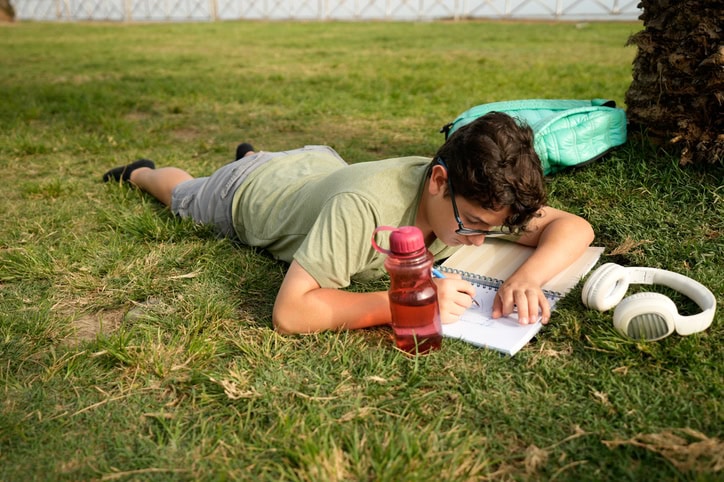
- Morning devotion or “morning watch” begins the day with a brief time of reflection, prayer, or Scripture reading. This quiet start helps campers center themselves before the activity schedule begins and establishes a rhythm of daily spiritual practice that many campers carry home with them.
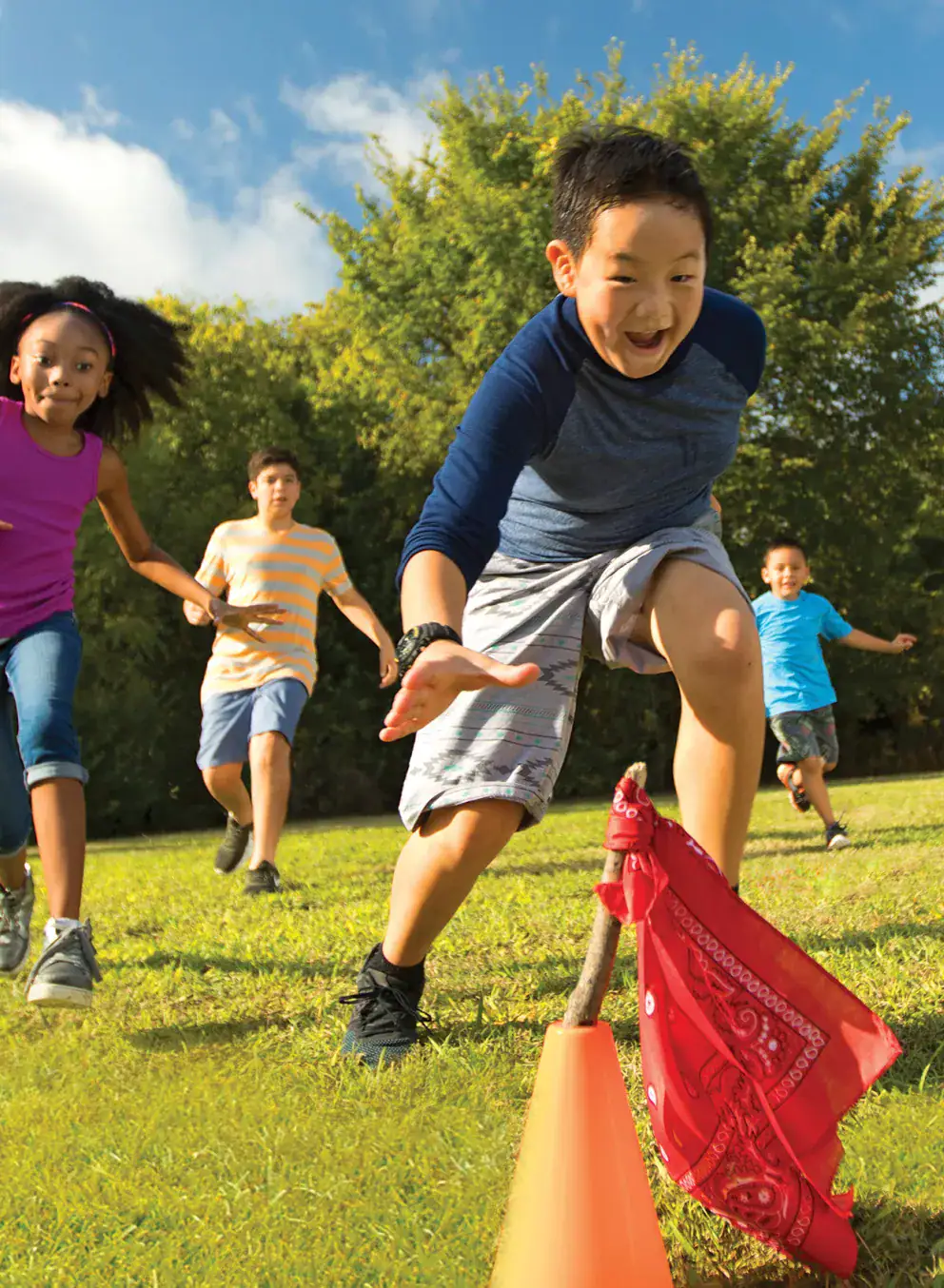
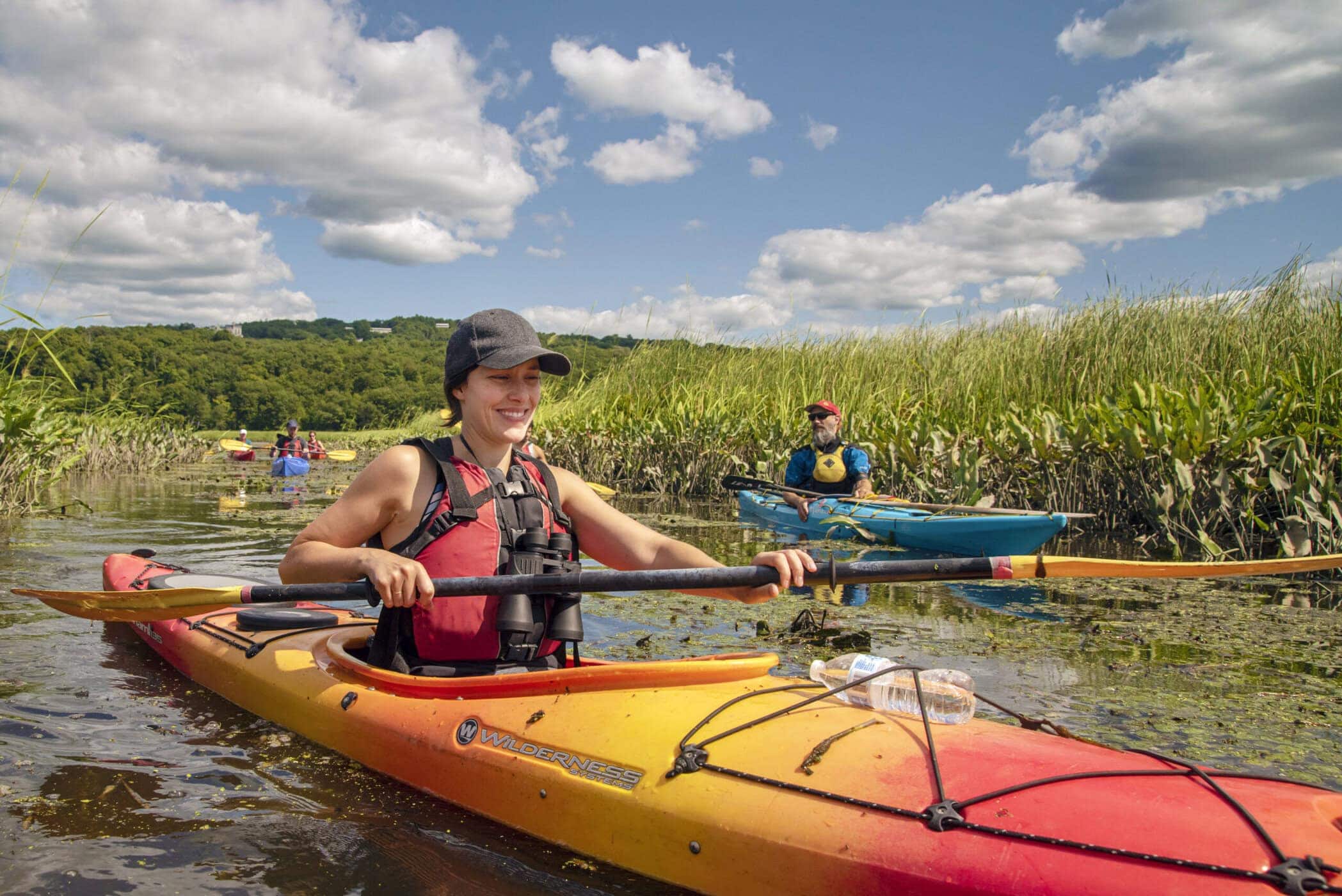
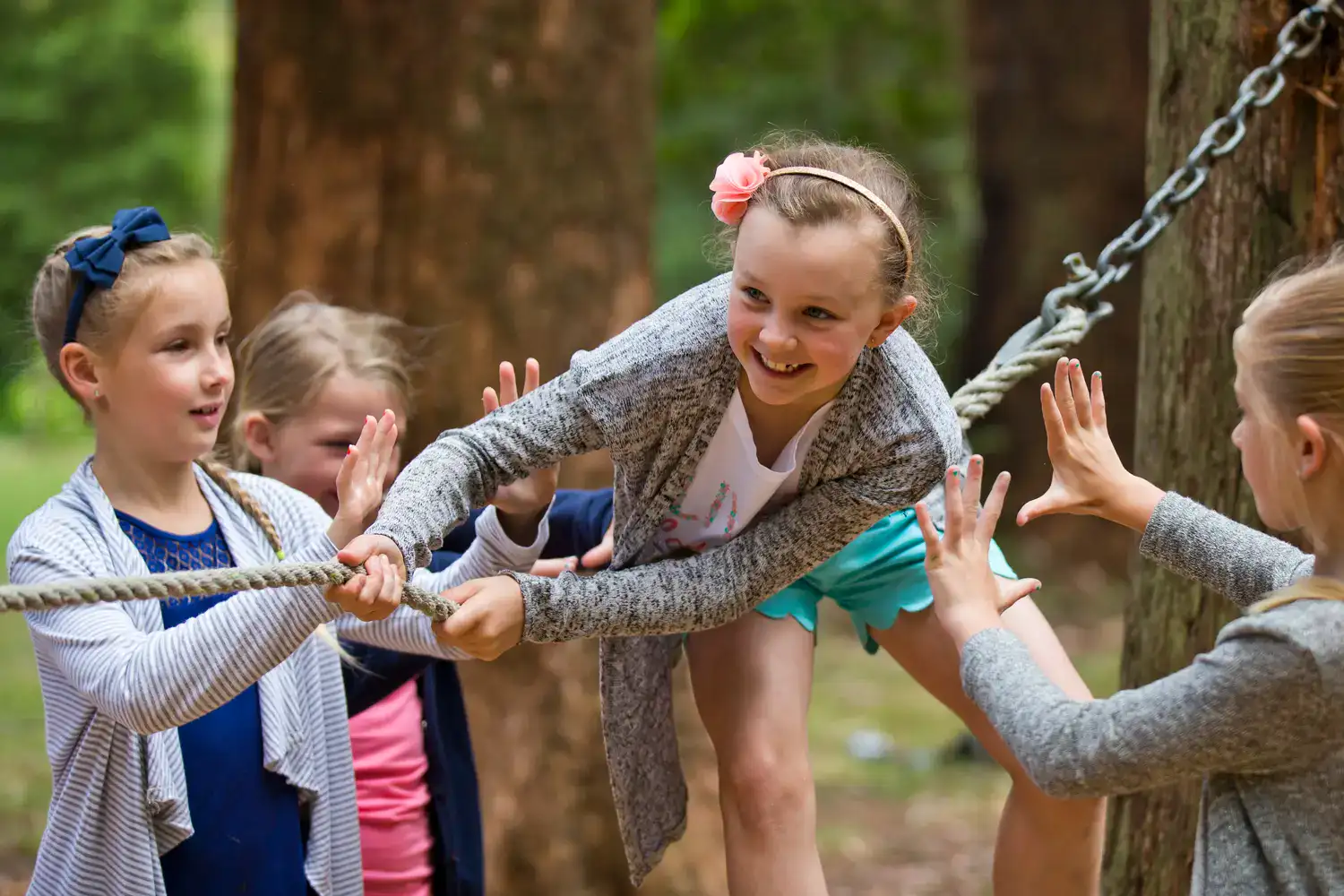
- Activity periods fill the morning and afternoon with the same high-energy programming found at any camp: horseback riding, swimming, ropes course and zip line, archery, canoeing, arts and crafts, sports, and outdoor adventures. At a Christian camp, counselors use these activities as natural opportunities to model patience, encouragement, teamwork, and grace under pressure. The faith is not separate from the activity. It is integrated into how the activity is facilitated.
- Chapel or worship service gathers the entire camp community for singing, teaching, and reflection. Chapel is the heart of the spiritual programming, where campers hear age-appropriate messages grounded in Scripture, participate in group worship, and engage in discussion about how faith applies to their daily lives. Some camps hold chapel daily; others hold it several times per week.
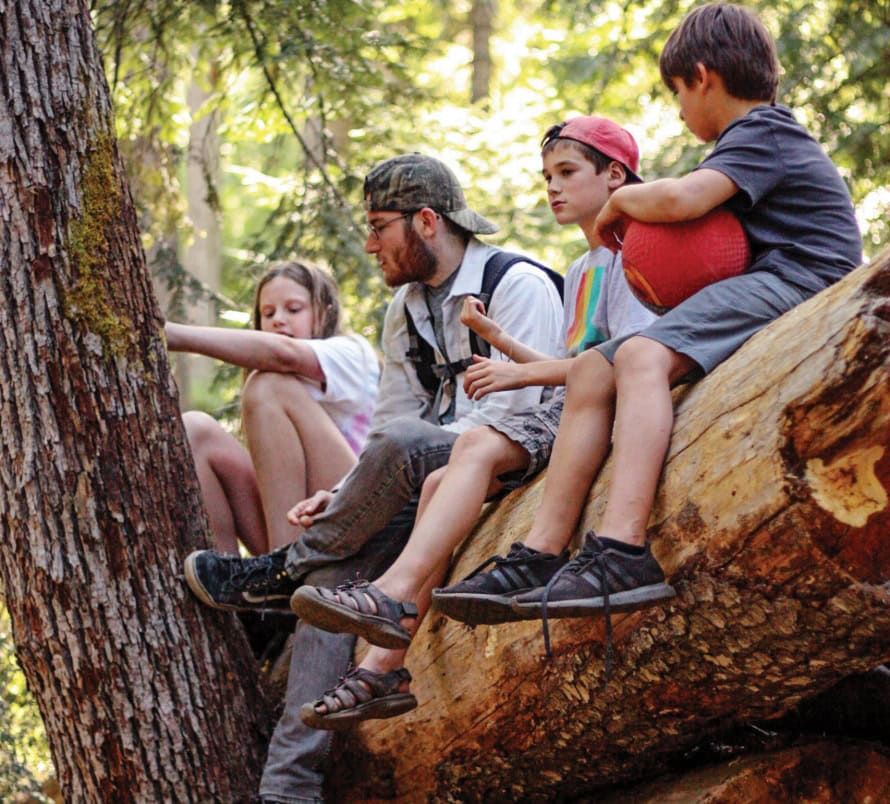
- Cabin devotions in the evening give small groups of campers and their counselor a quiet space to talk about the day, share what they learned, ask questions about faith, and pray together. This is often the most intimate and impactful part of the day because it happens in the safety of a small group where every child feels heard.
- Sunday services at camps that run over a weekend provide a communal worship experience that replaces the family’s regular church attendance for that week. Sunday services at camp often feel different from church at home because the entire community, campers, counselors, and directors, worships together in an outdoor or camp chapel setting that feels personal and alive.
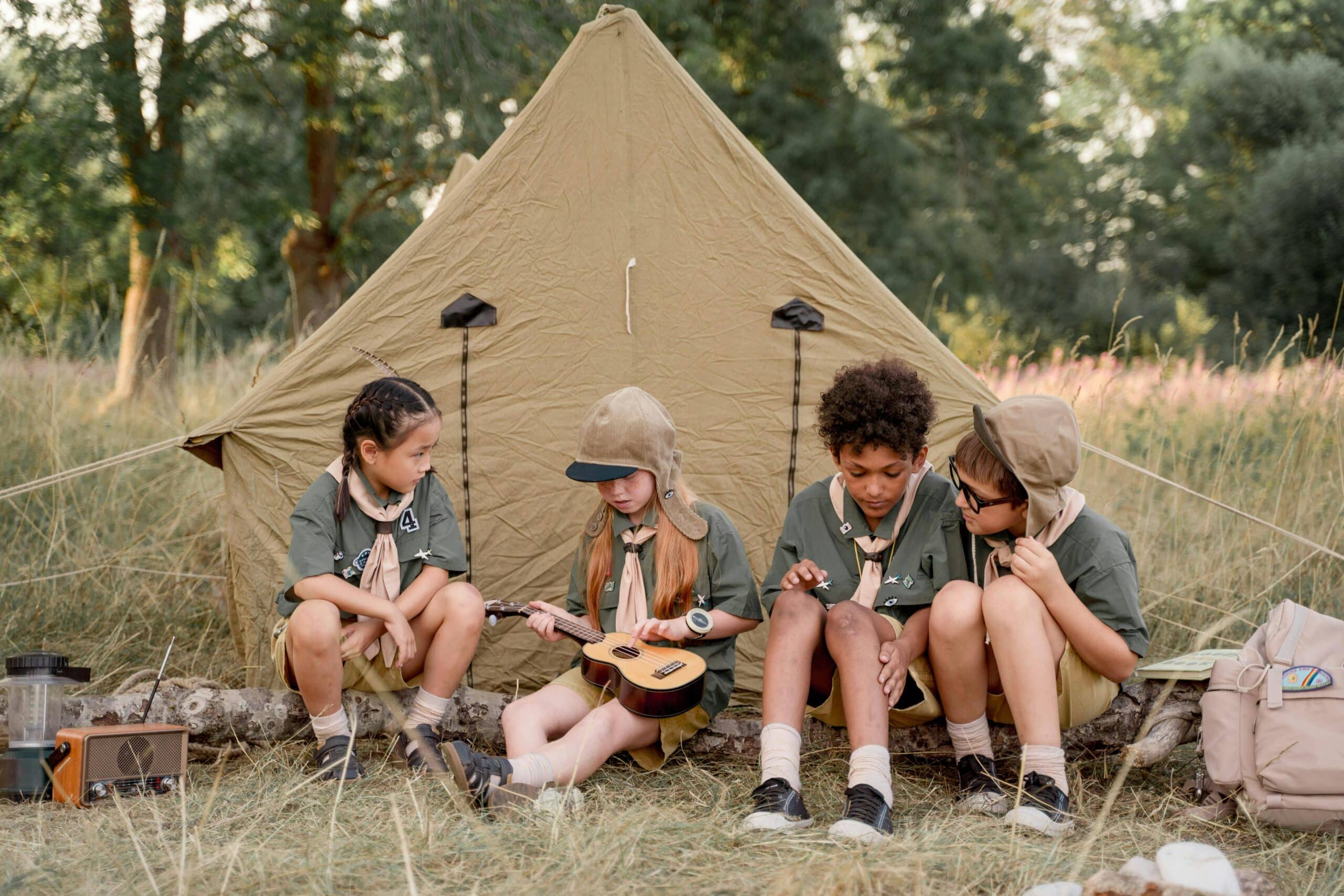
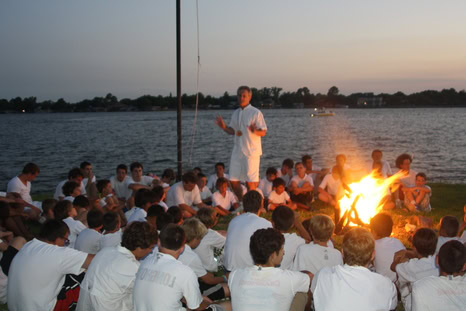
- Special events like campfire programs, talent shows, and camp traditions incorporate faith themes naturally. A campfire might include songs of worship alongside silly camp songs. A closing ceremony might include a time of prayer and blessing for the campers heading home.
What Are the Different Types of Summer Camps?
The different types of summer camps can be organized into three broad categories: secular camps, Christian or faith-based camps, and denominational camps. Each type offers quality programming, but they differ in how they approach values, community, and the role of spirituality in the camp experience.
| Dimension | Secular Summer Camp | Christian Summer Camp | Denominational Camp |
| Faith Component | None. Programming is values-neutral or broadly humanistic. | Faith integrated into daily schedule: devotions, chapel, prayer, Scripture, counselor modeling | Faith specific to one denomination (Methodist, Lutheran, Baptist, Catholic, etc.) with denominational theology and traditions |
| Activities | Full range: sports, arts, outdoor adventure, swimming, horseback riding, ropes courses | Same full range of activities, facilitated through a faith-informed lens | Same activities, sometimes with additional denominational programming (confirmation, liturgical elements) |
| Staff Values Training | Staff trained in safety, child development, activity instruction | Same safety and child development training, plus training in faith modeling, spiritual mentoring, and Biblical character | Same as Christian camp, with additional denominational training specific to the tradition |
| Accreditation | ACA (American Camp Association) | ACA plus CCCA (Christian Camp and Conference Association) or similar faith-based accrediting body | ACA plus denominational oversight (e.g., United Methodist Camp and Retreat Ministries, Lutheran Outdoor Ministries) |
| Community Culture | Built around shared fun, inclusion, and general character values | Built around shared faith, service, grace, and Biblical community | Built around denominational identity and theological tradition |
| Who Attends | Open to all families regardless of belief | Open to all families; faith participation is encouraged but typically not required | Primarily families within the denomination, though most welcome visitors |
Sources: American Camp Association (ACA), Christian Camp and Conference Association (CCCA), Lutheran Outdoor Ministries (LOM), United Methodist Camp and Retreat Ministries (UMCRM), Lifeway Research.
What Do Christian Camps Do Differently?
Christian camps do five things differently from secular camps, and each difference compounds the others to create a camp experience that develops the whole child, body, mind, social skills, and spirit.
First, Christian camps hire and train counselors who model faith in their daily conduct. At a secular camp, counselors are trained in safety, activity instruction, and child development. At a Christian camp, counselors receive the same training plus additional preparation in how to model Biblical character in real time: showing patience when a camper is frustrated, extending grace when a child makes a mistake, choosing kindness over sarcasm, and demonstrating what it looks like to live out faith in ordinary moments. The counselor’s behavior becomes a living example that children observe, internalize, and emulate. Research published in the Journal of Youth Development found that Christian camp leaders described faith integration as starting with staff: every aspect of camp, from activities to meals to cabin cleanup, becomes an opportunity for counselors to teach important lessons about life and faith.
Second, Christian camps use chapel and devotion time to create space for spiritual growth that is separate from Sunday morning church. Camp chapel is not a church service transplanted outdoors. It is designed specifically for children, with age-appropriate teaching, interactive worship, and small-group discussion that meets kids where they are developmentally. Many children experience personal spiritual growth at camp that they describe as deeper and more personal than what they experience in a typical Sunday school classroom, because the camp environment removes distractions and creates concentrated time for reflection.
Third, Christian camps build community around shared values that are explicitly articulated rather than implicitly assumed. The camp’s values, often rooted in Scripture, such as kindness, service, honesty, forgiveness, and gratitude, are named, taught, modeled, and practiced every day. This creates a social environment where children know what is expected, see it demonstrated by adults, and practice it with peers in real situations.
Fourth, Christian camps integrate faith into activities rather than separating “spiritual time” from “fun time.” A horseback riding lesson becomes an opportunity to talk about trusting something bigger than yourself. A ropes course becomes an opportunity to practice courage and to encourage a cabin mate who is afraid. A campfire becomes a space for worship, testimony, and communal prayer alongside songs and s’mores. The Effective Camp Research Project, a study of over 1,000 campers across six camps, found that the long-term benefits of Christian camp include increased self-confidence, increased church attendance, and increased personal devotional practices, benefits that persisted more than three months after the camp session ended.
Fifth, Christian camps create a screen-free, nature-immersed environment that many families describe as feeling like sacred space. The ACA reports that 97% of accredited camps limit digital devices, and Christian camps amplify this benefit by pairing the screen-free environment with intentional spiritual practice. A child who spends a week without a phone, surrounded by creation, engaged in worship, and supported by a faith community of peers and mentors, is experiencing something that most churches cannot replicate in a one-hour Sunday service.
Does Attending a Christian Camp Help Children Grow Spiritually?
Yes, attending a Christian camp helps children grow spiritually, and the research on this point is remarkably consistent. Two major studies have examined the faith impact of Christian camp experiences.
The National Study on Youth and Religion, a longitudinal study of 3,370 teenagers surveyed three times over six years, found that 80% of teens who were religious and attended a religious camp were still actively religious six years later. Only 56% of religious teens who did not attend a religious camp maintained their faith over the same period. Attending a religious summer camp increased the likelihood of sustained faith by 24 percentage points. That is one of the largest effects documented in the youth faith-formation research literature.
The Effective Camp Research Project, which studied more than 1,000 campers from six different camps, found that some benefits of the Christian camp experience were temporary, including increases in specific Bible knowledge, which faded within about two months. But the study also found lasting benefits that persisted beyond three months: increased self-confidence, increased church attendance, and increased personal devotional practices like prayer and Bible reading. The researchers summarized their findings by noting that campers gained something more valuable than theological knowledge. They gained a desire to be in Christian community, a hunger to learn more, and the assurance that faith makes a difference in their lives.
A 2018 Lifeway Research study found that 44% of Protestant churchgoing parents of young adults (ages 18-30) had sent their children to church camps and retreats during childhood. Lifeway described camp as a “milestone experience” for spiritual growth, a concentrated encounter with faith that creates a lasting reference point in a child’s spiritual development. The ACA’s own data supports the broader developmental impact: 70% of parents reported their child gained self-confidence at camp, 92% of campers said the people at camp helped them feel good about themselves, and 96% made new friends. Christian camps produce all of these outcomes plus the additional dimension of spiritual growth.
Do You Have to Be Christian to Attend a Christian Summer Camp?
No, you do not have to be Christian to attend a Christian summer camp. Most Christian camps welcome families of all faith backgrounds, including families with no religious affiliation. The camp’s Christian identity shapes the environment, the values, the staff culture, and the programming, but attendance is not typically restricted to Christian families. Children who attend from non-Christian or non-religious backgrounds participate in the same activities, live in the same cabins, eat the same meals, and are included in the same community as every other camper.
Chapel services, devotions, and prayer are part of the daily schedule, and all campers are encouraged to participate. However, participation is typically invitational rather than coercive. A child who is not comfortable praying aloud is never forced to do so. A child who has questions about faith is welcomed into conversation, not lectured. The goal of a Christian camp is not to pressure children into belief but to create an environment where faith is visible, accessible, and modeled by caring adults, so that every child, regardless of her starting point, has the opportunity to explore spiritual questions in a safe and supportive setting.
Families considering a Christian camp for the first time should review what campers can expect and contact the camp directly with any questions about the spiritual programming. Reputable Christian camps are transparent about their faith approach and are happy to explain how chapel, devotions, and prayer fit into the daily experience.
How Do You Choose the Right Christian Camp?
Choosing the right Christian camp involves evaluating the same factors you would consider for any camp, plus a few additional questions specific to the faith dimension. Parents should look for:
- ACA accreditation, which confirms the camp meets more than 300 health and safety standards covering staffing, facilities, transportation, emergency procedures, and program quality. An ACA-accredited camp has been independently reviewed and verified by trained professionals.
- CCCA membership or certification, which indicates the camp is part of the Christian camping professional community and adheres to faith-based standards of excellence in addition to ACA standards. CCCA camps are committed to quality, safety, and intentional spiritual programming.
- Staff training and character. Ask how counselors are selected, trained, and supervised. Christian camp counselors should be trained in child development, activity safety, and faith modeling. Ask whether counselors go through background checks, reference checks, and pre-summer training that includes spiritual mentoring preparation.
- The camp’s approach to faith integration. Some Christian camps are heavily evangelistic, with altar calls and conversion-focused programming. Others are more formation-oriented, focusing on building a child’s relationship with God through community, nature, worship, and service. Understanding where a camp falls on this spectrum helps families choose a program that matches their own faith tradition and comfort level.
- Activity variety and quality. A strong Christian camp does not sacrifice activity programming for spiritual programming. It integrates the two. Look for a camp that offers a full range of activities, from outdoor adventure to arts to sports, delivered by trained instructors who also model faith in their interactions with campers.
- Session length and format. Christian camps offer sessions ranging from short-term (one week) to long-term (two weeks or more), as well as day camp options for younger children or families new to the camp experience. Choose a session length that matches your daughter’s readiness and your family’s schedule.
Frequently Asked Questions
What Is the Best Age to Send a Child to Christian Camp?
The best age to send a child to Christian camp is typically between 7 and 10 for a first overnight experience, though some camps offer day programs for children as young as 5 or 6. The child should be able to manage basic self-care, follow directions from adults who are not her parents, and express curiosity about the camp experience. Readiness for the spiritual component is less about age and more about the family’s existing faith practices. A child who is accustomed to Sunday school, family prayer, or church attendance will find the faith elements of camp familiar and comfortable.
Are Christian Camps Safe?
Yes, Christian camps that hold ACA accreditation meet the same rigorous safety standards as any accredited camp, covering staff training, health services, emergency procedures, facility maintenance, and program quality. Many Christian camps also hold CCCA certification, which adds an additional layer of accountability. The combination of ACA and CCCA standards represents the highest level of professional oversight in the camping industry.
Will My Child Be Pressured to Convert?
At reputable Christian camps, the approach to faith is invitational, not coercive. Campers are invited to participate in chapel, devotions, and prayer, but no child is pressured to make a faith commitment she is not ready for. The goal is to create an environment where spiritual questions are welcomed and explored, not to force a particular outcome. Parents who have questions about a camp’s specific approach should ask the camp director directly before enrollment.
What If My Child Has Never Been to Church?
A child who has never been to church can still have a wonderful experience at a Christian camp. The camp environment is different from a church service: it is interactive, outdoor, peer-driven, and facilitated by young adult counselors who relate to children on their level. Many camp directors report that children with no church background are among the most engaged participants because everything is new and exciting. The camp experience meets children where they are and invites them into a community built on kindness, fun, and faith without requiring any prior religious knowledge.
How Is a Christian Camp Different from Vacation Bible School?
A Christian camp is different from Vacation Bible School (VBS) in duration, immersion, and developmental impact. VBS typically runs for a few hours each day over one week and takes place at the child’s home church with familiar faces. Camp is a full-immersion experience where the child lives away from home, spends 24 hours a day in a faith community, and engages in outdoor adventure alongside spiritual programming. The Effective Camp Research Project found that the immersive, residential nature of the camp experience produces lasting changes in self-confidence, church attendance, and devotional practices that short-duration programs like VBS do not typically achieve.
What It Comes Down To
A Christian summer camp gives a child everything a great secular camp provides, friendship, adventure, independence, confidence, and physical activity, plus a spiritual foundation that research shows persists for months and years after the last campfire. The National Study on Youth and Religion found that attending a religious camp increased the likelihood of sustained faith by 24 percentage points over six years. The Effective Camp Research Project found that campers left with increased self-confidence, church attendance, and personal devotional practices that lasted well beyond the session. These are not small effects. They represent measurable, lasting changes in how a child relates to her faith, her community, and herself.
On the banks of Little River in Mentone, Alabama, Riverview Camp for Girls has been building faith, friendship, and confidence in girls since 1924. We are ACA-accredited, CCCA-certified, and committed to integrating faith into every part of the camp day, from morning devotions on the mountain to campfire worship under the stars. Enroll your daughter and let her experience the kind of summer that shapes not just her skills, but her heart.