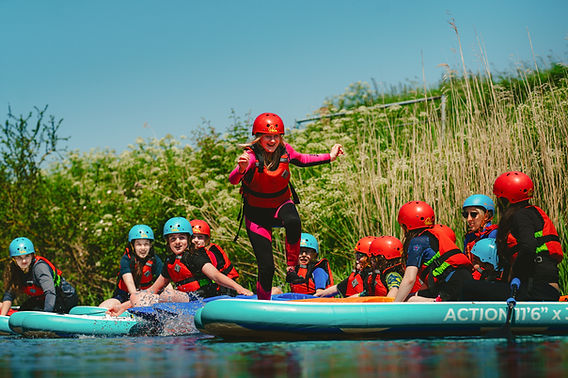

The right age to send a child to sleepaway camp falls between 7 and 12 for most children, with 8 to 9 years old being the most common and developmentally supported starting point. Data from the Summer Camp Guru database shows that 90% of traditional overnight camps in the United States accept children as young as 7, and 45% offer sessions for 6-year-olds. Camp directors, child development experts, and the American Camp Association (ACA) agree that readiness matters more than a number on a birthday cake. A child who can handle basic self-care, ask unfamiliar adults for help, and recover from a disappointment without a parent stepping in shows the core skills that predict a successful camp experience. This article breaks down what readiness looks like at each age, what developmental milestones support the decision, and how to choose the right session length for a first-time camper.
What Is the Right Age to Send a Child to Sleepaway Camp?
The right age to send a child to sleepaway camp depends on the individual child’s maturity, prior separation experience, and the camp’s programming for younger campers. There is no single perfect age. Camp directors across the country confirm that the typical starting range spans ages 7 through 12, with most first-time campers enrolling between 8 and 10. Jed Dorfman, director of Camp Walt Whitman in New Hampshire, reports that the average starting age at his camp is 8 or 9, though some campers begin happily at 7 and others wait until 10 or 11. Camp Jewell YMCA in Connecticut welcomes campers as young as 7 and describes ages 10 to 12 as the “sweet spot” for many families.
The ACA reports that 92% of campers say camp helped them feel good about themselves, and 70% of parents say their child gained self-confidence during the experience. These outcomes hold across the entire 7-to-16 age range, which means the benefits of camp are not limited to a single starting age. What matters is matching the child’s readiness to the right camp environment and session length. Understanding what campers can expect helps parents and daughters picture the experience before making the decision.
Why Readiness Matters More Than Age for Sleepaway Camp
Readiness matters more than age for sleepaway camp because two children of the same age can have vastly different levels of independence, social confidence, and emotional regulation. A mature 7-year-old who has slept at a friend’s house multiple times and handles disappointments calmly may be more ready than a sheltered 10-year-old who has never spent a night away from home. Age provides a rough guideline, but readiness provides the actual answer.
The ACA and Dr. Christopher Thurber, a Phillips Exeter Academy psychologist who has studied camp homesickness extensively, identify a practical readiness framework. A child is likely ready for sleepaway camp when she demonstrates the following skills:
- Basic self-care independence. She can dress herself, brush her teeth, wash her hair, use the bathroom, and manage her personal hygiene without a parent directing each step. Younger campers may need some help, and that is normal, but the foundation should be in place.
- Willingness to ask unfamiliar adults for help. At camp, the counselor is the go-to person, not a parent. A child who can approach a teacher, coach, or other adult she does not know well and ask for what she needs shows a critical camp readiness skill.
- Ability to recover from disappointment. Camp includes moments of frustration: losing a game, not getting the activity she wanted, missing a parent at bedtime. A child who can feel upset and then move forward without a parent smoothing things over demonstrates emotional resilience that predicts camp success.
- Some prior separation experience. A sleepover at a friend’s house, a weekend at a grandparent’s home, or even a full day at a day camp program all build the “separation muscle” that overnight camp requires. Each successful night away from home becomes evidence the child can draw on.
- Interest in going. A child who expresses curiosity or excitement about camp, even alongside nervousness, shows readiness. A child who has zero interest and is being pushed by a parent may not be ready regardless of age.
Parents can review our frequently asked questions to address specific readiness concerns before making the decision.
What Developmental Milestones Should a Child Reach Before Sleepaway Camp?
The developmental milestones a child should reach before sleepaway camp include cognitive reasoning beyond black-and-white thinking, basic emotional regulation, social perspective-taking, and functional independence in daily routines. These milestones emerge at different ages for different children, which is why readiness varies even among same-age peers.
- Cognitive reasoning (typically ages 7-9). Kyndra Luce, owner of Famous Adventures day camp and a veteran of multiple residential camps, explains that the “magic” age for sleepaway camp is 8 or 9 because this is when the brain develops a new ability to reason. The world becomes less black-and-white for children at this stage. They can understand that missing home and having fun at camp can happen at the same time, which is the cognitive flexibility that makes coping with homesickness possible.
- Emotional regulation (typically ages 7-10). A child who can name her feelings, calm herself down after a frustration, and accept that not every moment will be perfect has reached the emotional regulation milestone that supports camp success. This does not mean she never cries or never gets upset. It means she can feel the feeling and then move on.
- Social perspective-taking (typically ages 9-11). By late elementary school, most children develop the ability to see situations from another person’s point of view. This milestone supports cabin living, teamwork, and friendship-building at camp because the child can recognize that other girls have feelings and needs too.
- Functional independence (typically ages 6-8). The ability to manage a daily schedule of waking up, getting dressed, eating meals, and following a sequence of activities without step-by-step adult direction. Most children reach this milestone during early elementary school.
Research from the ACA confirms that children ages 7 to 10 can enjoy a positive overnight camp experience when the program is intentionally designed for younger campers, with higher staff-to-camper ratios, more structured schedules, and counselors trained to provide extra support during the first days.
Is 6 Too Young for Sleepaway Camp?
No, 6 is not too young for sleepaway camp at every camp, but it does require a program specifically designed for very young campers. Data from the Summer Camp Guru database shows that 45% of traditional overnight camps offer sessions for 6-year-olds or rising first graders. These programs typically feature shorter sessions (one week or less), higher counselor-to-camper ratios, more hands-on daily care support, and activities calibrated for younger attention spans and physical abilities.
Adam Boyd, director at Camps Timberlake and Merri-Mac, reports that 6-year-olds show huge leaps of independence during camp. By the end of even a short session, their confidence level is tremendous. They also form meaningful friendships with counselors and older campers. The key for parents of 6-year-olds is choosing a camp that explicitly serves this age group with programming built for them, not a camp that simply allows younger children to attend an older-camper program. We welcome girls as young as 6 and provide counselors trained to assist with daily needs including personal hygiene and scheduling so younger campers feel supported from the first morning.
Is 7 Old Enough for Overnight Camp?
Yes, 7 is old enough for overnight camp for many children, and it is one of the most common starting ages across the industry. The Summer Camp Guru database shows that 90% of traditional camps accept 7-year-olds or rising second graders. ACA guidance confirms that many children ages 7 to 10 can enjoy a positive overnight camp experience when the camp is designed to support younger participants.
A 7-year-old who has slept away from home before, can manage basic self-care, and shows interest in the idea of camp is a strong candidate for a one-week session. A 7-year-old who has never spent a night away from her parents and shows high anxiety about separation may benefit from a few practice sleepovers before enrolling. Parents of 7-year-olds should focus on session length as a key variable. A one-week camp session gives a young first-timer enough time to settle in, make friends, and build confidence without feeling overwhelmed by a longer stay.
What Makes Ages 8 and 9 the Most Common Starting Age?
Ages 8 and 9 are the most common starting age for sleepaway camp because this is the developmental stage when children gain the cognitive, emotional, and social skills that align with what camp requires. Kyndra Luce, who worked at multiple residential camps before owning Famous Adventures day camp, explains that at ages 8 and 9, the brain develops a new ability to reason, the world becomes less black-and-white, and children become capable of taking care of themselves and their belongings independently. Camp Walt Whitman director Jed Dorfman confirms that the average first-time camper at his camp enrolls at age 8 or 9.
At 8 or 9, most children can follow a multi-step daily routine without constant reminders, resolve minor conflicts with peers without adult mediation, and understand that temporary discomfort (like missing home) does not mean something is wrong. This cognitive shift is what makes 8 and 9 the “sweet spot” that camp directors and child development experts cite most often. Here on Lookout Mountain in Mentone, Alabama, we see this age group thrive in both one-week and two-week sessions because they are old enough to manage independently but young enough to be fully open to the camp experience.
Luce also notes that allowing children to experience independence outside the home at this age builds a kind of confidence that parents cannot provide at home, no matter how supportive they are. Camp gives children proof of their own competence in a way that a parent’s reassurance alone cannot replicate. The ACA’s National Camp Impact Study confirms that high-quality camp experiences promote independence, social awareness, and perseverance in youth, with the strongest evidence appearing in children who feel both supported and challenged by the camp environment.
What About Starting Sleepaway Camp at Ages 10 to 12?
Starting sleepaway camp at ages 10 to 12 works extremely well for many families and is the range that Camp Jewell YMCA calls the “sweet spot” for overall readiness. Children in this age range typically demonstrate strong self-care skills, well-developed social awareness, and the emotional regulation needed to handle the full camp experience with minimal adjustment difficulty. The ACA reports that 96% of campers made new friends at camp, and children ages 10 to 12 are at the ideal developmental stage for building those friendships because they have strong social perspective-taking skills.
Parents who wait until 10, 11, or 12 to send their daughter to camp should not feel they have waited too long. This age range remains one of the most popular for first-time enrollment. Two-week sessions are often a great fit for this group because the child has the maturity to handle a longer stay and the extra week gives her time to deepen friendships, try more activities, and experience the full rhythm of camp traditions like campfires, special events, and team competitions. We recommend reviewing session dates and rates to find the length that matches your daughter’s readiness and your family’s schedule.
Can a Child Be Too Old to Start Sleepaway Camp?
No, a child cannot be too old to start sleepaway camp. Older first-timers, including those ages 12, 13, and 14, integrate into the camp community quickly because their social skills and emotional maturity are well-developed. Many camps offer leadership tracks and counselor-in-training programs that give older first-time campers a natural entry point with built-in responsibility and purpose.
The concern some parents have about sending an older child for the first time is that she will feel out of place among campers who have been coming for years. In practice, this rarely happens. Camp culture is designed to welcome new campers at every age. Returning campers are often the most enthusiastic about including first-timers because they remember what it felt like to be new. Older first-time campers also tend to experience less intense homesickness than younger ones, because their emotional regulation and coping skills are more developed. The ACA reports that 92% of campers feel good about themselves after the camp experience, and that statistic holds for first-timers across all ages.
How Long Should a First-Time Camper Stay at Camp?
A first-time camper should stay for a session length that matches her readiness level, with one-week sessions being the safest starting point for younger or more anxious campers and two-week sessions working well for children who show strong readiness indicators. Session length is a strategic variable that parents can use to set their daughter up for success.
For girls ages 6 to 8 who are attending camp for the first time, a one-week session provides enough time to settle in, make friends, and build confidence without the pressure of a longer commitment. The ACA notes that seeing personal growth and development takes time, especially in activity areas, which is why many camps recommend at least two weeks for the fullest experience. A one-week session is a strong foundation, and many families use it as a stepping stone. A girl who attends one week and has a positive experience often asks to sign up for two weeks the following summer.
For girls ages 9 and older with prior separation experience and solid readiness indicators, a two-week session is often the better choice. The extra time allows her to move past the adjustment period, settle into the rhythm of camp life, explore more activities, and form deeper friendships. We see the most dramatic confidence growth in campers who stay for two weeks because the second week is where the real transformation happens, after the newness wears off and she starts feeling like camp is her own.
Does Starting Camp Younger Help with Homesickness?
Yes, starting camp younger can help with homesickness because younger children often adjust to new situations more easily than older children who have never been away from home. This finding is counter-intuitive for many parents, who assume older children will cope better. Research from Dr. Christopher Thurber at Phillips Exeter Academy shows that 83% of campers experience homesickness on at least one day. The critical variable is not age but preparation. Thurber’s prevention research found that combining parent coaching with child coping education lowers first-year homesickness intensity by roughly 50%, regardless of the child’s age.
The Parent.com analysis of camp readiness cites multiple camp directors who confirm that younger first-timers (ages 7-9) tend to adjust more readily than older first-timers (ages 11-13) who have no prior separation experience. Yates Pharr, director at Falling Creek Camp, notes that camp alumni parents send their children at the earliest age allowed because they know firsthand what camp delivers and want their daughters to benefit from it as early as possible.
Thurber’s data also shows that 81% of campers recover from homesickness relatively quickly, supported by friends, counselors, and engaging activities. Only about 7% experience severe homesickness that persists. Preparing your daughter for camp with practice separations, concrete information about daily life, and confident parental messaging makes a measurable difference at every age. Parents can also read through our homesickness guide for specific strategies that work.
| Starting Age | Typical Readiness Level | Recommended Session Length | Homesickness Considerations | Best Camp Features for This Age |
| 6 to 7 | Early independence; needs higher support | 1-week starter session | May miss home but adjusts quickly with structured bonding | High staff-to-camper ratio, daily-care support, age-calibrated activities |
| 8 to 9 | Developmental “sweet spot” for reasoning and self-care | 1-week or 2-week | Adjusts more easily than older first-timers; prep lowers intensity by 50% | Mix of structured and choice-based programming, cabin bonding |
| 10 to 12 | Strong social skills, emotional regulation, independence | 2-week sessions ideal | Well-equipped to cope; benefits from deeper immersion | More activity choice, team traditions, growing responsibility |
| 13 and older | High readiness; may benefit from leadership roles | 2-week or longer | Lowest homesickness risk; highest initial social confidence | CIT/leadership programs, peer mentoring, deeper skill development |
Sources: American Camp Association; Dr. Christopher Thurber, Phillips Exeter Academy; Summer Camp Guru database; Camp Walt Whitman; Camp Jewell YMCA; Kyndra Luce, Famous Adventures
Frequently Asked Questions
Should I Start with Day Camp Before Sleepaway Camp?
Starting with day camp before sleepaway camp is a reasonable strategy for children who have never been away from home, but it is not required. Day camp introduces a child to the camp environment, group activities, and being away from parents during the day, all of which build familiarity. A Mother-Daughter Weekend is another option that lets both parent and child experience the camp setting together before committing to a full session. Many children, however, transition directly to sleepaway camp without day camp and do well, especially when they attend a one-week starter session with strong first-timer support.
What If My Child Is Not Ready for Sleepaway Camp Yet?
If your child is not ready for sleepaway camp yet, that is completely fine. Readiness develops at different rates. Focus on building the specific skills that predict camp success: practice sleepovers, encourage independence in daily routines at home, and let her make age-appropriate decisions on her own. Revisit the idea in six months or a year. Many children who are not ready at 7 are fully ready by 9, and waiting until the child is genuinely interested produces a better outcome than pushing before she is prepared.
Is It Better to Start Camp Young or Wait Until They Are Older?
Neither starting young nor waiting is universally better. Each approach has advantages. Starting younger (ages 7-9) allows a child to build a multi-year camp history, form lasting friendships, and develop independence earlier. Multiple camp directors note that younger first-timers often adjust more easily because they are more adaptable to new environments. Waiting until ages 10-12 means the child arrives with stronger social and emotional skills, which can make the experience deeper from the start. The best approach is the one that matches your individual child’s readiness.
How Do I Know If My Child Is Emotionally Ready for Camp?
A child is emotionally ready for camp when she can name and manage her feelings, tolerate temporary discomfort, and accept that not every moment will go her way. She does not need to be fearless. She needs to be able to feel nervous and still function. The Child Mind Institute notes that a child who says “I want to go but I am scared” is showing emotional readiness, because she is expressing both desire and self-awareness. A child whose anxiety is so severe that it prevents normal daily functioning at home should consult a mental health professional before enrolling.
Does Sleeping Independently at Home Matter for Camp Readiness?
Yes, sleeping independently at home matters for camp readiness because a child who regularly sleeps in her own bed through the night demonstrates the basic sleep independence that camp requires. A child who still co-sleeps with a parent every night may find the transition to sleeping in a cabin with peers more challenging. If your child is not yet sleeping independently, practicing this skill in the months before camp gives her time to build comfort with sleeping on her own before adding the new environment of camp on top of it.
What Happens on the First Day of Camp for New Campers?
On the first day of camp, new campers arrive, meet their counselors, settle into their cabins, and begin bonding with cabin mates right away. We place first-time campers in cabins with other girls who are also new, along with experienced campers eager to welcome them. A structured opening day removes the uncertainty that drives most first-day anxiety, and cabin bonding activities start within minutes of parents leaving. Most new campers are laughing and connecting with their cabin mates before the first meal.
The Bottom Line
There is no single perfect age to send a child to sleepaway camp. The right age is the age at which your daughter shows readiness: she can care for herself, ask for help, bounce back from a tough moment, and express at least some interest in going. For most children, that readiness emerges between 7 and 12, with 8 to 9 being the developmental sweet spot that camp directors and child development experts cite most often. Whether your daughter is a confident 7-year-old ready for her first one-week session or a curious 12-year-old ready to dive into two full weeks, the benefits of camp, including confidence, independence, friendship, and resilience, are available at every starting age.
At Riverview Camp for Girls, we have been welcoming first-time campers of all ages for decades. We offer one-week and two-week sessions for girls ages 6 to 16, and our team is experienced at helping nervous newcomers feel at home from the moment they arrive. If you are trying to decide whether your daughter is ready, we would love to talk it through with you. Reach us at 256-634-4043 or through our contact page.