Camp traditions act as powerful emotional anchors that reduce homesickness and build a deep sense of belonging. Shared rituals like campfires, songs, and opening ceremonies transform a group of strangers into a supportive community, helping children feel safe enough to try new things and grow in confidence. Research from the American Camp Association shows that 92% of campers say camp helped them feel good about themselves, and traditions are a primary driver behind that number. The predictable daily routines calm anxious minds in unfamiliar places. The chants, team colors, and ceremonies connect girls to a history bigger than themselves. The simple, repeated rituals replace material things with lifelong positive memories. This article explains exactly why camp traditions matter, what the research says about how rituals shape child development, and how traditions turn a summer program into an experience girls carry with them for the rest of their lives.
Why Do Camp Traditions Matter?
Camp traditions matter because they provide emotional safety, shared identity, and lasting joy in an environment where everything else is new. A girl who arrives at camp not knowing a single person can feel like she belongs within hours, not because someone told her she belongs, but because she participated in the same song, the same cheer, and the same campfire circle as every other girl around her. That participation is what creates belonging, and belonging is the foundation everything else at camp is built on.
Traditions work because they are repeated. A song sung once is entertainment. A song sung every night before dinner for an entire session becomes a ritual that marks time, creates anticipation, and bonds the group together through shared experience. Research from Dr. Barbara Fiese, a leading scholar on family rituals, found that children from families with meaningful rituals perform better academically and socially, and that disruption of rituals leads to behavioral and school problems. The same principle applies at camp. When camp life is structured around predictable, meaningful traditions, girls feel grounded even when they are far from home.
The emotional weight of traditions compounds over time. A first-year camper participates in the campfire circle and feels included. A third-year camper returns to that same circle and feels continuity, a thread connecting this summer to the ones before it. A girl who earns her team colors and learns her team songs becomes part of a lineage that stretches back years or decades. That sense of lineage is what transforms camp from a place a girl visits into a community she belongs to. The ACA’s 2005 study of over 5,000 campers across 80 camps found significant growth in self-esteem, independence, leadership, and friendship skills, and traditions are the mechanism that produces much of that growth.
Why Are Traditions Important for Kids?
Traditions are important for kids because they provide predictability, identity, and emotional connection during a developmental period when children are actively asking who they are and where they fit in. Developmental psychologist Erik Erikson identified adolescence as the critical stage of identity versus role confusion, and shared traditions help children answer those questions by giving them a group to belong to, a role to play, and a history to be part of.
The psychological mechanism behind traditions is well documented. Psychologists Edward Deci and Richard Ryan developed Self-Determination Theory (SDT), which identifies three core human motivators: autonomy (the sense that your choices matter), competence (the sense that you are capable), and relatedness (the sense that you are genuinely connected to others). Well-run camps meet all three simultaneously, and traditions are the primary vehicle for relatedness. When a girl sings the same song as every other girl in the dining hall, she experiences relatedness at a visceral, physical level. Her voice is part of a collective voice, and that experience tells her nervous system she is not alone.
Dr. Daniel Siegel and Dr. Tina Payne Bryson, authors of The Power of Showing Up, found that rituals help wire the brain for security and connection, which are foundational to lifelong mental health. Even brief but consistent traditions leave deep, positive imprints on developing brains. A nightly campfire, a morning gathering, or a weekly team competition repeated across an entire camp session creates a pattern of safety that a child’s brain recognizes and responds to with reduced anxiety and increased openness. Research from Dr. Fiese and colleagues confirmed that families who engage in regular traditions report higher levels of emotional connection and resilience, especially during times of stress. Camp operates on the same principle, compressed into a few powerful weeks.
How Do Camp Traditions Help Children Feel Like They Belong?
Camp traditions help children feel like they belong by creating shared experiences that every girl participates in equally, regardless of age, experience, or social background. When everyone in the dining hall sings the same song, everyone around the campfire hears the same story, and everyone on a team wears the same colors, the differences between girls shrink and the common ground between them expands.
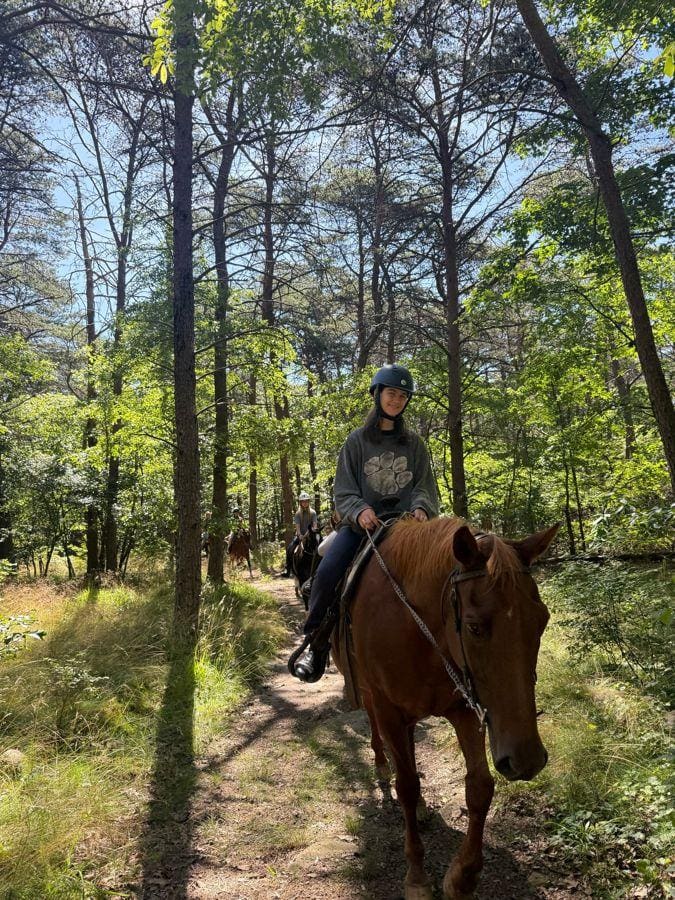
Research published in the psychology of rituals found that children who participated in group rituals reported more ingroup affiliation than children who performed the same group activity without the ritual framework. The ritual itself, the structured, repeated, symbolic nature of the action, produced the belonging effect. The activity alone did not. This finding explains why camp traditions create deeper bonds than camp activities. Horseback riding is fun, but the campfire afterward is what makes the group feel like a family.
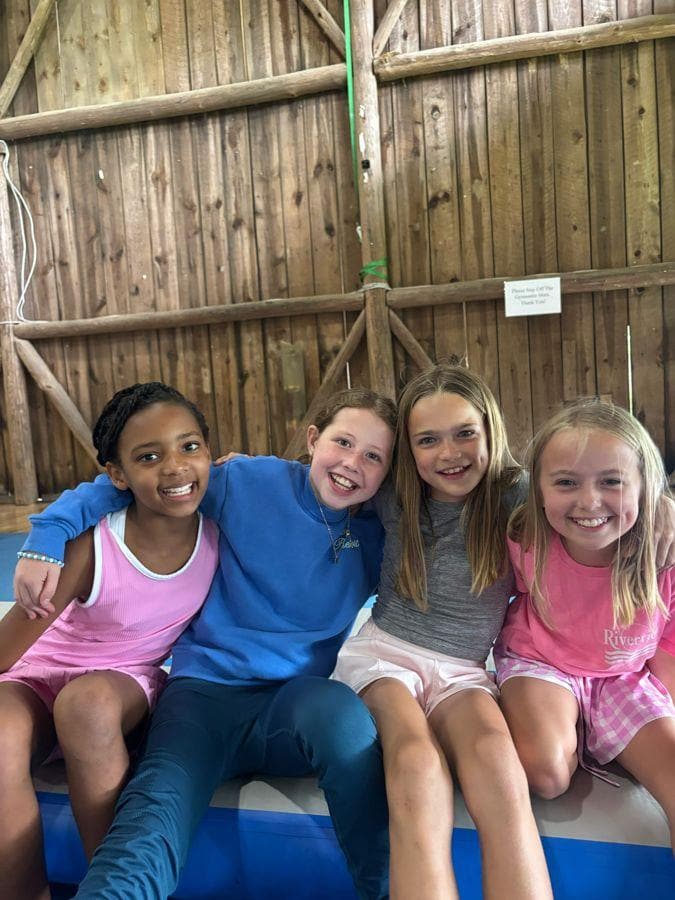
Traditions also bridge age groups in ways that unstructured socializing cannot. When a 7-year-old and a 15-year-old are on the same camp team, wearing the same colors, singing the same cheers, they share an identity that their age difference would normally prevent. The camp teams here, Archers, Monarchs, and Thunderbirds, create exactly this cross-age connection. Girls of all ages compete together, cheer together, and celebrate together, and the team identity becomes a bond that spans the full age range of the camp. The ACA reports that 96% of campers make new friends during their session, and traditions are the fastest path to those friendships because they give strangers instant common ground.
How Do Traditions Reduce Homesickness at Camp?
Traditions reduce homesickness at camp because predictable routines calm anxious minds in unfamiliar places. Research from Dr. Christopher Thurber at Phillips Exeter Academy found that 83% of campers report homesickness on at least one day of their session, but the predictability and rhythm that traditions create give homesick girls something to hold onto while everything else feels new.
Homesickness peaks during quiet, unstructured moments when a girl’s mind has space to focus on what she is missing. Traditions fill those moments with something positive, familiar, and grounding. A nightly campfire ritual gives a homesick girl something to look forward to at the end of each day. A morning gathering gives her a predictable start. A pre-meal song tells her body and brain that this place has a rhythm, a pattern, a way of doing things that she can learn and participate in. Homesickness loses its grip when a girl stops feeling like a visitor and starts feeling like a participant, and traditions are the fastest mechanism for making that shift happen.
The effect is measurable. Dr. Thurber’s research shows that 81% of campers recover from homesickness relatively quickly, supported by friends, comforted by counselors, and, critically, grounded by the camp’s daily rhythm and ritual structure. Girls who attend camps with strong traditions tend to adjust faster than girls at camps that rely on activities alone, because traditions give them something consistent to hold onto from the very first day.
What Types of Traditions Do Summer Camps Have?
Summer camps have five primary types of traditions, and each type serves a different developmental purpose: daily routines, evening and campfire rituals, team and competition traditions, ceremonial traditions, and food traditions. The combination of all five types creates a complete emotional ecosystem where every part of the day carries meaning, connection, and belonging.
Daily routines are the backbone of tradition at camp. Morning gatherings, cabin clean-ups, shared responsibilities, and structured transitions between activities give each day a familiar shape. These routines sound ordinary, but they are the most powerful tradition type for reducing anxiety because they are the most frequent. A girl who knows what comes next feels safer than a girl who does not, and daily routines provide that certainty from sunrise to lights-out.
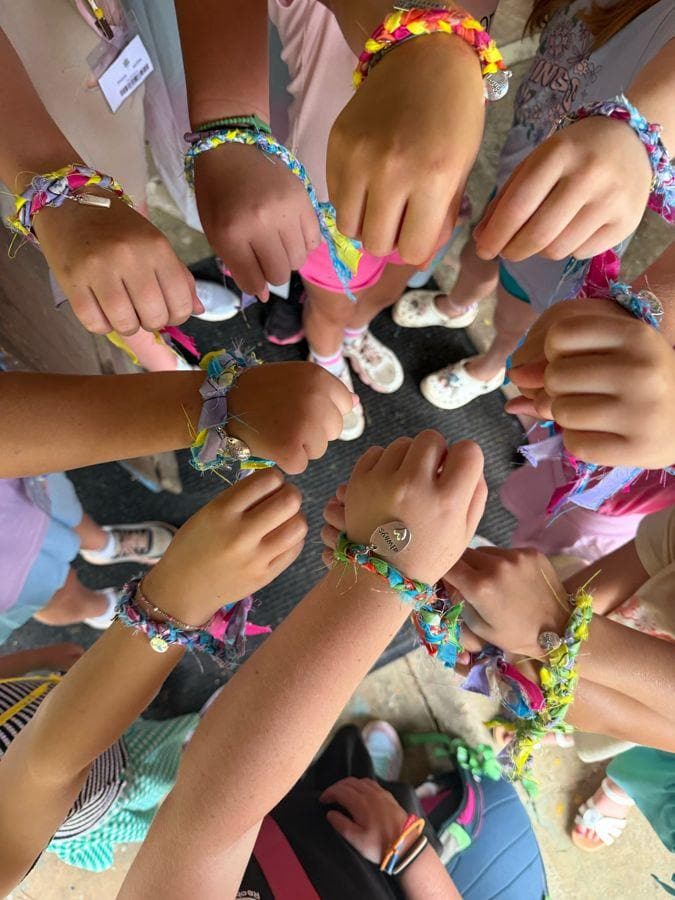
Evening and campfire rituals are where the day comes together emotionally. After hours of activity, the campfire circle slows everything down. Songs, stories, and reflection create space for real conversation and emotional processing. We gather for Vesper campfires every evening at Riverview, and these nightly traditions include singing together and talks that inspire. The special events that fill our evenings give every girl something to look forward to and something to remember.
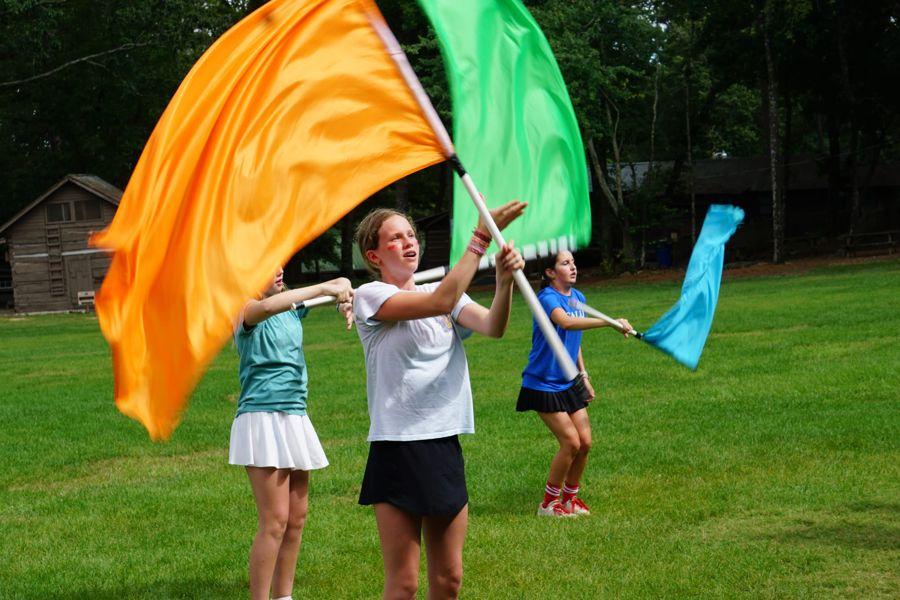
Team and competition traditions create identity and pride. When girls are sorted into teams, given colors, taught cheers, and sent into friendly competition, they experience loyalty, camaraderie, and collective effort. The tradition of team competition connects older and younger campers on the same side, creating natural mentorship and cross-age friendship.
Ceremonial traditions mark the beginning, middle, and end of the camp session. Opening day ceremonies welcome girls into the community. Closing day ceremonies honor the connections made and the growth achieved. These bookend traditions give the summer a narrative arc, a beginning and an ending that make the experience feel complete and meaningful rather than random.
Food traditions bond campers through shared sensory experience. A special dessert on a specific night, a song before meals, or a particular way the dining hall operates becomes a ritual that girls associate with warmth, community, and joy. Food traditions are among the most commonly remembered traditions years after camp ends, because taste and smell are the senses most strongly linked to emotional memory.
| Tradition Type | Belonging | Leadership | Memory | Friendship | Emotional Safety |
|---|---|---|---|---|---|
| Daily Routines | High: participation signals membership | Moderate: older campers model routines | Moderate: remembered through repetition | High: shared routines create cabin bonds | Very high: predictability reduces anxiety |
| Campfire and Evening | Very high: whole-camp participation | High: counselors and older campers lead | Very high: sensory and emotional imprint | High: quiet moments deepen connection | High: grounding ritual at end of day |
| Team Competition | Very high: shared identity through colors and cheers | Very high: team leaders emerge naturally | Very high: peak emotional moments | Very high: cross-age bonding on same team | Moderate: competition adds excitement |
| Ceremonies | High: marks passage and membership | High: older campers play ceremonial roles | Very high: milestone moments stick | Moderate: shared reflection builds empathy | High: gives the summer narrative structure |
| Food Traditions | Moderate: communal eating signals family | Low: less leadership opportunity | Very high: taste and smell anchor memory | High: shared table creates conversation | Moderate: comfort through familiar treats |
Each tradition type contributes differently to a girl’s camp experience, and the most powerful camp programs incorporate all five. A camp with strong daily routines but no campfire tradition misses the evening grounding effect. A camp with great ceremonies but weak daily structure leaves gaps in the emotional rhythm of the day. The combination of all five types is what produces the deep sense of belonging that parents notice when their daughter comes home talking about camp as though it were a second family.
How Do Camp Traditions Build Leadership in Older Campers?
Camp traditions build leadership in older campers by creating a natural progression from participant to leader that happens organically across multiple summers. A girl who arrives at age 7 as a first-time participant in team cheers, campfire songs, and cabin routines gradually becomes the girl who teaches those same traditions to younger campers, and that progression from learner to leader is one of the most powerful confidence-building mechanisms camp offers.
The leadership progression follows a predictable path:
- First summer: A new camper learns the traditions by watching, listening, and participating alongside returning campers who model the rituals.
- Second and third summers: A returning camper knows the traditions well enough to participate confidently and begins helping newer girls learn the songs, cheers, and routines.
- Fourth and fifth summers: An experienced camper takes on informal leadership roles within her team, her cabin, and the broader camp community, passing traditions forward to younger girls.
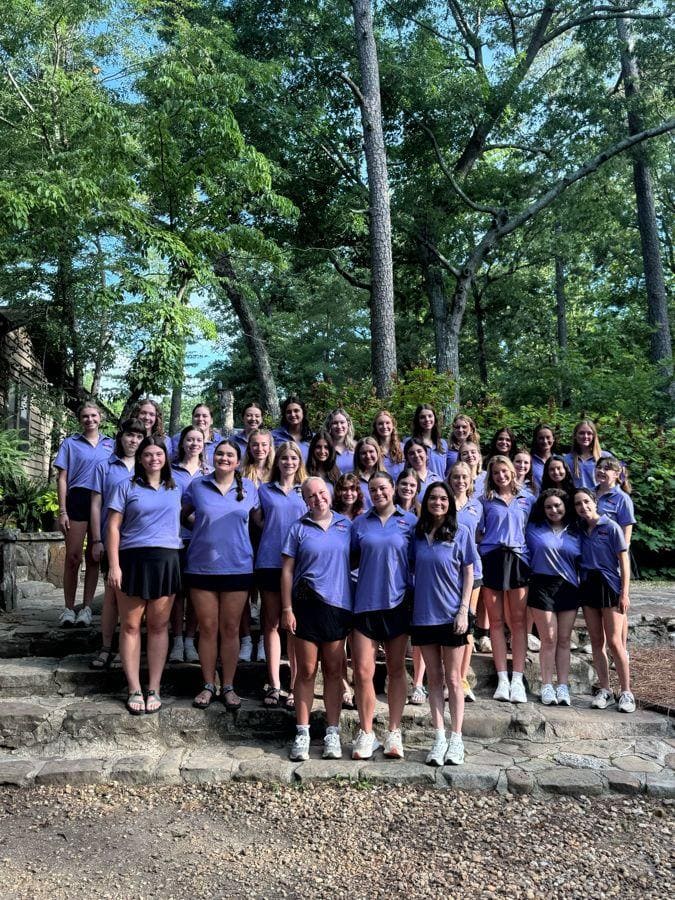
- Final summers: The most experienced campers serve as team leaders, lead campfire songs, and take on Counselor-In-Training roles that formalize the leadership they have been practicing for years.
This progression builds confidence because the leadership is earned through experience, not assigned by an adult. A girl who leads her team’s cheer at a camp event is leading because she has participated in that cheer for five summers and knows it by heart. Her authority comes from her history with the tradition, and that kind of authority carries a weight that no title or badge can replicate. The ACA reports that 70% of parents say their child gained self-confidence at camp, and traditions are a primary pathway to that confidence because they give returning campers a visible, respected role within the community. The 10-year blanket at Riverview honors girls who return for a decade of summers, and more than 250 girls have earned this recognition, a testament to how deeply traditions anchor a girl to her camp community.
Why Do Campers Remember Traditions More Than Activities?
Campers remember traditions more than activities because traditions carry emotional meaning that compounds through repetition, while activities produce individual memories that fade more quickly. A girl may forget which horseback riding class she took on a Tuesday afternoon three summers ago, but she will remember the campfire song she sang every single night because that song became woven into her emotional identity at camp.
The psychology behind this is straightforward. Repetition strengthens neural pathways associated with a memory, and emotional context deepens the encoding. A tradition that is repeated nightly for two weeks and associated with warmth, belonging, laughter, and connection produces a memory trace that is dramatically stronger than a single activity experienced once. Research from Dr. Emily Esfahani Smith, author of The Power of Meaning, identifies rituals and traditions as key ways people find purpose in their lives because they help mark time, reflect on values, and stay connected to something larger than themselves.
Traditions also produce shared memories rather than individual ones. A girl who completes horseback riding has an individual accomplishment. A cabin full of girls who sang their team song together at the final campfire has a collective memory that belongs to all of them equally. Shared memories are the foundation of lasting friendships because they give people something to return to, something that belongs to the group rather than to any one person. Research shows that 76% of campers report learning something new at camp, but the traditions are what they carry home and reference months and years later in conversations with camp friends.
Do Camp Traditions Help Kids Make Friends Faster?
Camp traditions help kids make friends faster because shared rituals create instant common ground between girls who have never met before. When every girl in a cabin participates in the same morning routine, sings the same pre-meal song, and wears the same team colors, the barriers between strangers dissolve far more quickly than they would through unstructured socializing.
The mechanism is the same one that makes team sports bond players quickly: shared action in pursuit of a common purpose. Traditions provide that shared action without requiring any particular skill or experience. A girl who has never played a sport in her life can still sing a campfire song, participate in a team cheer, and contribute to a cabin clean-up. The participation itself is the bonding agent, and the tradition’s structure makes participation accessible to every girl regardless of background, personality, or prior camp experience.
Girls who are naturally quiet or shy benefit from traditions the most because traditions provide structured, low-pressure participation that does not require initiating conversation. A shy camper who struggles to approach a stranger in an unstructured setting can stand in a campfire circle and sing alongside that same stranger without any social risk. The singing is the connection. The shared ritual is the bridge. By the time the tradition ends, the two girls have something in common, and conversation flows naturally from there. The ACA reports that 33% of parents notice increased independence in their children after camp, and that independence often begins with the confidence a girl gains from participating in traditions alongside peers who accept her exactly as she is.
What Are the Benefits of Camping for Children?
The benefits of camping for children include increased self-confidence, stronger social skills, greater independence, improved emotional regulation, deeper resilience, and a sense of belonging that extends beyond the summer. Over 26 million children and adults participate in camp experiences annually according to the ACA, and the research consistently shows that camp produces developmental benefits that school, sports, and family vacations cannot replicate on their own.
Camp achieves these benefits by combining physical challenge, social immersion, and screen-free living into a single extended experience. A girl at camp is not just trying a new activity; she is trying it alongside peers, under the guidance of a trusted counselor, within a community held together by traditions that tell her she belongs. That combination is what produces lasting change. A week of swimming lessons at a local pool builds one skill. A week of swimming, campfire songs, cabin bonding, team competitions, and morning gatherings at camp builds a foundation of confidence, friendship, and identity that a girl carries with her into the school year and beyond.
What Makes a Tradition-Rich Camp Different from Other Camps?
A tradition-rich camp is different from other camps because it prioritizes the emotional experience of belonging alongside the physical experience of activities. Activities engage and excite children, but traditions shape them. A camp with a strong ropes course and a packed activity schedule gives girls a fun summer. A camp with all of that plus deep-rooted traditions gives girls a community they return to year after year.
Signs of a tradition-rich camp include:
- A structured daily rhythm that includes rituals at the beginning and end of each day, not just activities in between.
- Camp teams or groups that create cross-age identity and friendly competition with their own songs, colors, and cheers.
- Evening programs that bring the entire camp together for shared experiences like campfires, singing, and reflection.
- Ceremonial traditions that mark the opening and closing of each session with intention and meaning.
- A high camper return rate, because girls who experience strong traditions want to come back and bring their friends.
- Multi-generational participation, where parents who attended as children send their own daughters because the traditions meant that much to them.
Nestled atop Lookout Mountain in Mentone, Alabama, we have been building and maintaining these traditions since 1997. Morning Watch, Vesper campfires, team competitions among the Archers, Monarchs, and Thunderbirds, and the 10-year blanket ceremony are all part of a living tradition that connects each summer to the ones before it. Traditions give camp its soul, and a camp with a strong soul gives girls something they remember, reference, and return to for years.
Frequently Asked Questions
How Do Traditions Connect Different Age Groups at Camp?
Traditions connect different age groups at camp by placing girls of all ages on the same teams, in the same campfire circles, and in the same ceremonial traditions. A 7-year-old and a 15-year-old on the same team share an identity that their age difference would normally prevent. Older campers naturally mentor younger ones by teaching them the songs, cheers, and routines, and that mentorship creates bonds that bridge the age gap.
Can a First-Time Camper Participate in Traditions Right Away?
A first-time camper can participate in traditions right away because traditions are designed to be inclusive and accessible. Songs, cheers, campfire circles, and team activities do not require prior experience. Returning campers and counselors model the traditions, and new girls learn by watching and joining in. Most first-time campers are fully participating within the first day or two.
How Do Camp Traditions Help Kids After They Go Home?
Camp traditions help kids after they go home by giving them shared reference points with their camp friends, a sense of identity that extends beyond the summer, and emotional anchors they can return to mentally during stressful or lonely moments during the school year. Many campers sing camp songs at home, reference inside jokes from traditions, and reconnect with camp friends over the shared memories that traditions created.
What Role Do Spiritual Traditions Play at Camp?
Spiritual traditions at camp provide a layer of meaning and reflection that complements the social and physical dimensions of the camp experience. Morning devotionals, evening reflections, and weekly gatherings give campers space to think about gratitude, kindness, and their connection to something beyond themselves. These traditions often become some of the most meaningful and most remembered parts of the camp experience.
Do Camp Traditions Change Over Time or Stay the Same?
Camp traditions evolve gradually over time while maintaining their core meaning. The best camps honor long-standing traditions that connect current campers to previous generations while remaining open to creating new traditions that reflect the needs and interests of today’s girls. A healthy camp tradition is one that still resonates with the campers who participate in it, and camp leadership regularly evaluates which traditions carry forward and which ones need refreshing.
What It All Comes Down To
Camp traditions matter because they do something that activities alone cannot: they give a girl a sense of belonging that is earned through shared experience, deepened through repetition, and carried forward through memory. The campfire song she learns on her first night becomes the campfire song she leads on her fifth summer. The team colors she wears as a nervous 7-year-old become the team colors she cheers for as a confident 15-year-old. The traditions are the thread that connects each summer to the next, and each girl to every other girl who has participated in the same rituals before her.
We have watched this happen for decades. A girl arrives as a stranger, participates in her first campfire, learns her first team cheer, and by the end of the session she is talking about camp as though she has been part of it her entire life. That is the power of traditions. Riverview Camp for Girls is built on traditions that have been shaping girls into confident, connected, compassionate young women since the day we opened our doors. If you want your daughter to experience that kind of belonging, call us at 800-882-0722 or visit our enrollment page to learn more.