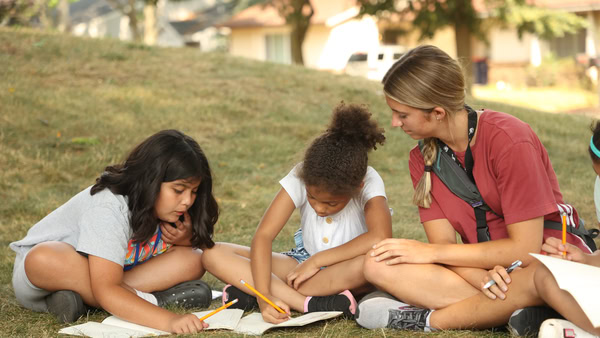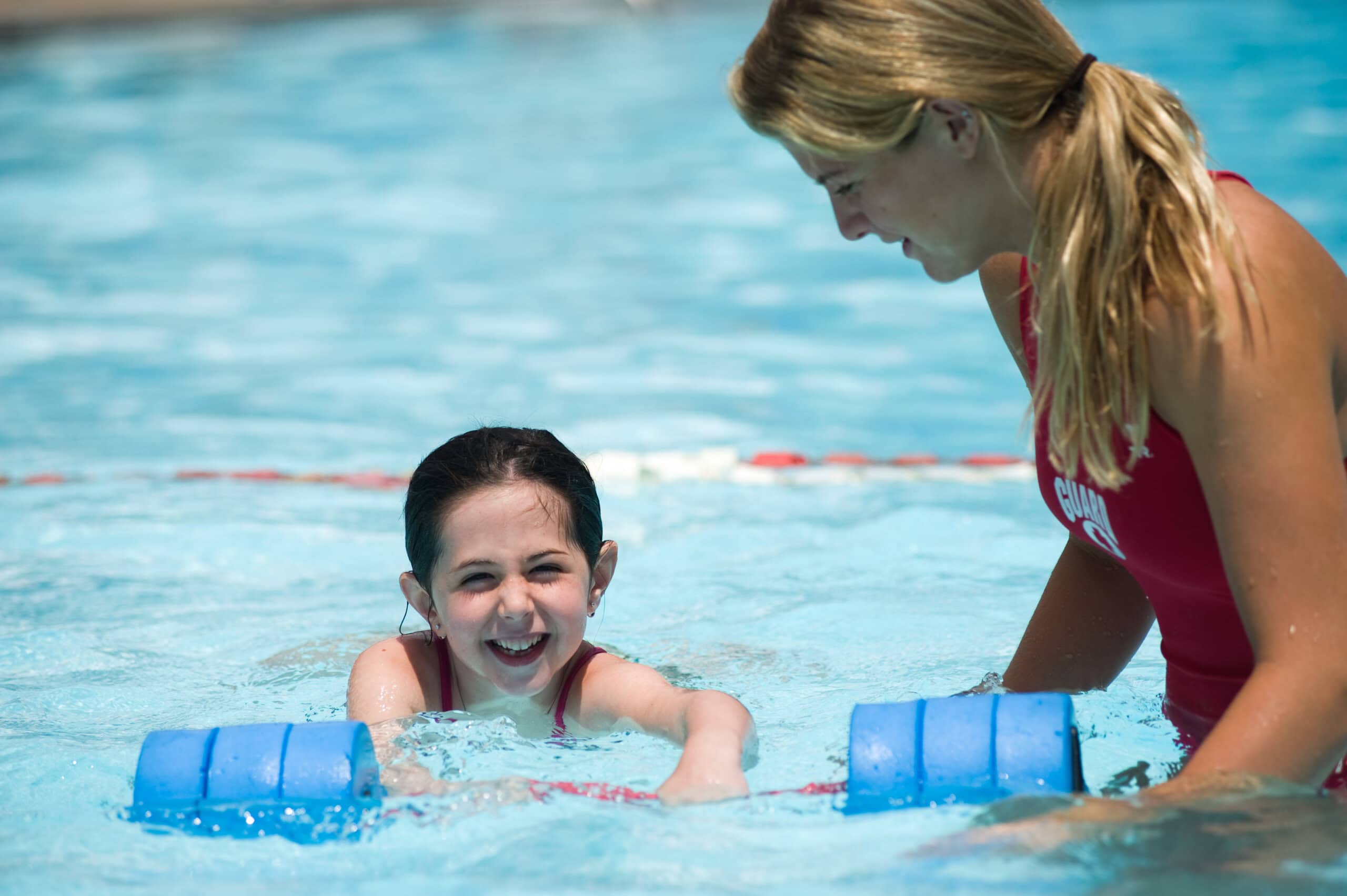

Sending your child to the same camp every year helps them build deeper friendships, grow into leadership roles, and feel a strong sense of community that compounds with each returning summer. Research conducted by Bundy, Ellis, and Roark through the American Camp Association (ACA) found that three critical developmental outcomes, friendship skills, competence, and independence, progressively increase with each additional summer a child attends the same camp. Those gains are not marginal. They are cumulative. A first-year camper learns the ropes. A second-year camper deepens friendships and tries harder activities. A third-year camper mentors younger girls and steps into leadership. By year four and beyond, camp becomes a core part of who she is. This article covers why returning to the same camp matters, how familiarity reduces anxiety, how friendships and leadership grow year over year, why traditions play such an important role, and how to know whether your daughter’s camp is the right long-term fit.
Why Sending Your Child to the Same Camp Every Year Builds Stronger Outcomes
Sending your child to the same camp every year builds stronger outcomes because the benefits of camp are cumulative, not one-time. A single summer at camp produces real growth in confidence, social skills, and independence. The ACA’s Youth Development Outcomes study, conducted with over 5,000 families across 80 accredited camps, confirmed that parents, campers, and staff all reported significant gains in those areas after just one session. But the research by Bundy, Ellis, and Roark (2008) went further. Their study of campers aged 8 to 16 found that friendship skills, competence, and independence did not just appear during one summer. Those outcomes increased progressively the more summers a child returned to the same camp.
The mechanism behind this compounding effect is straightforward. A returning camper does not start from zero. She arrives knowing the layout of camp, the daily schedule, the songs, the counselors, and most of the girls in her cabin. That familiarity eliminates the adjustment period that consumes the first several days for new campers and puts the returning camper into growth mode immediately. According to the ACA’s five-year National Camp Impact Study, conducted by the University of Utah with 80 participating camps from 2017 to 2022, high-quality camp experiences promote youth outcomes in independence, social awareness, and connection to nature. Those outcomes strengthen when the child returns to a familiar environment where she already feels safe, known, and valued.
We see this compounding effect at Riverview every summer. Girls who arrive for their second or third year walk through the gate with a confidence their first-year selves would not recognize. They know exactly where to go, who to look for, and what to expect. That familiarity does not breed complacency. Familiarity breeds freedom, the freedom to take bigger risks, try harder activities, and invest more deeply in the camp life they already love.
Do Returning Campers Make Better Friends at Camp?
Yes, returning campers make better friends at camp because they build on existing relationships rather than starting from scratch each summer. A first-year camper spends her first days learning names, figuring out social dynamics, and finding her place in the cabin. A returning camper walks in already connected. She already has friends from last year. She already trusts her counselors. She already knows the inside jokes, the traditions, and the rhythms of the day. That head start means her friendships deepen faster and reach a level of closeness that first-year connections rarely achieve in a single session.
The ACA’s Youth Development Outcomes research found that 96% of campers report camp helped them make new friends, 93% say camp helped them get to know kids who are different from them, and 92% report that people at camp helped them feel good about themselves. Research compiled by Sunshine Parenting found that 100% of campers surveyed reported making new friends at camp, with 99% of their parents confirming the same. Those numbers are remarkable for any youth program, and they reflect the unique social design of camp: shared cabins, shared meals, shared challenges, and shared traditions create bonds that school friendships, built primarily on geographic proximity, rarely match.
Returning campers experience these friendship benefits at an even deeper level. A girl who has spent two or three summers with the same group of friends has a relationship built on shared campfire memories, rainy-day cabin games, ropes course victories, and late-night conversations that happened far from screens and social media. Those bonds create what social psychologists call “in-group identity,” a sense of belonging to a specific group with shared values and experiences. That identity endures across the school year, across state lines, and often across decades. Many of the strongest friendships at Riverview began between girls who were six or seven years old and returned together summer after summer until they aged out of the camper program.
How Does Camp Familiarity Reduce Homesickness?
Camp familiarity reduces homesickness because returning campers already know the environment, the people, and the routines, which eliminates the uncertainty that triggers anxiety in new campers. Dr. Christopher Thurber’s research found that 83% of campers report homesick feelings on at least one day of camp. The American Psychological Association reports that about 90% of young people spending time away from home experience some degree of sad feelings. But those statistics apply primarily to first-time campers experiencing an unfamiliar environment for the first time.
Returning campers skip most of the adjustment period entirely. They do not need to learn where the dining hall is, how shower time works, or which counselor to talk to when they feel nervous. They already know. That knowledge creates what psychologists call psychological safety, the feeling that the environment is predictable, supportive, and trustworthy. Psychological safety is the foundation for risk-taking and growth. A girl who feels safe is a girl who will try the climbing wall, volunteer to sing at campfire, or reach out to the shy new camper in the bunk next to hers.
At Riverview, we see the difference between a first-year camper’s opening day and a returning camper’s opening day every session. The first-year camper clings to her parent, scans the crowd nervously, and needs her counselor’s reassurance. The returning camper sprints through the gate, spots her best friend from last summer, and disappears into a hug before her parents have finished unloading the car. That is the familiarity advantage in action, and it repeats itself every summer a girl comes back.
Does Going to the Same Camp Build Leadership Skills?
Yes, going to the same camp builds leadership skills because returning campers naturally take on progressively greater responsibility with each additional year. A first-year camper is focused on adjusting and finding her footing. A second-year camper starts helping newer girls learn the routines. A third-year camper often becomes the one younger campers look up to for guidance. By the time a girl reaches her fourth or fifth summer, she may be stepping into formal leadership roles like cabin helper or activity assistant, and by her teen years, she enters Counselors-In-Training programs that develop the skills she will carry into college and beyond.
The ACA’s National Camp Impact Study found that 70% of parents report their child gained self-confidence at camp. That confidence builds with each returning year because the challenges grow alongside the child. A girl who was nervous about the ropes course at age eight is leading her cabin group through it at age twelve. A girl who could barely paddle a canoe at age nine is teaching younger campers proper stroke technique at age thirteen. That progression from participant to mentor to leader is one of the most powerful developmental pathways camp provides, and it only works when a child returns to the same environment year after year.
According to research by Botting, Ribbe Jr, and Robinson (2021), 70.7% of camp counselors attended camp as campers themselves. That statistic reflects the depth of the leadership pipeline that returning campers create. The girl who grows up at camp does not just develop leadership skills. She becomes the next generation of leaders who shape the camp experience for the girls who follow her.
| Returning Year | Friendship Development | Leadership Growth | Skill Progression | Sense of Belonging |
|---|---|---|---|---|
| Year 1 (First Summer) | Makes new friends, learns names, finds her group | Follows routines, looks to counselors for guidance | Tries activities for the first time, discovers favorites | “I went to camp” |
| Year 2 | Reunites with camp friends, bonds deepen through shared history | Helps new campers adjust, takes on small responsibilities | Builds on previous skills, tries advanced options | “I go to camp” |
| Year 3 | Friendships become lifelong bonds built on years of shared experiences | Mentors younger girls, leads cabin activities, models behavior | Progresses toward mastery in favorite activities | “This is my camp” |
| Year 4+ | Camp friends become a second family connected across the school year | Steps into CIT, junior counselor, or formal leadership roles | Teaches skills to younger campers, explores new challenges | “Camp is part of who I am” |
The progression outlined above reflects patterns documented by the ACA’s Youth Development Outcomes research and the Bundy, Ellis, and Roark (2008) study on cumulative camp attendance. Each year builds on the last, and the developmental gains in friendship, leadership, skills, and belonging accelerate rather than plateau.
What Is the Camper to Counselor Pipeline?
The camper to counselor pipeline is the developmental pathway through which a girl progresses from first-time camper to returning camper to Counselor-In-Training to junior counselor to senior counselor over multiple summers. This pipeline is one of the most valuable outcomes of sending a child to the same camp every year, because it transforms a childhood experience into a leadership development program that extends into young adulthood.
At Riverview, our CIT program is designed for girls ages 13 to 16 and focuses on developing dependability, responsibility, maturity, and integrity. CIT participants get to learn leadership skills in one of their favorite activities by taking the activity as a participant while also helping our counselors with younger campers during another activity period.
Many of our college-age senior counselors are girls who completed the CIT Program as campers. They know the Riverview community from the inside, and their lived understanding of what it feels like to be a first-year camper shapes the way they connect with the girls in their care. The pipeline does not just develop leaders. The pipeline produces great camp counselors who return to give back to the community that shaped them.
How Do Camp Traditions Help Children Develop?
Camp traditions help children develop by creating shared rituals that build identity, reinforce values, and give returning campers a sense of ownership over a community that is truly theirs. Traditions are not just fun activities repeated each summer. Traditions are the connective tissue that holds a camp community together across years and across generations of campers.
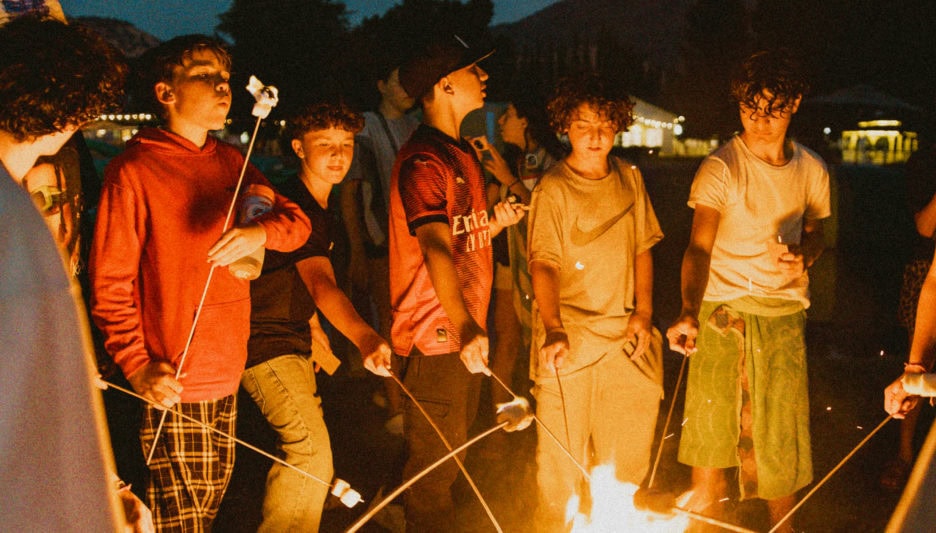
At Riverview, traditions are woven into every part of camp life. Morning Watch begins each day in a beautiful wooded setting with an enthusiastic welcome and devotional talk. Vesper campfires are a nightly ritual that includes singing and inspirational messages. Camp teams create multi-year identity and friendly competition. Sunday services in our open-air gymnasium follow homemade doughnuts at a pajama breakfast.
The 10-Year Blanket celebrates girls who have attended Riverview for a decade, marking a milestone that only a long-term commitment to the same camp can produce.
These traditions give returning campers something that no new experience can replicate: the feeling of coming home to a place that knows them. A girl who has sung the same campfire song for five summers carries that song in her heart as part of her identity. She is not just attending an activity. She is participating in a community story that she helped write. Research from the ACA’s Impact Study found that 58% of youth reported their time at camp helped them appreciate the importance of being present in the moment. Traditions are the mechanism through which that presence becomes meaningful, because traditions connect the present moment to every summer that came before it.
Does Camp Help with Screen Time and Social Connection?
Yes, camp helps with screen time and social connection by providing a sustained, technology-free environment where children practice face-to-face communication, build real relationships, and rediscover the value of being fully present. The U.S. Surgeon General’s Advisory on Social Connection reports that in-person time among young people dropped nearly 70% over the past two decades. The number of teenagers reporting being online “almost constantly” has doubled since 2015. Those trends are alarming for child development, and camp is one of the few environments that directly counteracts them.
At Riverview, campers do not bring phones. They do not scroll social media. They do not text their friends between activities. Instead, they talk to each other. They sing together. They sit on the cabin porch and share stories before bed. The ACA’s National Camp Impact Study found that 58% of youth reported camp helped them appreciate the importance of being present, specifically by taking time away from technology, developing in-person relationships, and reducing distractions. For returning campers, this benefit compounds each year. A girl who has spent five technology-free summers at camp has practiced hundreds of hours of real face-to-face conversation, conflict resolution, and emotional connection that her peers who never attended camp simply have not had.
The social skills built through those unplugged summers translate directly into stronger performance at school, in sports teams, and in future workplaces. The Rustic Pathways research compilation reports that 60% of camp alumni credit their camp experience with developing independence, teamwork, self-efficacy, leadership, and communication. Those skills were built around campfires, not screens.
Will My Child Get Bored Returning to the Same Camp?
No, children do not get bored returning to the same camp because quality camps continuously evolve programming, introduce age-appropriate challenges, and provide experiences that deepen with each returning year. This is the most common concern parents raise, and the research directly addresses it. ACA data showed consistently high satisfaction scores among returning campers, suggesting that the impact of camp carries over from one year to the next rather than diminishing.
A returning camper is not repeating the same experience. She is experiencing a more advanced version of it. The girl who tried horseback riding for the first time at age eight is working on cantering by age ten and trail riding by age twelve. The girl who watched the older campers perform at the talent show her first year is choreographing her own routine by year three. The activities may carry the same names, but the depth of the experience changes completely as the child grows. Camp Ondessonk, an ACA-accredited camp in Illinois, notes that the key to long-term engagement is not trying multiple camps. The key is finding the right camp and committing to it, because depth of experience produces greater developmental returns than breadth of novelty.
The desire to “try something different” each summer is understandable, but the research favors consistency. A national longitudinal study examining social-emotional benefits of summer camp, conducted by Sibthorp, Wilson, Povilaitis, and Browne (2020) and published in the Journal of Leisure Research, found that higher-quality camp experiences positively predicted all social-emotional outcomes, even when accounting for child and family factors. Quality, not variety, drives results.
How Do I Know If My Child’s Camp Is the Right Long-Term Fit?
You know your child’s camp is the right long-term fit when the camp’s values match your family’s values, your daughter looks forward to returning, and you see measurable growth in her confidence, independence, and relationships year over year. Committing to the same camp for multiple summers is an investment, and the right camp earns that commitment through consistent quality, safety, and genuine care for each child.
When evaluating whether a camp deserves a multi-year commitment, look for these indicators:
- ACA accreditation, which means the camp voluntarily undergoes review of up to 300 health and safety standards covering staff qualifications, emergency management, and program quality.
- A camp philosophy aligned with your family’s values. At Riverview, our Christian emphasis and focus on adventure, inspiration, character, and confidence building attract families who share those priorities.
- Strong counselor training and retention. Camps where counselors return year after year produce better outcomes than camps with high staff turnover, because returning counselors already know the campers and the community.
- Age-appropriate programming that grows with your child, from first-time camper activities through teen leadership and CIT programs.
- A culture of belonging where your daughter feels seen, known, and valued, not just entertained.
- Your daughter’s own enthusiasm. A child who counts the days until camp and talks about her camp friends during the school year is telling you everything you need to know about whether the fit is right.
The ACA serves more than 15,000 camps that annually serve 26 million campers across the United States. Among all those options, the right camp for your daughter is the one where she feels at home. Once you find that camp, the research is clear: staying with it produces compounding benefits that no amount of camp-hopping can replicate.
Frequently Asked Questions
How Many Years Should a Child Attend Summer Camp?
A child should attend summer camp for as many years as the experience continues to produce growth, connection, and genuine excitement. The Bundy, Ellis, and Roark (2008) study found that developmental outcomes increased progressively across one to five years of returning to the same camp. Many campers attend from age six or seven through their mid-teens, then transition into CIT and counselor roles that extend the experience into young adulthood. There is no upper limit on the years a child should attend, because the benefits continue compounding as long as the child remains engaged and challenged.
Do Parents Still Send Their Kids to Summer Camp?
Yes, parents still send their kids to summer camp in significant numbers. A 2024 Gallup Survey conducted in partnership with the National Summer Learning Association and the ACA found that 30 million youth participated in structured summer opportunities. The ACA reports that more than 15,000 camps across the United States serve approximately 26 million campers each year. Camp participation has remained strong and even grown as parents increasingly recognize the value of technology-free, peer-driven experiences that build independence and social skills.
Should I Send My Child to a Different Camp Each Year?
No, sending your child to a different camp each year prevents the cumulative developmental benefits that come from consistency. Research consistently shows that depth of experience at a single camp produces greater gains in friendship, competence, independence, and belonging than breadth of experience across multiple camps. Each time a child switches camps, she restarts the adjustment period, rebuilds social connections from scratch, and loses the familiarity that enables deeper growth. The most effective approach is to find the right camp and commit to it.
What If My Child Wants to Try a Different Camp?
If your child wants to try a different camp, have a conversation about what specifically she is looking for. Sometimes the desire for something new reflects a genuine interest in a specialty program, like a sports or arts camp, that her current camp does not offer. In that case, a specialty week during a different part of the summer can satisfy that curiosity without abandoning the primary camp relationship. Other times, the desire for change is simply a phase. Talk to the camp director about new programming options or session lengths that might refresh the experience without starting over somewhere else.
Can Returning Campers Attend Longer Sessions?
Yes, returning campers often extend their sessions as their comfort and enthusiasm grow. At Riverview, we offer customized combinations from two to eight weeks, and many returning campers progress from a one-week first summer to a two-week second summer to multi-session stays of three weeks or longer. Multi-session campers enjoy chaperoned excursions between sessions and the chance to deepen friendships and skills across multiple weeks of programming. The longer a returning camper stays, the more camp becomes part of her identity. Check our enrollment page to explore session options for returning families.
Does the Mother-Daughter Weekend Help Parents Connect with the Camp Community?
Yes, parent events like mother-daughter weekends create opportunities for parents to experience the camp environment firsthand and build their own connections within the camp community. When parents feel connected to the camp, they are more likely to commit to multi-year attendance, and their daughter benefits from knowing that her family values the same community she loves. These events also give parents confidence in the camp’s staff, programming, and safety, which makes the decision to return each summer easier.
What It All Comes Down To
The benefits of sending your child to the same camp every year are not theoretical. They are documented, measurable, and visible in every returning camper who walks through the gate with more confidence than she had the summer before. Friendships deepen. Leadership grows. Traditions become part of her identity. The adjustment anxiety that marked her first summer fades into the background, replaced by the joy of coming home to a place and a community that know her completely. The ACA’s research confirms that these outcomes compound with each returning year, and the 70.7% of camp counselors who were once campers themselves are living proof that the investment pays off for a lifetime.
At Riverview Camp for Girls, we have watched girls grow from nervous six-year-old first-timers into confident teenage leaders who return to give back to the community that shaped them. That transformation does not happen in one summer. That transformation happens when a family finds the right camp and stays with it, year after year, on Lookout Mountain in Mentone, Alabama. If you are looking for a camp where your daughter can build that kind of lasting connection, start the enrollment process or call us at 256-634-4043. We would love to welcome her home.