Yes, a child can learn to ride a horse at summer camp, even if that child has never stood next to a horse before. Camps that offer horseback riding programs group beginners by age and skill level, teach grooming and safety fundamentals before anyone touches a stirrup, and progress riders through walk, trot, and trail rides under the guidance of trained instructors. A 2005 study by the American Camp Association across 80 camps found that 74% of campers tried activities they were afraid of at first, and horseback riding ranks among the most popular of those first-time challenges. This article covers everything a parent needs to know: the right age to start, what the learning process looks like, the physical and emotional benefits your daughter will gain, how camps keep young riders safe, and what gear to pack.
Can a Child Learn to Ride a Horse at Summer Camp?
A child can absolutely learn to ride a horse at summer camp, and most camps are specifically designed to make that happen for first-time riders. Horseback riding programs at overnight camps follow a structured progression that takes a complete beginner from the ground to the saddle within the first few days of a session. The structure works because camp provides something that weekly lessons at a local stable often cannot: daily repetition in an immersive setting where the child eats, sleeps, and breathes the experience for one to two weeks straight.
According to the American Camp Association, over 26 million children and adults participate in camp experiences annually across the United States. Horseback riding remains one of the most sought-after activities among those campers. The ACA’s accreditation standards include a dedicated section on horseback riding that sets expectations for trained supervision, age-appropriate instruction, safety precautions, and emergency procedures. Camps that follow these standards produce riders who gain real skills, not just a pony ride for a photo.
Daily riding classes allow young riders to build muscle memory in a way that once-a-week lessons cannot replicate. A child who rides for one hour every day across a two-week camp session accumulates 10 to 14 hours of saddle time. That concentrated exposure accelerates learning significantly. Research published in Frontiers in Public Health by a team at Tokyo University of Agriculture found that even 10 minutes of horseback riding produced measurable improvements in children’s cognitive task performance, suggesting the three-dimensional movement of a horse activates the sympathetic nervous system in ways that benefit learning and memory.
What Is the Best Age for a Child to Learn Horse Riding?
The best age for a child to learn horse riding at a summer camp setting is typically between 6 and 12 years old. Most riding schools and camp programs recommend formal lessons begin between ages 5 and 7, when children have developed enough physical coordination, balance, and attention span to follow an instructor’s directions safely. Children younger than 5 can enjoy supervised pony introductions, but structured riding instruction requires a level of focus and body awareness that most children develop around kindergarten age.
Physical readiness matters more than a specific number on a birthday cake. A child needs enough core strength to sit upright in the saddle without slumping, enough leg length to reach the stirrups or maintain contact with the horse’s sides, and enough arm coordination to hold the reins. Emotional readiness matters equally. A child who can follow multi-step directions, remain calm around large animals, and manage mild frustration when a skill takes more than one attempt is ready to succeed in the saddle. These readiness signals emerge at different ages for different children, which is why experienced instructors evaluate each rider individually rather than applying a rigid age cutoff.
Camps often separate riders into age-based groups that account for both physical size and developmental stage. Younger campers (ages 6 to 9) typically start with shorter sessions, smaller ponies or gentle school horses, and one-on-one or very small group instruction. Older campers (ages 10 and up) work with full-size horses and move through skills more quickly. The ACA’s Youth Development Outcomes Study found that 92% of campers reported that the people at camp helped them feel good about themselves, a finding that directly connects to how well programs match instruction to the individual child’s readiness level.
Do Kids Need Experience Before Horseback Riding at Camp?
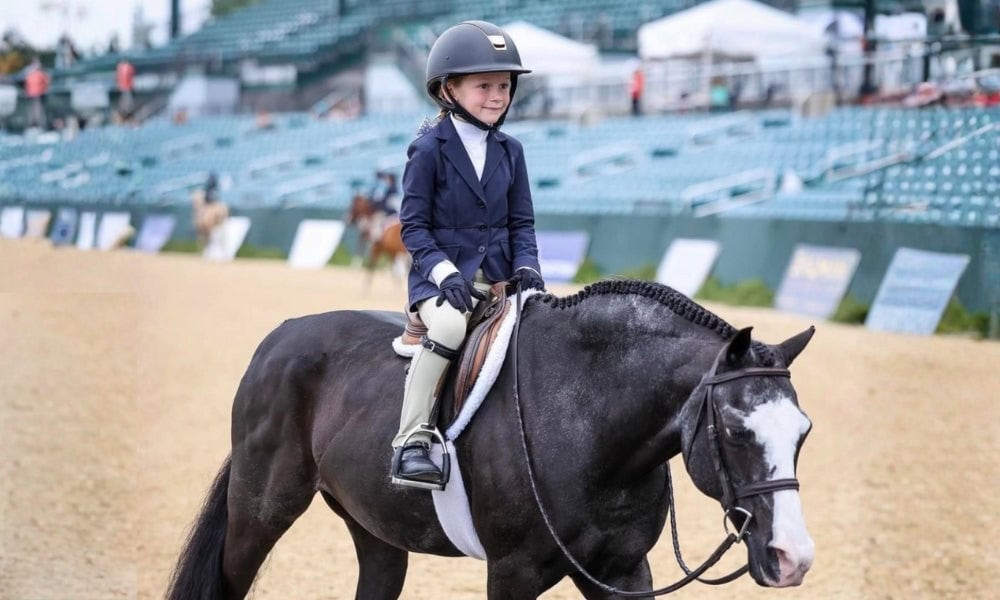
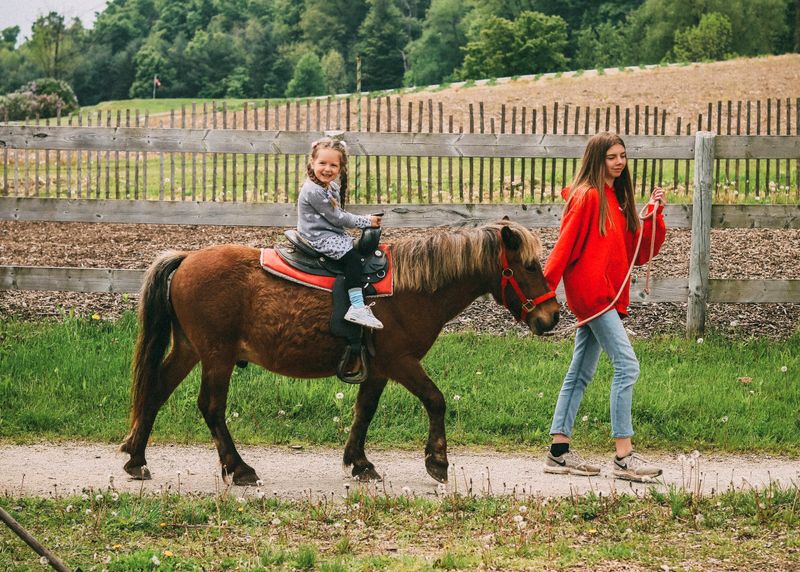
No, kids do not need any prior experience before horseback riding at camp. Camp riding programs are built from the ground up for children who have never been near a horse. The very first lesson does not start in the saddle. It starts in the barn, where campers learn how to approach a horse calmly, how to brush and groom, and how to place a saddle blanket and saddle on the horse’s back. This sequence is intentional: it builds a relationship between the child and the animal before the child ever mounts.
Grooming teaches campers that a horse is a living being that responds to gentle handling, steady voice, and calm energy. Tacking up (placing the bridle, saddle pad, and saddle on the horse) teaches sequencing and responsibility. By the time a beginner steps into the stirrup for the first time, she already knows her horse by name, has spent 30 to 45 minutes handling the animal, and understands the basic safety rules of the barn. That camp experience transforms what could be an intimidating first encounter into a confident, informed one.
Camps stock their stables with horses specifically selected and trained for beginner riders. These school horses are chosen for calm temperament, predictable behavior, and tolerance of inexperienced handling. A horse that startles easily or moves unpredictably would never be assigned to a first-time rider. The matching process between horse and camper is one of the most important safety decisions an equestrian program makes each session.
How Do Camps Teach Beginners to Ride Horses?
Camps teach beginners to ride horses through a step-by-step progression that builds each skill on top of the one before it. The learning sequence at a well-structured riding program follows a predictable order:
- Barn safety orientation covers how to move around horses, where to stand, how to lead a horse using a lead rope, and what to do if the horse moves unexpectedly. Every camper completes this orientation before touching a horse.
- Grooming and tacking introduces campers to brushes, hoof picks, saddle pads, saddles, and bridles. Campers practice these skills daily, which reinforces responsibility and builds a bond with their assigned horse.
- Mounting and dismounting drills teach the proper technique for getting on and off the horse safely, using the stirrup and the horn or pommel of the saddle for balance.
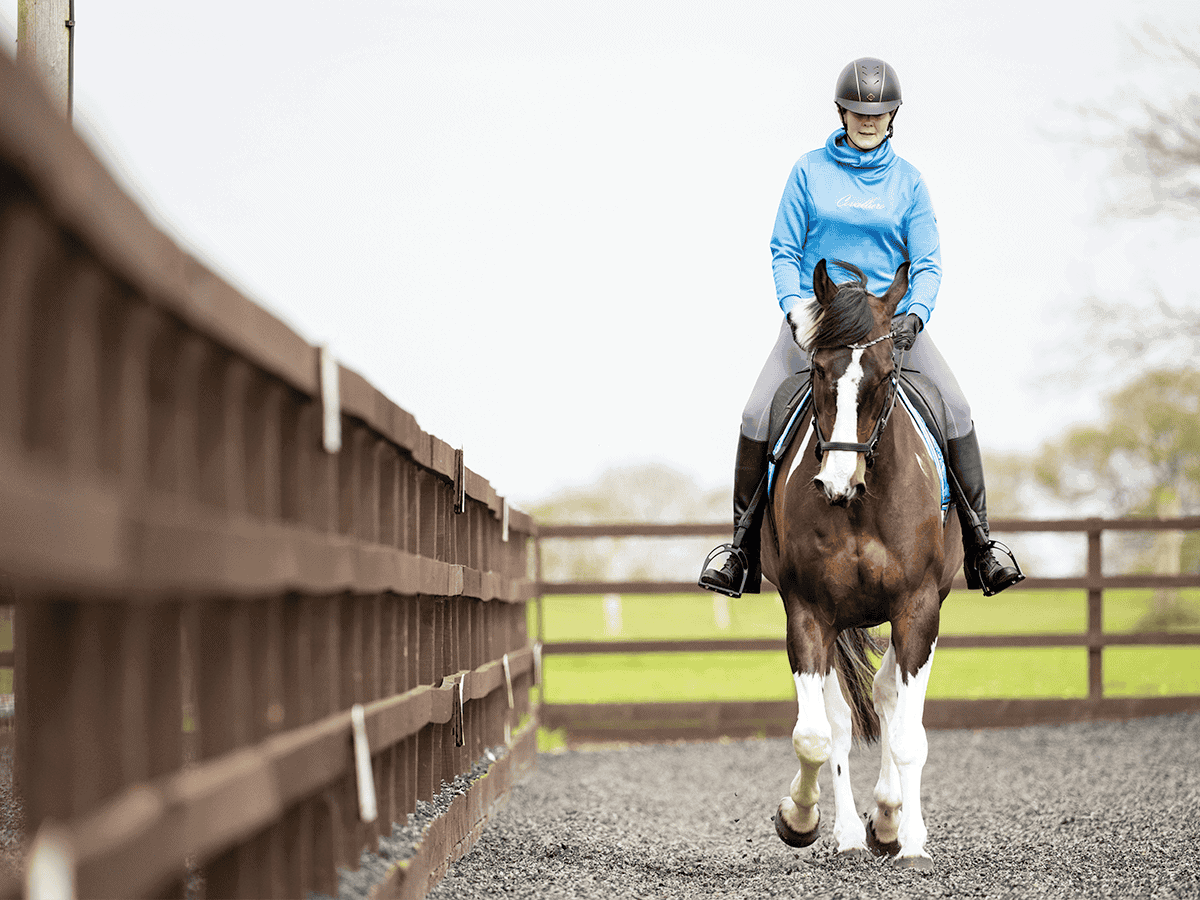
- Walking instruction in a ring teaches basic rein handling, posture (heels down, shoulders back, eyes forward), and how to steer the horse using gentle rein pressure and leg cues. An instructor often leads the horse during the first few sessions.
- Independent walk and trot work progresses campers from instructor-led walking to independent control at a walk, then introduces the trot, a two-beat gait that requires the rider to learn “posting” (rising and sitting in rhythm with the horse’s movement).
- Canter instruction and trail rides follow for campers who demonstrate control at the walk and trot. Trail rides apply ring skills to outdoor terrain and build the rider’s ability to manage a horse in a less controlled environment.
This progression typically unfolds across one to two weeks of daily one-hour classes. According to the British Horse Society, 30 minutes of continuous riding at a walk and trot qualifies as moderate-intensity exercise, meaning campers are getting a genuine physical workout every single day in addition to skill development. The daily repetition is what sets camp apart from weekly riding lessons at home, where a child might practice a skill once and then wait seven days before reinforcing it.
What Skills Does Horseback Riding Teach Children?
Horseback riding teaches children a combination of physical coordination, emotional regulation, cognitive focus, and social responsibility that few other activities deliver in a single package. The skill set divides into four categories, and each category reinforces the others.
Physical skills include balance, core strength, posture, hand-eye coordination, and bilateral body control (using both sides of the body independently). Riding a horse requires the child to stabilize her torso while her arms guide the reins and her legs signal the horse. This multitasking builds neuromuscular pathways that improve coordination off the horse as well. A study commissioned by the British Horse Society and conducted in collaboration with the University of Brighton found that recreational horseback riding and related barn activities produce sufficient energy expenditure to classify as moderate-intensity exercise.
Emotional skills include patience, frustration tolerance, empathy, and the ability to regulate one’s own emotional state. Horses respond directly to a rider’s energy. A tense, anxious rider produces a tense, anxious horse. A calm, steady rider produces a calm, responsive horse. Children learn this cause-and-effect relationship quickly because the feedback is immediate and unmistakable. The horse becomes a mirror that teaches the child how to manage her own emotions before she can manage the animal.
Cognitive skills include following multi-step instructions, sequencing (grooming before tacking, tacking before mounting), spatial awareness (distance from other riders, position in the ring), and problem-solving (adjusting rein pressure, changing leg position to correct the horse’s gait). The Tokyo University of Agriculture study found that 46.3% of children improved their Go/No-go cognitive performance after just 10 minutes of horseback riding, compared to 26.9% after walking.
Social skills include teamwork (riding in a group lesson requires awareness of other riders), communication (clear verbal and physical cues to the horse), and responsibility (every rider is accountable for her horse’s care before and after the lesson). These four skill categories overlap and reinforce each other constantly, which is why researchers at the Harvard Graduate School of Education cited camp horseback riding programs as particularly effective environments for social-emotional development.
What Are the Physical Benefits of Horseback Riding for Kids?
The physical benefits of horseback riding for kids include improved core strength, better balance and posture, increased cardiovascular fitness, enhanced coordination, and measurable calorie expenditure. Riding a horse is a full-body workout that engages the back, abdomen, thighs, calves, and arms simultaneously. The rider’s core muscles fire continuously to maintain an upright, balanced position on a moving animal.
According to a study cited by Horse & Rider magazine and conducted at Texas A&M University, riding a horse for 45 minutes at a walk, trot, and canter burns approximately 200 calories. More vigorous riding, such as jumping or extended canter work, can push that figure to 400 to 550 calories per hour. Even the barn work that accompanies riding, like carrying saddles, lifting hay bales, and grooming, burns additional calories and builds functional upper-body strength.
The three-dimensional movement of a horse’s walk mimics the human pelvis during walking, which activates the rider’s postural muscles in patterns similar to physical therapy exercises. Pediatric occupational therapists have noted that horseback riding helps children develop motor planning skills, bilateral coordination, and body awareness. These gains transfer directly to other physical activities, from swimming to team sports. For children who spend much of the school year in sedentary screen time, the daily physical engagement of a camp riding program provides a reset that strengthens muscles, improves cardiovascular health, and re-establishes healthy movement patterns.
| Benefit Category | Horseback Riding | Team Sports (Soccer, Basketball) | Creative Arts (Drama, Crafts) |
|---|---|---|---|
| Core Strength & Balance | High (continuous engagement for 45-60 min) | Moderate (intermittent bursts) | Low |
| Cardiovascular Fitness | Moderate (classified as moderate-intensity by British Horse Society) | High (sustained aerobic activity) | Low |
| Calorie Burn Per Hour | 200-550 (Texas A&M / Horse & Rider) | 400-700 | 100-150 |
| Emotional Regulation | High (horse responds to rider’s emotional state in real time) | Moderate (team dynamics, competition pressure) | Moderate (creative expression) |
| Cognitive Demand | High (multi-step sequencing, spatial awareness, animal communication) | Moderate (strategy, positioning) | Moderate to High (creativity, memorization) |
| Animal Bond / Empathy | High (direct relationship with a living animal) | None | None |
| Confidence Growth | High (70% of camp parents report gains, ACA 2005) | Moderate to High | Moderate |
Sources: Texas A&M University (calorie data), British Horse Society / University of Brighton (exercise classification), American Camp Association Youth Development Outcomes Study 2005 (confidence data), Tokyo University of Agriculture / Frontiers in Public Health 2017 (cognitive data).
How Does Horseback Riding Build Confidence in Kids?
Horseback riding builds confidence in kids by placing them in a controlled challenge where they must communicate with, care for, and ultimately direct a 900 to 1,200-pound animal. The confidence that results is not abstract praise or a participation ribbon. It is earned competence, the kind that comes from doing something genuinely difficult and succeeding. Developmental psychologist Albert Bandura described this mechanism as “mastery experience,” the most powerful source of self-efficacy in children.
The confidence-building sequence unfolds in layers. First, the child overcomes the initial intimidation of standing next to an animal that outweighs her by 800 pounds or more. Grooming and handling normalize the horse’s size and presence. Next, the child mounts and discovers that she can balance, steer, and control the horse at a walk. Each new skill, posting the trot, maintaining a canter, guiding the horse through a trail, adds another layer of earned confidence. The ACA’s Value of Camp data shows that 70% of parents reported their child gained self-confidence at camp, and horseback riding is consistently cited as one of the activities where that confidence gain is most visible.
The confidence carries over. A child who learned to manage a horse through a winding forest trail on Tuesday often approaches the ropes course on Wednesday with less hesitation. Research from Spielvogel, Warner, and Sibthorp (2022) found that three years after attending summer camp, children maintained increases in their willingness to try new things. Horseback riding produces a particularly durable form of confidence because the feedback loop is so clear: the horse either responds to your cues or it does not, and the child learns to adjust in real time.
Is Horseback Riding Good for an ADHD Child?
Yes, horseback riding is good for an ADHD child. Research supports what many parents and instructors observe firsthand: the combination of physical movement, animal interaction, and structured attention required in horseback riding produces benefits that align directly with the challenges ADHD presents.
The Frontiers in Public Health study from Tokyo University of Agriculture measured cognitive function in 106 children aged 10 to 12 before and after horseback riding. The researchers found that the three-dimensional vibrations produced by a horse during movement activate the sympathetic nervous system, which improves the child’s ability to perform appropriate Go reactions (taking action when needed) and No-go reactions (exercising self-control when needed). These are precisely the executive function areas where children with ADHD struggle most.
A separate meta-analysis published in the journal Child Psychiatry & Human Development examined equine-assisted activities for children with ADHD and found statistically significant improvements in attention problems, self-esteem, learning and cognition, and motor proficiency. The structured, predictable environment of a riding lesson, combined with the calming rhythmic motion of the horse, provides a sensory experience that helps regulate the nervous system. Camp horseback riding adds the social dimension: group lessons require turn-taking, waiting, and cooperative awareness, all practiced in a setting where the child is deeply engaged and motivated.
How Long Does It Take a Child to Learn to Ride a Horse?
How long it takes a child to learn to ride a horse depends on the child’s age, physical readiness, and how often she rides. At a summer camp with daily one-hour lessons, most beginners can walk independently and begin trotting within the first week. By the end of a two-week session, many campers progress to confident walk-trot work, basic steering and stopping, and supervised trail rides.
Children between ages 8 and 12 tend to progress fastest because they have sufficient body strength, coordination, and attention span to absorb new skills quickly. Younger riders (ages 6 and 7) may spend more time on lead-line work and basic balance exercises before riding independently. Older beginners (ages 13 and up) often advance rapidly once they overcome any initial nervousness because their physical strength and cognitive processing speed are more developed.
Cantering, jumping, and advanced horsemanship require months or years of consistent practice that extend well beyond a single camp session. A two-week camp provides a strong foundation: the child learns to groom, tack, mount, walk, and trot with proper form. That foundation gives her the confidence and basic skill to continue lessons at home if she chooses. Many experienced instructors note that the concentrated immersion of camp riding, 10 to 14 hours in two weeks, produces faster early progress than the same number of hours spread across several months of weekly lessons.
What Is the Difference Between English and Western Riding?
The difference between English and Western riding lies in the saddle design, the rein handling technique, and the riding discipline’s purpose. English riding uses a smaller, lighter saddle without a horn, requires the rider to hold a rein in each hand, and emphasizes close contact between rider and horse for precise communication. English disciplines include dressage, hunter/jumper, and eventing. Western riding uses a larger, heavier saddle with a horn (originally designed for roping cattle), allows the rider to hold both reins in one hand, and emphasizes smooth, relaxed movement suited to trail riding and ranch work.
Summer camps typically specialize in one style based on their region and instructor expertise. Camps in the eastern United States more commonly teach English riding, while camps in the West and Midwest often teach Western. Some programs offer both. We teach English riding at our camp, with instruction in walk, trot, canter, and jumping across two oval riding rings. Equestrian classes are available at beginner through advanced levels, and trail rides give campers the chance to apply ring skills in an outdoor setting.
For a child who has never ridden before, either style provides an excellent foundation. The core skills, balance, posture, leg position, rein contact, and communication with the horse, transfer between disciplines. A child who learns English riding at camp can transition to Western lessons at home (or vice versa) without starting over. The choice between styles matters less for beginners than the quality of instruction and the suitability of the horses.
Is Horseback Riding Safe for Kids at Summer Camp?
Horseback riding is safe for kids at summer camp when the camp follows established safety protocols, uses trained instructors, and maintains horses suited for youth riders. The overall equestrian injury rate among young riders is 0.6 per 1,000 riding hours, according to research published in The Journal of Family Practice in collaboration with the Centers for Disease Control and Prevention. That rate decreases further in structured camp settings where helmets are mandatory, instructor-to-rider ratios are low, and horses are specifically selected for calm temperament.
ASTM/SEI-certified riding helmets reduce the risk of serious head injury by over 70%. Accredited camps require every rider to wear a properly fitted helmet during every mounted activity, from ring lessons to trail rides. The American Camp Association’s accreditation standards include specific horseback riding requirements covering staff qualifications, instructor training, safety equipment, emergency procedures, and appropriate horse-to-rider matching. We carry a 100% score on applicable ACA standards, and our staff completes an on-site ACA workshop during orientation each summer. Camps that are ACA accredited undergo rigorous review across up to 300 operational standards, and horseback riding is one of the specialized activity areas that receives focused scrutiny.
Parents can further evaluate a camp’s riding safety by asking about instructor certifications, horse ownership (camps that own their horses year-round know each animal’s temperament intimately), rider-to-instructor ratios, and how the camp matches horses to riders. Trail rides should always include instructors riding at both the front and back of the group, with communication equipment available.
What Should a Child Wear for Horseback Riding at Camp?
A child should wear specific protective and functional clothing for horseback riding at camp. The right gear keeps a young rider safe, comfortable, and able to move freely in the saddle. The essential items include:
- A properly fitted ASTM/SEI-certified riding helmet, the single most important piece of safety equipment. Many camps provide helmets, but families can also purchase one before camp to guarantee proper fit.
- Closed-toe boots or riding boots with a small heel (at least half an inch). The heel prevents the foot from sliding through the stirrup, which is a critical safety feature. Sneakers and sandals are never permitted.
- Long pants, preferably fitted jeans or riding breeches. Loose fabric can catch on the saddle or equipment. Long pants also protect the inner leg from rubbing against the saddle leather.
- Gloves (optional but recommended) help with grip on the reins and protect against blisters during extended riding sessions.
Camp packing lists typically specify the riding gear required. Reviewing the preparing for camp checklist well in advance gives families time to source boots and helmets that fit properly. Avoid brand-new boots on the first day of riding; break them in at home first to prevent blisters.
What Not to Do While Riding a Horse?
What not to do while riding a horse comes down to five fundamental rules that every beginner learns in the first lesson. These rules protect both the rider and the horse.
Do not make sudden movements or loud noises while mounted. Horses are prey animals with a strong startle reflex, and abrupt actions can cause a horse to spook, bolt, or buck. Calm, deliberate movement is the baseline expectation in any riding environment. Do not approach a horse from directly behind, where the animal cannot see you. Horses have a blind spot directly behind their hindquarters, and surprising a horse from that angle can result in a kick. Do not pull sharply on the reins. Reins connect to the bit in the horse’s mouth, and jerking the reins causes pain and confusion. Gentle, steady pressure communicates direction; harsh yanking communicates fear and triggers resistance.
Do not wrap the reins around your hands or wrists. If the horse drops its head suddenly or bolts, wrapped reins can trap the rider and cause injury. Hold the reins with a firm but flexible grip that allows release if needed. Do not kick the horse hard with your heels to make it go faster. Light leg pressure or a gentle squeeze communicates “move forward” far more effectively. Aggressive kicking startles the horse and erodes the trust between rider and animal. Camp instructors teach these rules on day one and reinforce them every session, creating habits that keep young riders safe throughout their time in the riding program.
Frequently Asked Questions
Can a 3 Year Old Ride a Pony?
A 3 year old can sit on a pony with adult assistance, but a 3 year old cannot take formal riding lessons. Children at this age lack the core strength, attention span, and ability to follow multi-step instructions that independent riding requires. Many stables offer supervised lead-line pony rides for toddlers, where an adult leads the pony while the child sits in the saddle. These introductory experiences build comfort and familiarity with horses but do not constitute riding instruction. Most camps and riding programs set a minimum age of 5 to 7 for structured lessons.
What Does a Child Learn from Horseback Riding?
A child learns responsibility, patience, empathy, physical coordination, emotional regulation, and problem-solving from horseback riding. The daily routine of grooming, feeding, and caring for a horse teaches consistent follow-through. Communicating with a 1,000-pound animal through subtle body language teaches awareness and emotional control. Research published in Frontiers in Public Health found that horseback riding activates the sympathetic nervous system in ways that improve cognitive task performance in children aged 10 to 12.
Should My Child Ride at a Day Camp or Overnight Camp?
A child should ride at a day camp if the family prefers shorter daily sessions and the child is not ready for an extended stay away from home. An overnight camp provides the advantage of daily immersion, where the child rides every day for one to two weeks and accumulates significantly more saddle time than weekly day camp sessions can offer. The ACA reports that the most popular overnight camp session length is two weeks, which is long enough for a beginner to progress from grooming basics to independent walk-trot work and trail rides.
How Often Do Campers Ride During a Typical Camp Session?
Campers at dedicated equestrian camps ride every day, typically for one-hour sessions. At multi-activity camps that include horseback riding as one option among many, campers may ride three to five times per week depending on how the schedule rotates. Daily riding accelerates learning because the child reinforces skills from the previous lesson without a multi-day gap in between. According to the ACA’s research, 63% of parents reported that their child continued participating in new activities learned at camp after returning home.
What Happens If My Child Is Afraid of Horses?
If a child is afraid of horses, experienced instructors introduce the animal gradually. The first step is observing horses from a comfortable distance. The second step is approaching with an instructor present to demonstrate calm handling techniques. The third step is touching and grooming a horse while it stands still. This gradual exposure builds familiarity that often dissolves the initial fear within one to two days. A 2005 ACA study found that 74% of campers did things at camp they were initially afraid of, and horseback riding is frequently the activity where that breakthrough occurs.
Can My Child Continue Riding After Summer Camp?
Yes, a child can continue riding after summer camp by enrolling in lessons at a local stable or equestrian center. The foundation built during camp, grooming, tacking, basic walk-trot skills, and barn safety, transfers directly to year-round lesson programs. Organizations like United States Pony Club and 4-H offer youth riding programs with structured skill advancement. Many children who discover horseback riding at camp go on to ride competitively or recreationally for years afterward.
Putting It All Together
A child who arrives at summer camp having never touched a horse can leave two weeks later knowing how to groom, saddle, mount, steer, and trot, with trail ride memories that last a lifetime. Horseback riding at camp gives girls something most other activities cannot: a real relationship with a living animal that responds to their patience, rewards their calm, and reflects their growth in real time. The research supports what parents and campers have known for generations. Seventy percent of camp parents see self-confidence gains. Ninety-two percent of campers say camp helped them feel good about themselves. Horseback riding sits at the center of those outcomes because it combines physical challenge, emotional connection, and earned competence in a way that sticks.
If your daughter has been dreaming about horses, or even if she has never mentioned them but loves a good adventure, summer camp horseback riding might be exactly the experience that sparks something lasting. Riverview Camp for Girls would love to welcome her to the barn. Reach out to learn more about sessions and enroll when you are ready. Nestled along the banks of Little River on Lookout Mountain in Mentone, Alabama, the trails are waiting.